


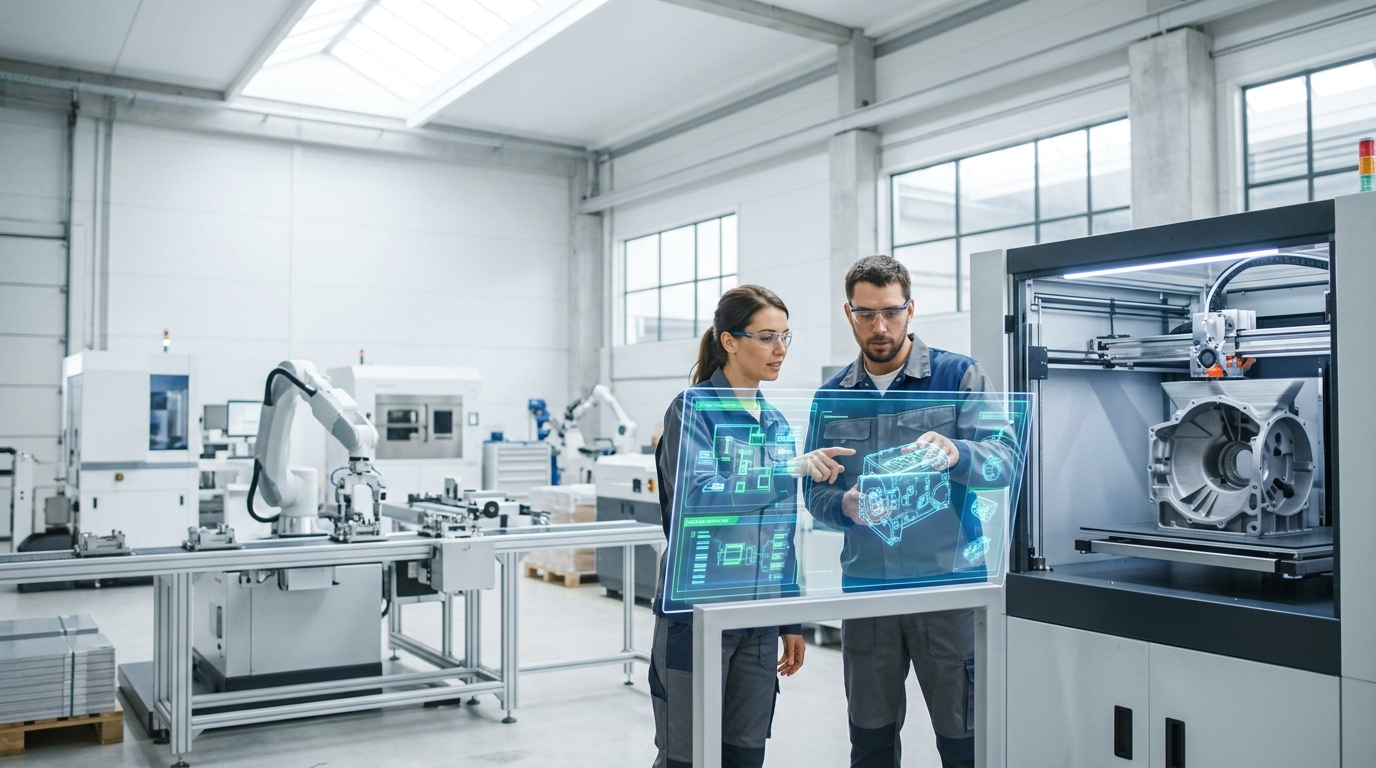
American manufacturers are turning to artificial intelligence, digital simulation, and 3D printing as worker shortages threaten plans to expand domestic production.
The three technologies could help engineers design products faster, test ideas virtually, and produce complex parts with less waste. Yet their success will depend on workforce training, reliable data, and careful investment.
Factories Face a Skills Constraint
Efforts to increase advanced manufacturing in the United States require more than new factories. Companies also need engineers, technicians, software specialists, and machine operators.
Finding those workers can be difficult, especially for roles that combine mechanical knowledge with digital skills. Retirements may add pressure as experienced employees leave and take years of practical knowledge with them.
Technology can reduce some of that strain. It can automate routine work and give smaller engineering teams better tools. However, it cannot fully replace people who understand materials, production systems, and safety requirements.
AI Speeds Engineering Decisions
AI systems can review large sets of design options and identify patterns that engineers may miss. They can also assist with scheduling, equipment maintenance, quality checks, and production planning.
For design teams, AI may shorten the time needed to compare materials or adjust a part for manufacturing. On factory floors, computer vision can inspect products for visible defects.
These systems still require human review. Poor training data can produce weak recommendations, while inaccurate outputs may create expensive errors. Manufacturers must also protect sensitive design and production information.



The practical goal is not simply to replace labor. It is to help scarce technical workers spend more time on difficult decisions.
Digital Simulation Cuts Physical Testing
Digital simulation allows engineers to test a product or production line before building it. A virtual model can show how heat, pressure, vibration, or material changes may affect performance.
Factories can also create digital versions of equipment and workflows. Teams may then identify bottlenecks, compare layouts, or estimate the effects of a machine failure without interrupting production.
The approach can lower development costs and reduce the number of physical prototypes. Its accuracy, however, depends on the quality of the model and the data supporting it. Real-world testing remains necessary for many safety-critical products.
3D Printing Changes Parts Production
3D printing, also called additive manufacturing, builds objects one layer at a time. The method can produce shapes that are difficult or costly to make with traditional machining.
Potential uses include:
- Rapid prototypes for design reviews and testing
- Specialized tools, fixtures, and replacement parts
- Low-volume parts that do not justify expensive molds
- Lighter designs that use material more efficiently
The technology is not the best choice for every product. Printing can be slow at high volumes, and certified materials may cost more. Parts used in aircraft, medical devices, or defense systems also face strict testing rules.
Training Will Shape the Outcome
Manufacturers will need to pair technology spending with education. Engineers must learn how to evaluate AI output, operate simulation software, and design parts for additive production.
Community colleges, universities, labor groups, and employers could play a role through apprenticeships and short technical programs. Existing workers will also need access to training, rather than being left behind by automation.
AI, simulation, and 3D printing offer practical ways to increase engineering capacity and shorten production cycles. They are tools, not complete answers to the talent shortage.
The next test will be whether U.S. manufacturers can integrate these systems at scale while maintaining quality, security, and worker trust. Progress will depend as much on skilled people as on advanced machines.