




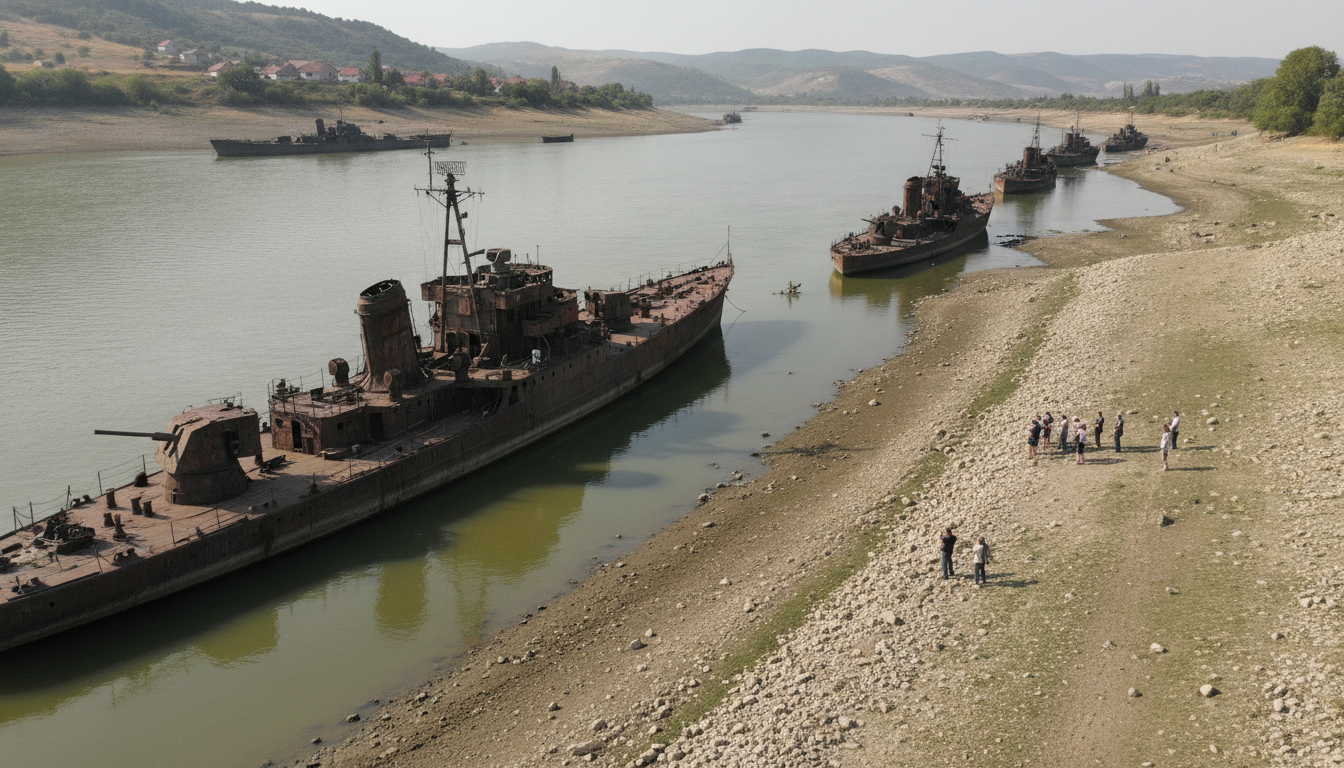
As drought grips Central and Eastern Europe, falling water levels on the Danube River have exposed the hulks of World War II German ships, turning a vital trade route into a stark history lesson. The low river, reported this week, has revealed wrecks long hidden under silt and currents, drawing concern from shippers, historians, and local officials along the 1,770-mile waterway.
The Danube flows through or borders 10 countries, linking farm belts, factories, and Black Sea ports. When the river drops, commerce slows, power plants adjust operations, and river towns brace for economic hits. Now the river is also revealing wartime debris, with the rusting outlines of scuttled vessels appearing in stretches where the drought bites hardest.
Historic Wrecks Surface As River Drops
“Water levels on the Danube River have dropped so low due to drought that World War II German battleships are emerging into view.”
These ship remains are relics of retreats, blockades, and frantic wartime maneuvers. Many were scuttled to obstruct navigation or avoid capture. For decades they rested out of sight, buried in mud. The current drought has changed that, bringing twisted steel and gun mounts into daylight.
Local residents have described shoreline sections scattered with jagged metal and ammunition casings. River authorities face a tricky balance: protect public safety, preserve heritage, and keep traffic moving on one of Europe’s busiest inland routes.
Why The River Is So Low
Low water on the Danube tends to follow hot, dry spells and reduced rainfall in upstream basins. Snowpack in the Alps and Carpathians feeds the river. When winter is mild or spring is short, flows can fade by mid-summer.
Meteorologists also point to longer dry periods and higher temperatures that increase evaporation. Barges ride higher on the water when cargo is light, but shippers cannot cut loads forever. At some points, channels become too shallow for safe passage without dredging.
Shipping, Safety, and Ecology Concerns
Exposed wrecks bring practical problems. Sharp debris threatens hulls. Munition remnants raise safety risks. Navigation channels may narrow as wreck fields press toward midstream.
- Shippers face delays or must lighten cargo, raising costs.
- Local governments weigh salvage, fencing, and signage for public safety.
- Environmental teams monitor fuel residues, metals, and sediment shifts.
Fish spawning zones can suffer when water drops fast. Warmer, shallower waters hold less oxygen, which can stress aquatic life. Conservation groups often push for careful salvage to avoid stirring contaminated silt.



Balancing Heritage With Hazard
For historians, the exposed ships are artifacts of a violent chapter on the river. For mayors and port captains, they are hazards that may demand cranes, barges, and careful demolition. Salvage can be expensive, slow, and risky if ordnance is present.
Museums and universities sometimes document wrecks before removal, creating 3D scans and archives. Local tourism boards may see short-term interest, though safety rules tend to limit access. The priority remains to secure sites, keep cargo moving, and protect the river’s ecology.
What Comes Next
Short-term relief depends on rain. If upstream storms raise levels, some wrecks will slip back under the surface. If dry weather holds, more hulls could appear, and shipping limits will persist.
River authorities are likely to map exposed sites, assess munitions, and plan selective recovery. That work can stretch for months. Insurance costs and freight rates may shift with each update on depth forecasts.
Longer term, policymakers look at a familiar toolbox: dredging key bottlenecks, improving hydropower schedules, and refining low-water timetables for barge convoys. None of that erases the fact that historic debris still lines parts of the channel.
The Danube has always been a working river and a witness. The reemergence of wartime wrecks is a reminder of both roles. As crews mark hazards and historians take notes, the region will watch the forecast and count the centimeters. The next weeks will show whether the river gives back some depth, or whether more history rises into view.