




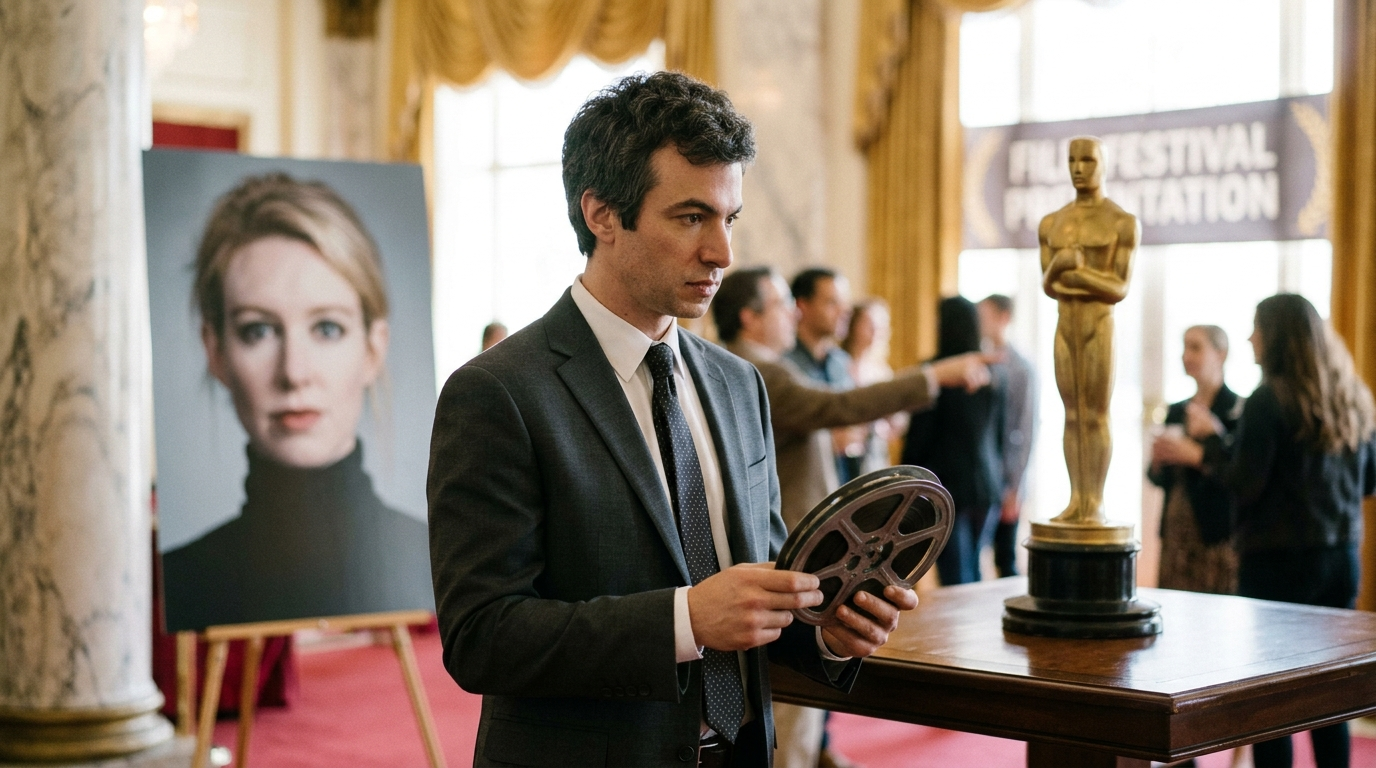
Early awards speculation is building around Nathan Fielder’s unusual documentary about Elizabeth Holmes, with some observers floating a possible Best Picture nomination.
The claim places an apparently unconventional project in Hollywood’s top awards conversation. Yet key facts remain unclear, including its title, release plan, critical reception, and eligibility status.
Without those details, the discussion is best viewed as preliminary Oscar forecasting, rather than evidence of an established campaign.
An Unlikely Awards Combination
Fielder is known for comedy that blurs performance, reality, and social experimentation. That approach could offer a different treatment of Holmes, whose rise and fall has already inspired extensive media coverage.
Holmes founded the blood-testing company Theranos and became a prominent Silicon Valley executive. The company collapsed after its technology and business claims came under close scrutiny.
Her story has since been covered through journalism, books, podcasts, documentaries, and television drama. A Fielder project would enter a crowded field, making its style and reporting central to its impact.
The brief description of the film as “weird” suggests it may not follow a standard documentary format. That could attract voters seeking an original approach. It could also make the film harder to classify and market.
Best Picture Remains a High Bar
A Best Picture nomination would require more than attention around Fielder or Holmes. The film would need to meet Academy eligibility rules and gain support across a broad voting group.



Several factors would shape its prospects:
- A qualifying release and compliance with Academy requirements.
- Strong reviews from critics and positive audience response.
- Backing from a distributor able to run an awards campaign.
- Support from voters outside the documentary branch.
Documentaries have historically faced long odds in the Best Picture category. Academy voters often recognize nonfiction films in the documentary categories instead.
That does not make a crossover impossible. It does mean that an unusual structure must connect with viewers while also demonstrating clear cinematic ambition.
Holmes Story Creates Opportunities and Risks
Holmes remains a familiar subject, which gives the project immediate public interest. Familiarity can help attract viewers, but it also creates the risk of repetition.
A new film would need to offer fresh reporting, a distinct argument, or a method that changes how audiences interpret the case. Fielder’s established style may provide that distinction.
However, mixing comedy or staged uncertainty with a real corporate scandal could invite criticism. The treatment of investors, employees, patients, and whistleblowers would likely receive close attention.
The central question is whether the project uses discomfort to reveal new facts or merely turns a serious case into spectacle. Reviews and festival screenings, if planned, would provide the first meaningful answers.
A Forecast Without Supporting Evidence
No voting data, industry endorsements, screening reactions, or campaign plans were cited alongside the Best Picture prediction. There was also no indication of who made the forecast or how widely it is shared.
For now, the nomination talk reflects curiosity about an unusual pairing: Fielder’s reality-bending methods and one of Silicon Valley’s most documented failures.
The film’s actual awards standing will depend on its release, execution, and reception. Until those elements are known, a Best Picture nomination remains an interesting possibility, not a reliable prediction.