



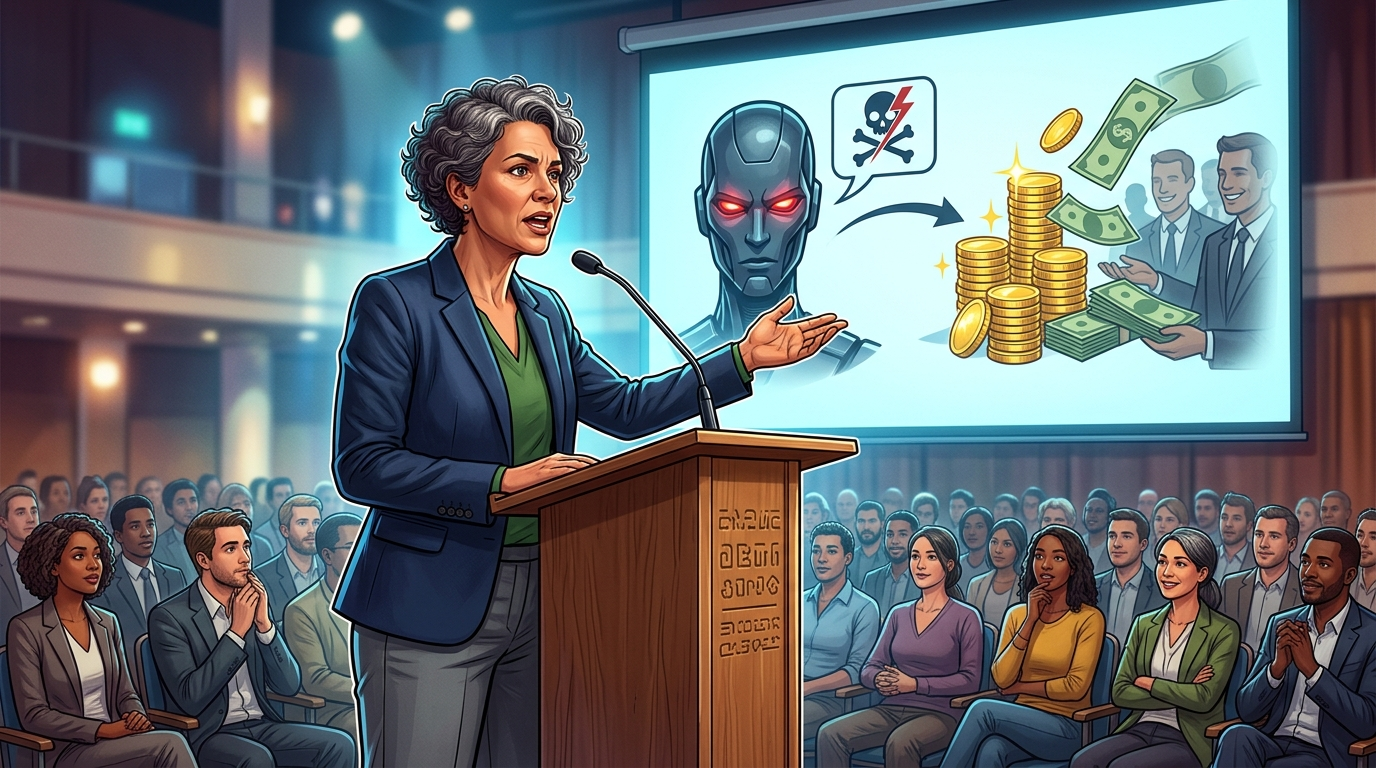
A fierce critic of artificial intelligence has challenged the industry’s warnings about human extinction, arguing that fear can help founders make money.
The criticism targets a central debate around AI development: whether public warnings reflect sincere safety concerns or serve commercial goals. The claim also raises questions about who benefits when possible future disasters dominate discussion.
“The doom talk is about founders making money, not saving humanity.”
The critic’s identity, evidence, and proposed financial mechanism were not specified. Even so, the charge captures a growing dispute over how AI risks are described to investors, governments, and the public.
How Fear Could Serve Founders
Warnings about catastrophic AI can make the technology appear unusually powerful. That image may increase attention, attract investment, and strengthen a company’s position in policy talks.
Founders could also benefit from rules that impose high compliance costs. Large, well-funded developers may absorb those costs more easily than smaller rivals or open-source projects.
Under this reading, calls for strict oversight can perform two roles. They may address real hazards while also creating barriers that protect established firms.
The critic’s argument does not prove that every warning is insincere. It instead points to a possible conflict between public safety claims and private incentives.
A Debate Over Present and Future Harm
AI safety discussions often cover two different time frames. One concerns current problems, including false information, biased decisions, labor disruption, surveillance, and misuse.


The other concerns hypothetical systems that could become more capable than their creators can control. Supporters of extinction-risk research argue that low-probability disasters still deserve early planning.
Critics respond that distant scenarios can draw attention from harms already affecting workers, artists, students, and communities. They also warn that dramatic language may give technology companies greater influence over regulation.
The competing concerns can be summarized as follows:
- Future-risk advocates seek safeguards before highly capable systems emerge.
- Skeptics want greater focus on measurable harms occurring now.
- Industry critics question whether corporate leaders should shape rules for their own products.
Motives Are Hard to Prove
Assessing the accusation requires more than studying public statements. Financial records, lobbying activity, investment pitches, and proposed laws would help show whether doom warnings produce direct commercial gains.
Intent may also be mixed. A founder can believe that AI presents severe dangers while recognizing that such warnings improve market visibility. Safety efforts and financial self-interest are not always separate.
That uncertainty makes transparency important. Companies can disclose funding for safety campaigns, explain their preferred regulations, and identify how those rules could affect competitors.
Policymakers also face a difficult task. Ignoring serious warnings could leave societies unprepared. Accepting claims without independent review could allow companies to write favorable rules under the banner of public protection.
What the Criticism Means for Regulation
The dispute suggests that officials should judge AI proposals by evidence rather than rhetoric. Rules can address immediate damage, require testing, and create clear accountability without assuming either catastrophe or perfect safety.
Independent researchers, labor groups, civil society organizations, and smaller developers can broaden that process. Their involvement may reduce the risk that a few well-funded founders control both the technology and its oversight.
The critic’s charge is ultimately about incentives as much as AI. Doom warnings may reflect genuine alarm, commercial strategy, or both. The next test will be whether industry leaders support transparent rules that protect the public even when those rules limit their own profits.