




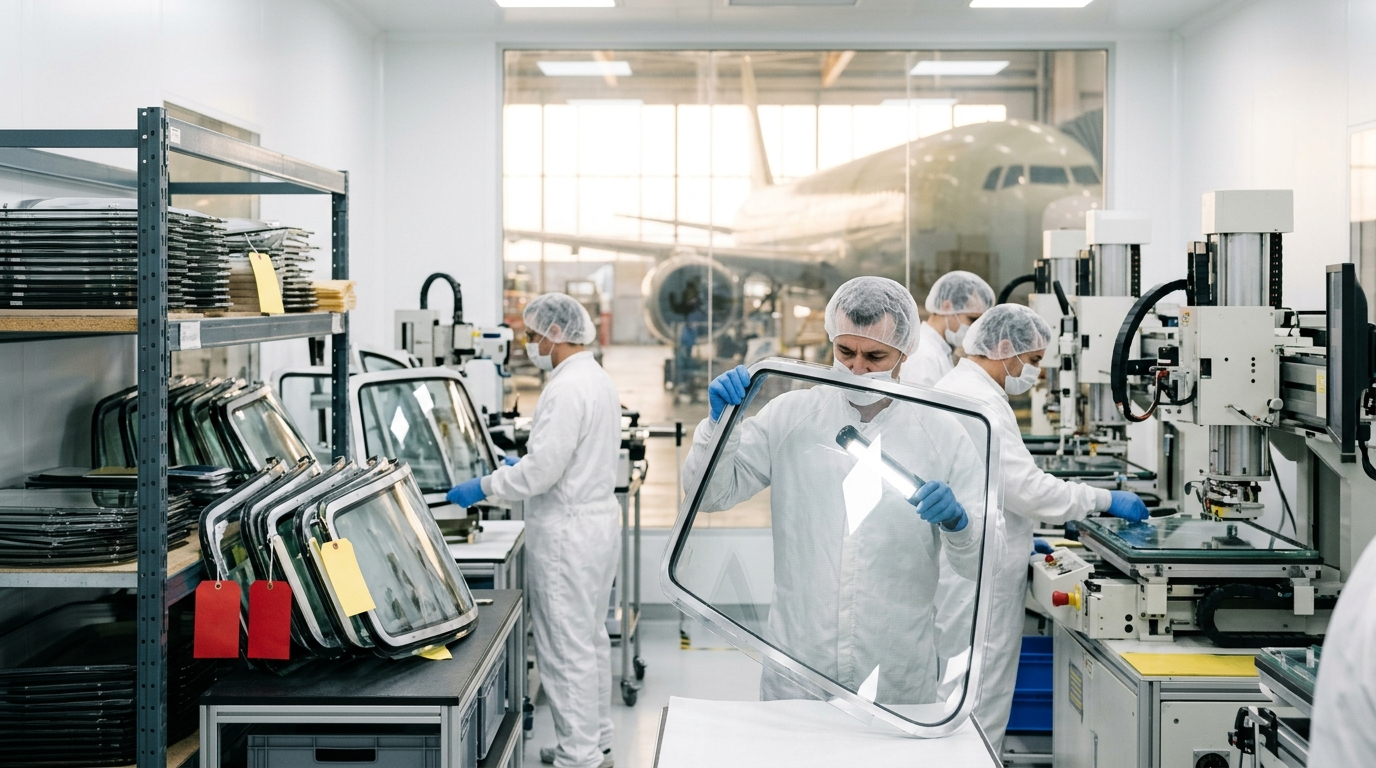
Aircraft windows are becoming harder to produce, while only a small group of companies has the required technology. That combination could create added pressure for aircraft makers, suppliers, airlines, and maintenance providers.
The concern centers on a critical aviation product that passengers may rarely consider. Windows must satisfy demanding requirements while remaining suitable for large-scale aircraft production and long service lives.
“Few companies have the technology to make aircraft windows, which are getting harder to make.”
The assessment points to two connected problems. Technical difficulty is increasing, and the number of qualified producers remains limited. Such concentration may leave the supply chain more exposed to delays or production setbacks.
A Specialized Manufacturing Challenge
Aircraft windows are not ordinary panes. Their design and production require specialized knowledge, equipment, materials, and quality controls. Producers must deliver consistent products for an industry that places safety at the center of every decision.
Manufacturing difficulty can rise as aircraft designs change. Suppliers may need to meet new requirements for shape, weight, durability, visibility, or compatibility with the surrounding airframe.
Each added requirement can make production harder. It may also lengthen testing and approval work before a product enters regular service.
The barriers help explain why relatively few companies can participate. New suppliers cannot simply open a production line and begin shipping aircraft windows. They must first develop the technology and prove that their products meet aviation standards.
Limited Suppliers Increase Business Risk
A narrow supplier base can create risk across aircraft manufacturing. If one producer faces equipment failures, material shortages, or quality problems, customers may have few immediate alternatives.



Potential effects include:
- Longer waits for aircraft production and repair parts
- Higher costs for manufacturers and maintenance providers
- Less flexibility when demand rises unexpectedly
- Greater dependence on a small number of technical specialists
Still, supplier concentration does not automatically mean the market is failing. Experienced producers may provide valuable expertise, stable processes, and close quality control. In aviation, rapid expansion without sufficient technical skill could introduce its own risks.
The central question is whether existing suppliers can maintain enough capacity as window production grows more difficult. Aircraft makers must balance cost, delivery speed, and safety rather than treating the product as a basic commodity.
Aircraft Makers May Seek More Resilience
Manufacturers may respond by working more closely with current suppliers. Longer purchasing commitments could support investment in equipment, staff, and production capacity.
They may also seek qualified second sources where practical. However, developing an alternative producer can take time because technical knowledge and approval processes cannot be created overnight.
Airlines and repair businesses face a related concern. Aircraft can remain in service for many years, creating continued demand for replacement windows after the original model leaves production. Suppliers must therefore support both new aircraft and older fleets.
What the Industry Must Watch
The issue will depend on whether manufacturing complexity continues to rise faster than supplier capacity. Production delays, longer replacement-part lead times, or higher prices could provide early signs of strain.
Investment will also matter. Existing producers need incentives to expand, while potential entrants require enough demand to justify the cost and difficulty of qualification.
Aircraft windows represent a small part of an airliner, but their supply carries wide consequences. With few capable producers and rising technical demands, careful planning will be needed to protect production schedules and long-term fleet support.