



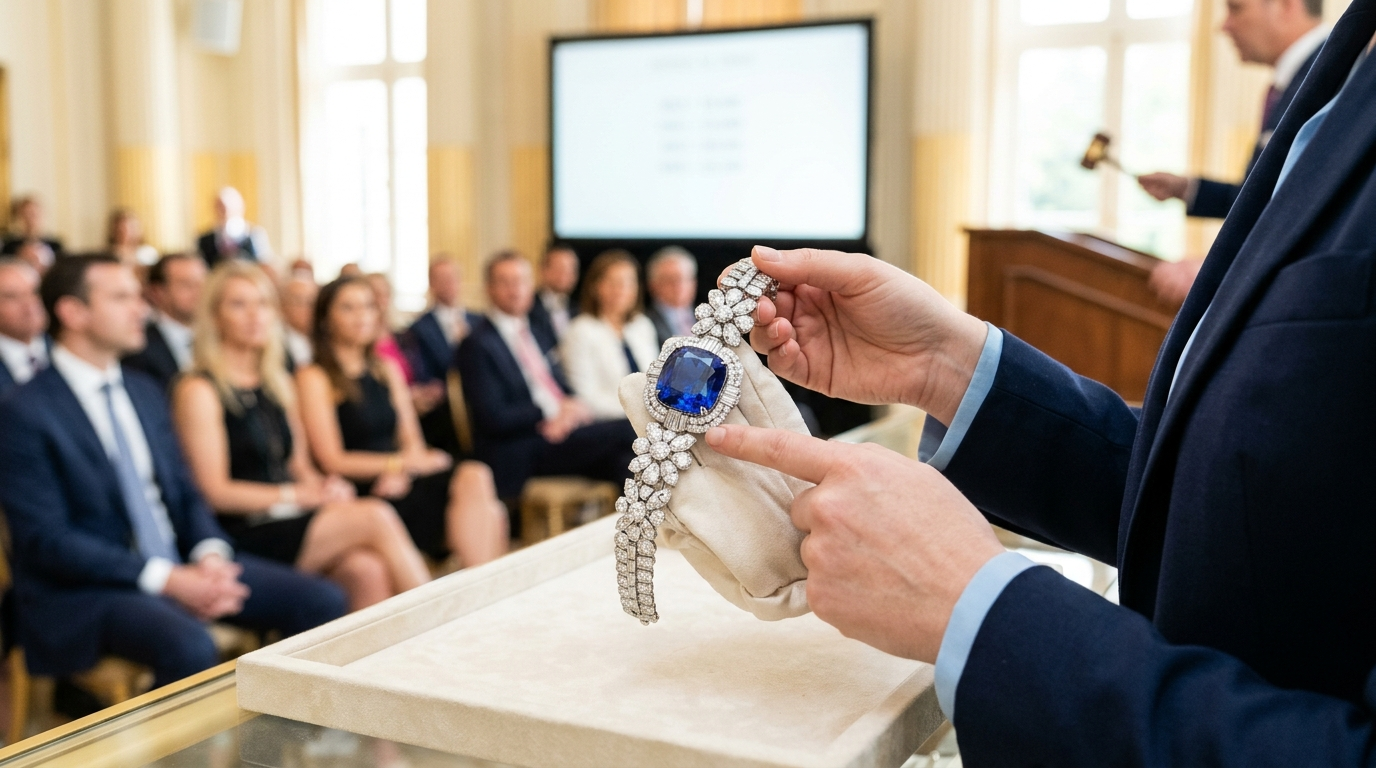
A nearly 198-carat Romanov sapphire sold for more than 4.1 million Swiss francs, or $4.9 million, at a Geneva auction, Sotheby’s said.
The cushion-shaped stone, mounted on a diamond-covered bracelet, sold far above its expected price range. Its reported link to Russia’s former imperial family helped draw attention to the sale.
The result shows how royal history, exceptional size and documented ownership claims can sharply increase demand for rare jewelry. It also signals continued interest in major colored gemstones among wealthy collectors.
A Large Stone With Imperial Ties
At nearly 198 carats, the sapphire is unusually large for a piece of wearable jewelry. One carat equals 0.2 grams, placing the stone’s weight at about 39.6 grams.
The gem has a cushion shape, which combines rounded corners with broad facets. This style can emphasize a sapphire’s color while retaining much of the original stone.
Sotheby’s attributed the jewel to former ownership within Russia’s Romanov dynasty. The family ruled the Russian Empire for more than three centuries, from 1613 until the 1917 revolution.
Jewelry connected with imperial courts often carries value that extends past materials and workmanship. Buyers may also pay for rarity, provenance and a direct link to major historical figures.
Price Surpasses Auction Expectations
The final price of more than 4.1 million Swiss francs vastly exceeded Sotheby’s expected range. The auction house did not identify the buyer in the information released about the sale.



Several features likely shaped bidding interest:
- The sapphire weighs nearly 198 carats.
- Diamonds cover the bracelet setting.
- The jewel is linked to the Romanov family.
- The sale took place in Geneva, a major center for jewelry auctions.
Auction estimates are based on factors such as past sales, condition, gem quality and ownership history. Yet rare objects can be difficult to price because direct comparisons are limited.
Competition between two or more determined bidders can quickly push a final result above the estimate. An imperial connection may further increase that competition, especially when comparable pieces seldom appear publicly.
Provenance Adds Value and Scrutiny
The phrase attributed to onetime ownership matters in evaluating the bracelet. It signals a historical association, but it may not carry the same certainty as an unbroken record of ownership.
For major jewels, specialists examine inventories, photographs, family records, sales documents and alterations to the setting. Each piece of evidence can strengthen or weaken an ownership claim.
Buyers also consider the sapphire itself. Color, clarity, geographic origin, treatment history and laboratory findings can affect value. The reported sale information did not provide those details.
The diamond setting adds material worth, though the sapphire and its imperial association appear to be the main drivers of interest. The bracelet format also makes the jewel both a historic object and a wearable piece.
Geneva Retains Its Auction Role
Geneva has long served as an international center for high-value watch and jewelry sales. Its auction calendar attracts dealers, collectors and advisers from several regions.
The Romanov bracelet’s result suggests that demand remains strong for objects combining scale, craftsmanship and royal history. Still, one exceptional sale does not establish a broad market trend.
Future results will depend on gemstone quality, supporting records and bidder confidence. For this bracelet, the sale price confirms that a rare sapphire with an imperial connection can command a steep premium, even above an auction house’s expectations.