


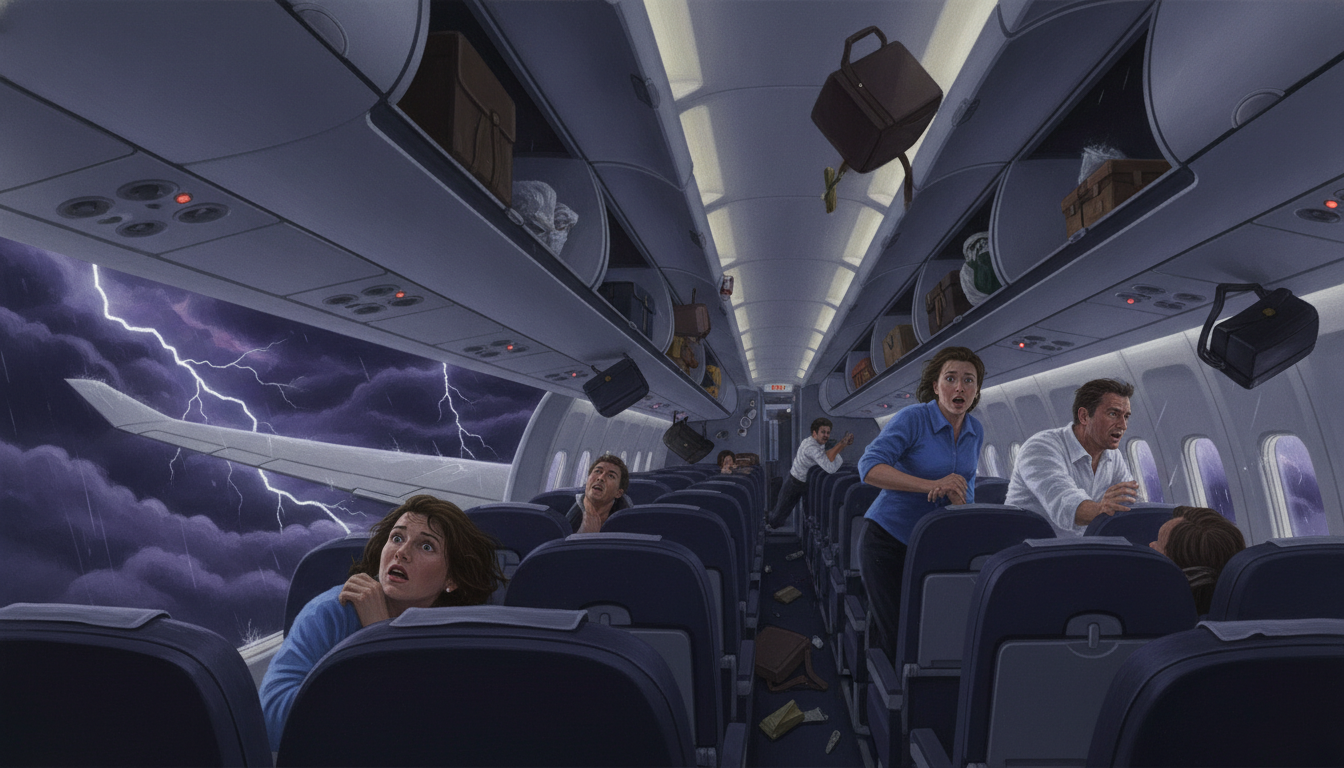
Nearly two dozen Delta Air Lines passengers have filed suit against the carrier, saying pilots flew too close to thunderstorms on a flight last year and triggered violent turbulence. The plaintiffs claim they were tossed around the cabin and suffered serious injuries. The case puts fresh attention on aviation weather safety and what airlines owe customers when storms build fast.
What Passengers Allege
The lawsuit argues the flight crew pressed on near strong storm cells rather than giving the weather a wider berth. Passengers say that choice led to sudden, severe jolts.
The pilots “recklessly flew” too close to thunderstorms, leaving passengers “violently thrown about the cabin,” the complaint states.
Attorneys for the group say injuries ranged from concussions to broken bones and deep bruising. They also describe lingering anxiety and sleep problems tied to the event. The filing seeks damages for medical costs, missed work, and pain and suffering.
- Claim: Negligent decision-making in storm proximity
- Claim: Inadequate warnings and restraint guidance
- Claim: Failure to prioritize passenger safety
The case does not name the individual pilots. It targets the airline for alleged operational choices and training practices.
How Pilots Manage Weather
Pilots are trained to avoid thunderstorms by wide margins. Onboard radar helps crews spot dangerous cells, and dispatch teams provide weather updates. Air traffic control can suggest routing changes, but the pilot in command makes the final call.
Thunderstorms pose risks that go well beyond rain. Wind shear and convective turbulence can strike without warning. Severe turbulence can injure people not wearing seat belts. It can also damage aircraft interiors, even when the structure remains sound.
Delta did not issue a specific public comment on this filing by press time. In prior statements on turbulence events, the carrier has said safety is its highest priority and that crews follow FAA and company procedures.
Turbulence Trends and Injury Data
Weather-linked turbulence is a leading cause of in-flight injuries to passengers and crew. FAA records show dozens of serious injuries in a typical year, often involving unbelted passengers and flight attendants moving about the cabin. Researchers have warned about more unstable air as the climate warms, which can heighten the risk of clear-air turbulence along busy routes.



In recent years, several high-profile incidents have made headlines, with images of damaged cabins and emergency landings. Investigations often find that a belt sign was on but not always heeded, or that turbulence intensified faster than forecasts suggested. That mix of human behavior and fast-changing weather makes risk hard to eliminate entirely.
Flight attendants’ unions have urged tighter rules on service during rough conditions. They also want clearer guidance to keep passengers seated earlier and longer when storms are likely.
Legal Stakes for Delta and the Industry
If the plaintiffs prevail, the case could push airlines to adjust storm buffers and seat-belt policies. It might also drive changes in how crews communicate upcoming bumps.
Courts typically examine whether a crew acted as a reasonable pilot would with the information available at the time. Weather files, cockpit recordings, dispatch logs, and radar data often decide these cases. Expert witnesses can sway outcomes by explaining what best practice looks like when storm lines evolve midflight.
For passengers, the seat belt remains the simplest safety tool. Even light chop can become heavy without warning. Keeping belts fastened when seated cuts injury risk dramatically, flight safety groups say.
What Happens Next
The case will likely move into discovery, where both sides gather records and expert analysis on the flight, the weather picture, and crew decisions. Settlement talks are possible, as many turbulence suits resolve without a jury trial.
For Delta, the challenge is twofold: defend the crew’s choices and show strong procedures for weather avoidance. For travelers, the lesson is clear enough—when the belt sign dings, click in and stay put.
This suit adds pressure on airlines to show how they factor storm data into real-time decisions. Watch for any policy changes on storm routing, earlier suspensions of cabin service, and more pointed announcements about staying seated. As summer storm season builds, those choices may decide whether flights stay smooth—or not.