



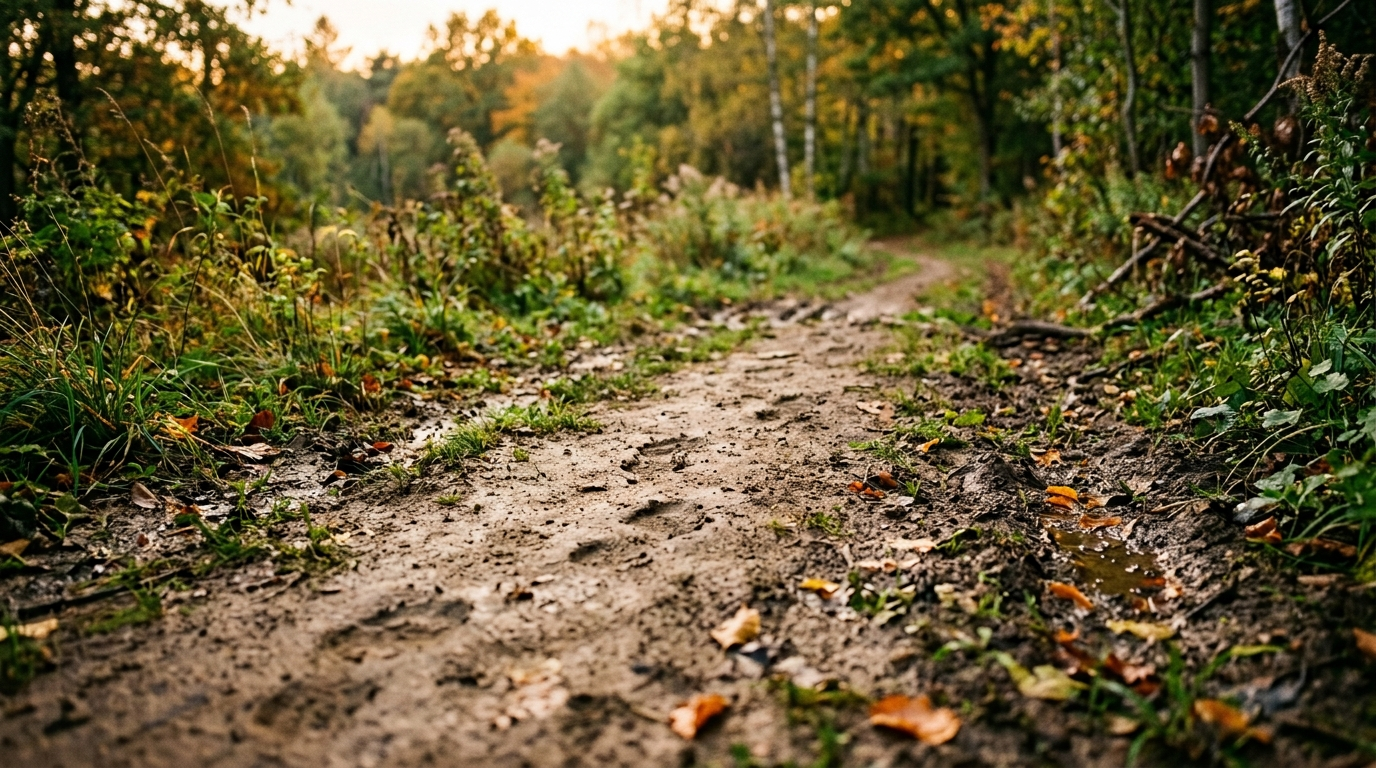
Poorly preserved steps indicate that an unidentified track-maker moved at about 1.6 meters per second, close to a human’s quick walking speed.
The estimate offers a narrow but useful view of movement captured in the tracks. However, the condition of the steps limits what researchers can conclude about the animal, its behavior, or the setting.
A Measured but Uncertain Pace
A speed of 1.6 meters per second equals about 5.8 kilometers per hour, or 3.6 miles per hour. For most people, that would feel like purposeful walking rather than running.
“The steps were poorly preserved, but still hint at an ambling pace of 1.6 meters per second, roughly equivalent to a quick walking speed for a human.”
The description of the pace as ambling suggests steady travel rather than a sprint. Yet speed alone cannot reveal why the track-maker was moving. It may have been traveling, searching for food, or responding to nearby conditions.
The comparison with human walking gives readers a familiar reference point. It does not mean the animal used the same gait or moved with the same effort as a person.
Why Track Quality Matters
Footprints can preserve evidence of motion that bones cannot. Their spacing, depth, direction, and shape may help researchers estimate speed and gait.
Those calculations depend on clear measurements. Poor preservation can blur the edges of a footprint or make individual steps difficult to identify. Weathering, erosion, sediment movement, and later damage can alter a track after it forms.
Key limits in this case include:



- The steps were not preserved clearly.
- The reported speed is an estimate, not a direct measurement.
- The available evidence does not identify the track-maker.
- No location, date, or trackway length was provided.
These gaps matter because speed estimates often rely on stride length and body size. If a footprint’s position is uncertain, the calculated pace can also shift.
What the Estimate Can Show
Despite those limits, the tracks appear to rule out complete stillness or extremely slow movement. They also offer no clear sign of a high-speed chase.
The finding instead points to controlled movement at a moderate pace. That may help frame later study if clearer tracks, body fossils, or geological details become available.
Researchers would need more evidence before linking the steps to a species or a specific behavior. A longer trackway could show whether the speed remained steady. Better prints might also reveal foot anatomy and direction changes.
Questions for Further Study
Future analysis should test how sensitive the estimate is to uncertain step positions. Researchers could calculate a range of possible speeds rather than relying on one figure.
Details about the surface would also help. Soft mud, wet sand, and firm sediment affect footprint shape and the effort required to move. Incline can further change stride length and pace.
For now, the clearest conclusion is limited but informative. The damaged steps suggest motion near 1.6 meters per second, comparable to a quick human walk. Clearer evidence will be needed to determine who made the tracks and what prompted the journey.