



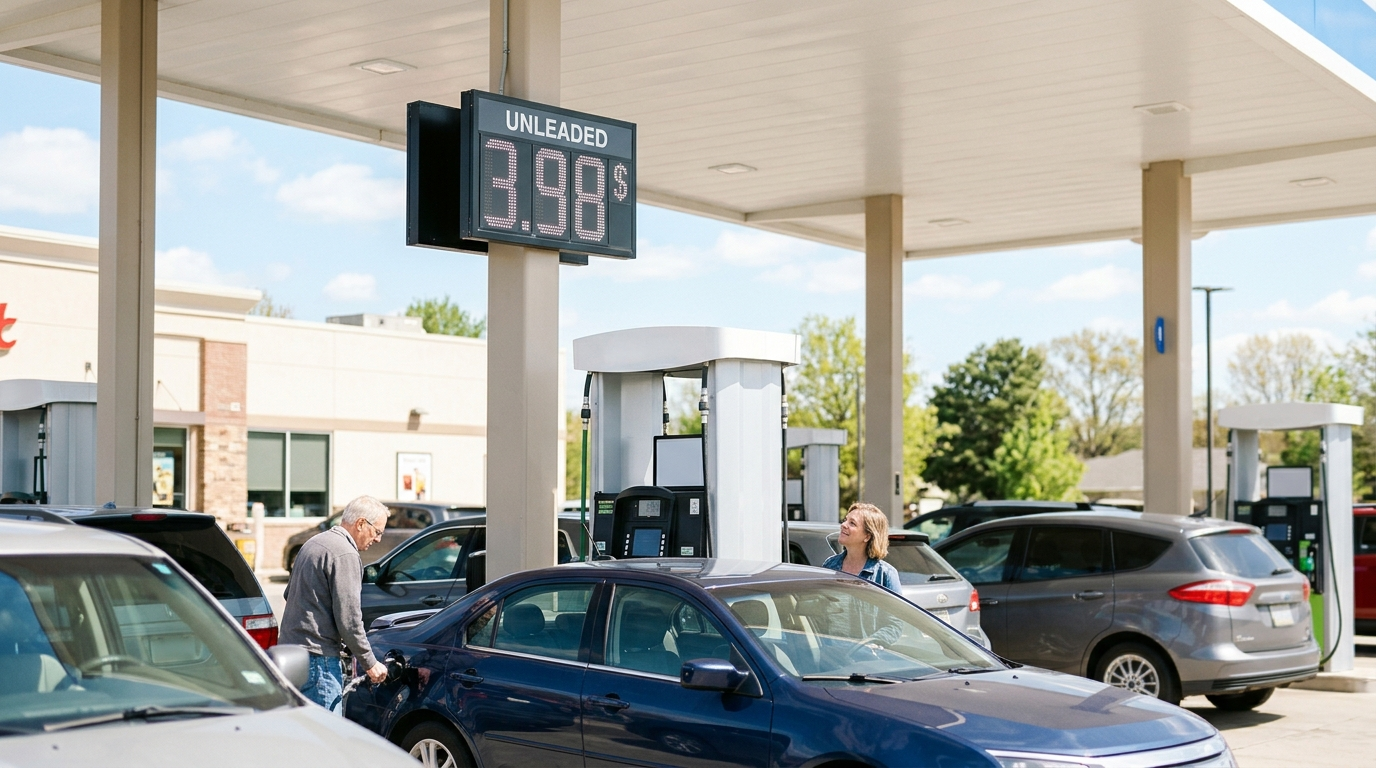
The average price of a gallon of gasoline fell below $4 this week for the first time in months, offering drivers some relief. The decline also raises a larger question: whether prices will keep falling or reverse course.
Crossing the $4 threshold carries practical and symbolic weight. Fuel remains a frequent expense for many households, particularly those with long commutes or limited access to public transportation.
Drivers Gain Modest Relief
A lower national average can reduce weekly costs, but the benefit varies by driver. People with larger vehicles or longer commutes tend to see the greatest savings.
Even small price changes can add up. A 10-cent decline saves $1.50 on a 15-gallon purchase. Repeated across several fill-ups, that reduction can create more room in a household budget.
However, a national average does not reflect every local market. Prices can differ sharply among states, cities and nearby stations. Taxes, transportation costs and regional fuel requirements all affect the amount displayed at the pump.
Why the Decline May Not Last
Gasoline prices depend on several forces, and many can change quickly. Crude oil prices are a major factor because oil is the main input used to produce gasoline.
Refinery operations also matter. Maintenance, equipment failures or severe weather can limit fuel production. Distribution problems may then push prices higher in affected regions.
Demand provides another source of uncertainty. Motorists often use more gasoline during busy travel periods. If demand rises faster than supplies, prices may increase even if recent trends have pointed lower.



- Crude oil prices can shift with global supply and demand.
- Refinery outages can reduce gasoline production.
- Seasonal travel can increase fuel consumption.
- Taxes and shipping costs create regional price gaps.
A Key Signal for Household Costs
Gas prices are especially visible because drivers encounter them on roadside signs. That visibility can shape how consumers view inflation and their own financial position.
Lower fuel costs may also ease expenses for companies that rely on cars and trucks. Delivery services, contractors and other mobile businesses can benefit when pump prices decline.
Those savings do not always reach customers immediately. Businesses may first use lower fuel expenses to offset increases in wages, equipment, rent or other operating costs.
What Drivers Should Watch
One week below $4 does not establish a lasting trend. A sustained decline would require favorable conditions across oil markets, refineries, fuel inventories and consumer demand.
Drivers should also compare local prices rather than rely only on the national figure. Regional averages and nearby station prices offer a clearer measure of the relief available to each household.
The move below $4 is welcome news, but it is not a guarantee of further declines. The next several weeks will show whether the drop marks lasting relief or a temporary pause. Oil prices, refinery capacity and travel demand will provide the clearest signals.