




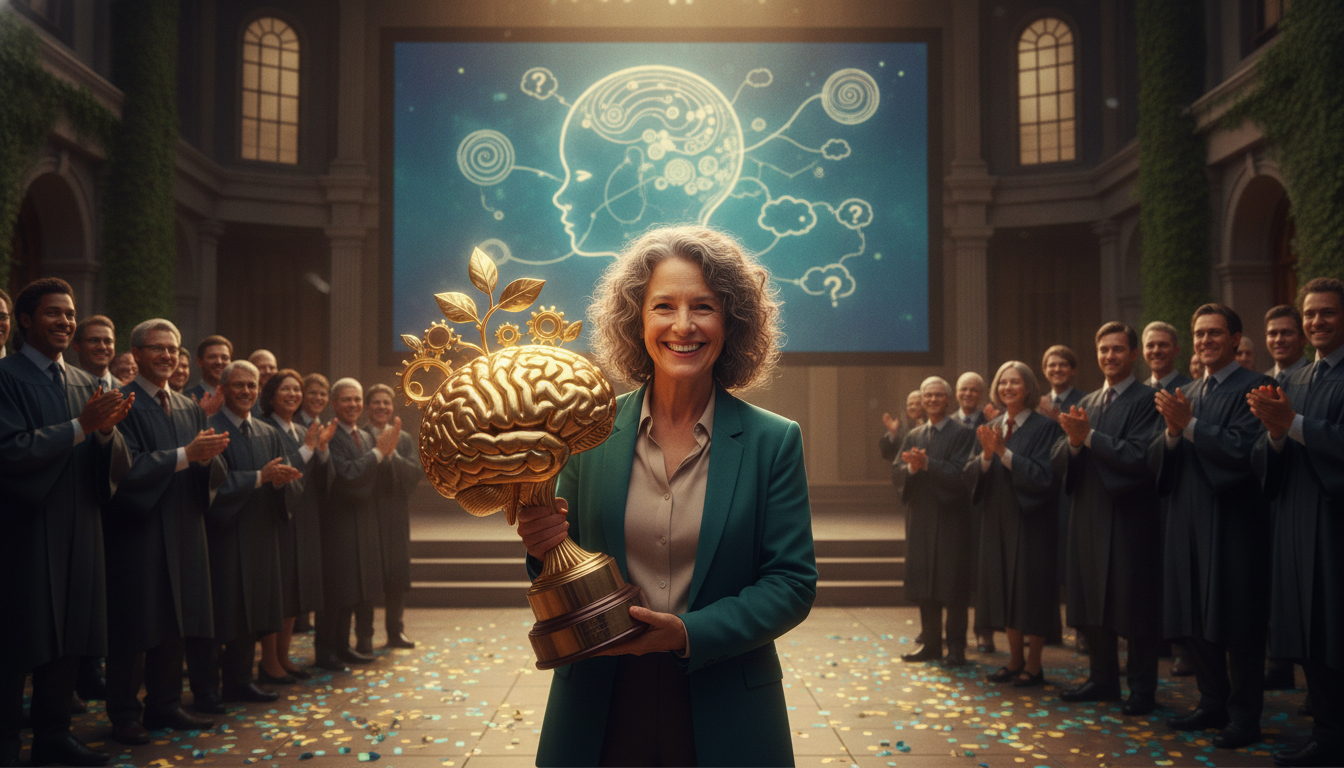
Alison Gopnik has won one of the field’s most prestigious honors, recognized as a Nobel Prize equivalent in cognitive science, for research on how children learn and what that reveals about human minds. The award highlights decades of work on early learning, curiosity, and how young children reason about the world. It also signals growing interest in applying developmental insights to education, caregiving, and technology.
Heralded as the Nobel Prize equivalent in cognitive science, Gopnik won for her research into how children learn and what they can teach us about ourselves.
Why This Award Matters
The prize draws attention to a simple but powerful idea. Children are not just small adults. They experiment, explore, and infer causes long before formal schooling. Gopnik’s work has shown that toddlers test hypotheses, track patterns, and use social cues to learn. This lens reframes early childhood as a period of active discovery rather than passive instruction.
The recognition also speaks to the reach of developmental science. Insights from studies with infants and preschoolers now inform classroom practice and caregiving. They also influence how computer scientists think about exploration, uncertainty, and flexible learning in machines.
A Shift From Instruction To Exploration
For years, education debates focused on direct teaching and practice. Developmental findings suggest a broader mix. Children thrive when adults provide rich materials, social interaction, and room to investigate. They learn language, causal rules, and social norms by observing and trying things out.
Many preschool programs have already moved in this direction. Play-based learning, guided discovery, and storytelling align with how young minds form theories about the world. The award brings fresh attention to these approaches and could spur new investment in early years research and teacher training.
Implications For Parents And Caregivers
Families often ask how to balance structure with freedom. Research celebrated by this award suggests a simple guide. Offer safe spaces, varied experiences, and responsive conversation. Let children pose questions and try solutions. Gentle scaffolding works best when it builds on a child’s curiosity rather than replacing it.
- Follow the child’s lead and interests.
- Model problem solving and reflection out loud.
- Invite explanations, not only correct answers.
- Value mistakes as information, not failure.
What It Means For Science And Technology
The recognition arrives as artificial intelligence draws on ideas from human learning. Children learn from small amounts of data, flexible goals, and social feedback. That differs from systems that depend on huge datasets. Developmental work highlights strategies like exploration before exploitation, causal reasoning, and learning from examples that do not have labels.
These ideas do not settle debates in AI. Some researchers favor models that mimic brain circuits. Others aim for practical performance with large-scale training. The award signals that studying how children learn remains a rich source of hypotheses for both camps.


Debates And Open Questions
Not everyone agrees on how to apply developmental science. Educators argue over how much structure to use in early grades. Policymakers weigh short-term test gains against long-term curiosity and creativity. Scientists disagree about how far lab findings extend to diverse homes and schools. The award does not end these debates, but it raises the stakes for careful, inclusive research.
Another question is how insights from young children translate to adolescents. Curiosity remains strong, but risk and reward change with age. Future work may chart when to shift from wide exploration to deeper practice. That research could guide middle school and high school reform.
A Career Shaping Public Conversation
Beyond the lab, Gopnik has helped bring research on children to a broad audience. Public writing and interviews have framed children’s questions as tools for growth. They have also offered parents and teachers practical ways to support learning without overcontrol. The award recognizes both scientific discovery and public impact.
The honor marks a clear message from cognitive science. Understanding how children learn can improve classrooms, caregiving, and even machine learning. The next steps will test how these ideas work at scale and in varied communities. Watch for new collaborations between scientists, educators, and technologists as this work moves from theory to daily practice.