





Stanford University is combining its Human-Centered Artificial Intelligence institute with its Data Science initiative, betting that larger research teams and academic openness can guide AI’s growing role in society.
Stanford HAI leaders James Landay, Fei-Fei Li, and John Hennessy presented the merger as a response to AI’s broad social impact. Their plan centers on shared research, work across academic fields, and open exchange among scholars.
A Push for Research at Greater Scale
The merger links two areas that already depend on each other. Modern AI systems learn from large amounts of data, while data science increasingly relies on AI to find patterns and produce forecasts.
Bringing the initiatives together could make it easier for researchers to share staff, computing resources, data, and methods. It may also connect technical experts with scholars studying health, education, law, economics, and public policy.
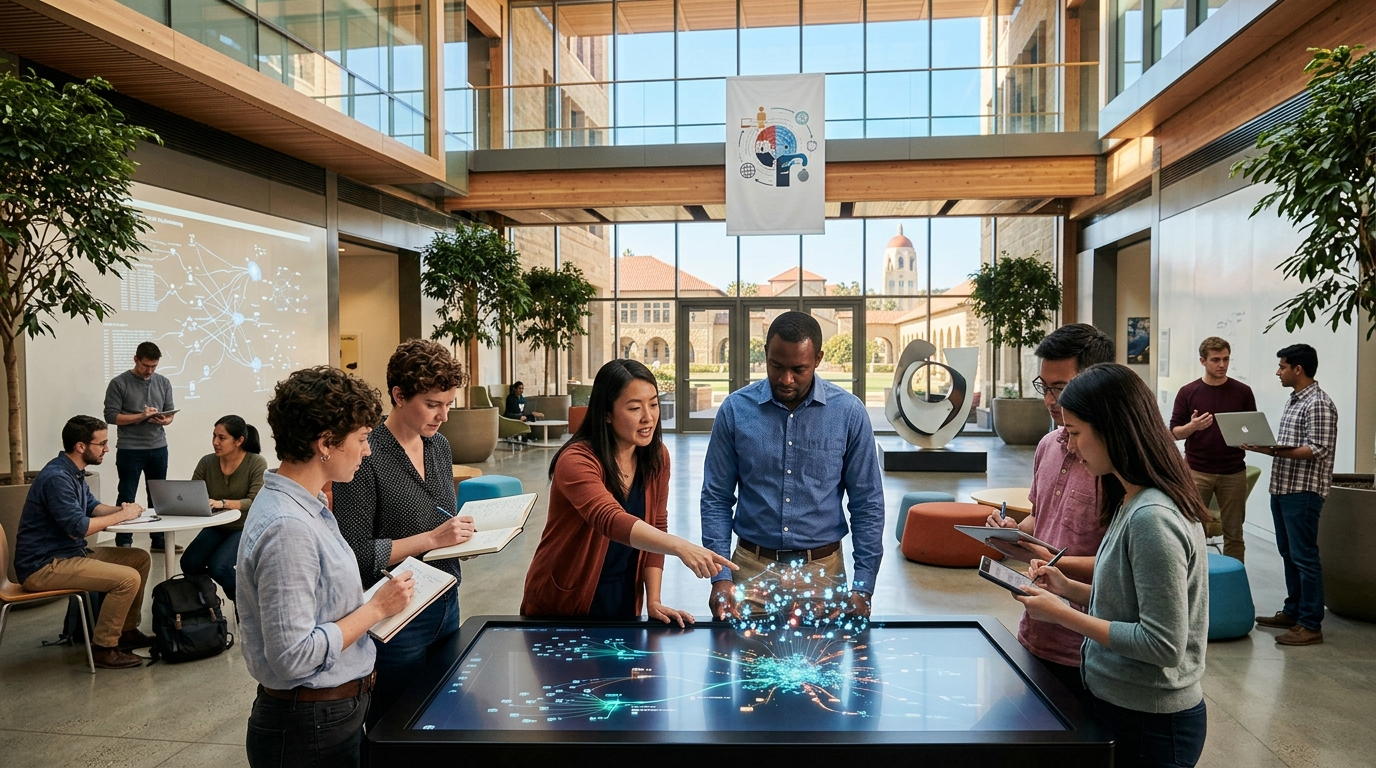
The leaders described the model as “team science at scale.”
That phrase signals a shift from small, separate research groups to larger teams built around common problems. Such teams can include computer scientists, social scientists, medical researchers, and ethics specialists.
This approach reflects the reach of current AI systems. Questions about model accuracy cannot always be separated from concerns about privacy, bias, labor, security, or access. A system may perform well in a laboratory yet create new problems when used in a hospital, classroom, or workplace.
Academic Openness as a Strategic Choice
Landay, Li, and Hennessy are also placing academic openness at the center of Stanford’s strategy. Universities have long relied on published findings, peer review, and debate to test research claims.
That model now faces pressure from commercial AI development. Private companies often control the largest models, computing systems, and training data. Some release detailed findings, while others limit access because of competition, safety, or intellectual property concerns.



Stanford’s wager is that open academic work can still shape how AI develops. Openness may allow researchers to check results, identify errors, and compare methods. It can also give policymakers and the public more information about systems that may affect daily life.
Yet openness carries difficult questions. Releasing code, data, or model details can support scientific review, but it may also create privacy and security risks. The merged initiative will need to define which materials should be shared and which require controls.
Why Human-Centered AI Still Matters
The combination could raise concerns that HAI’s human-centered mission may receive less attention inside a larger structure. Data science often focuses on measurement and prediction, while human-centered research asks who benefits, who bears the risks, and how systems affect institutions.
Keeping those questions central will be a key test of the merger. Its stated priorities suggest several goals:
- Build larger teams across academic departments.
- Connect AI development with social and policy research.
- Promote research that can be examined by other scholars.
- Study AI’s effects as adoption spreads across society.
The combined effort may also help Stanford compete for researchers and resources as universities face growing pressure from well-funded technology companies. Academic institutions cannot always match private-sector salaries or computing capacity. They can offer independence, cross-field collaboration, and public scrutiny.
Execution Will Determine the Merger’s Impact
The announcement sets a direction, but its effect will depend on practical decisions. Stanford must decide how projects are selected, how resources are divided, and how researchers from different fields receive credit.
Success will also depend on whether open research produces findings that reach industry leaders, government officials, and affected communities. Publishing results alone may not change how AI systems are built or used.
The merger reflects a clear judgment: AI has become too influential for isolated research groups. Stanford is responding with larger teams and a stronger link between technical work and human consequences. The next measure will be whether “team science at scale” delivers public knowledge while preserving careful oversight.