



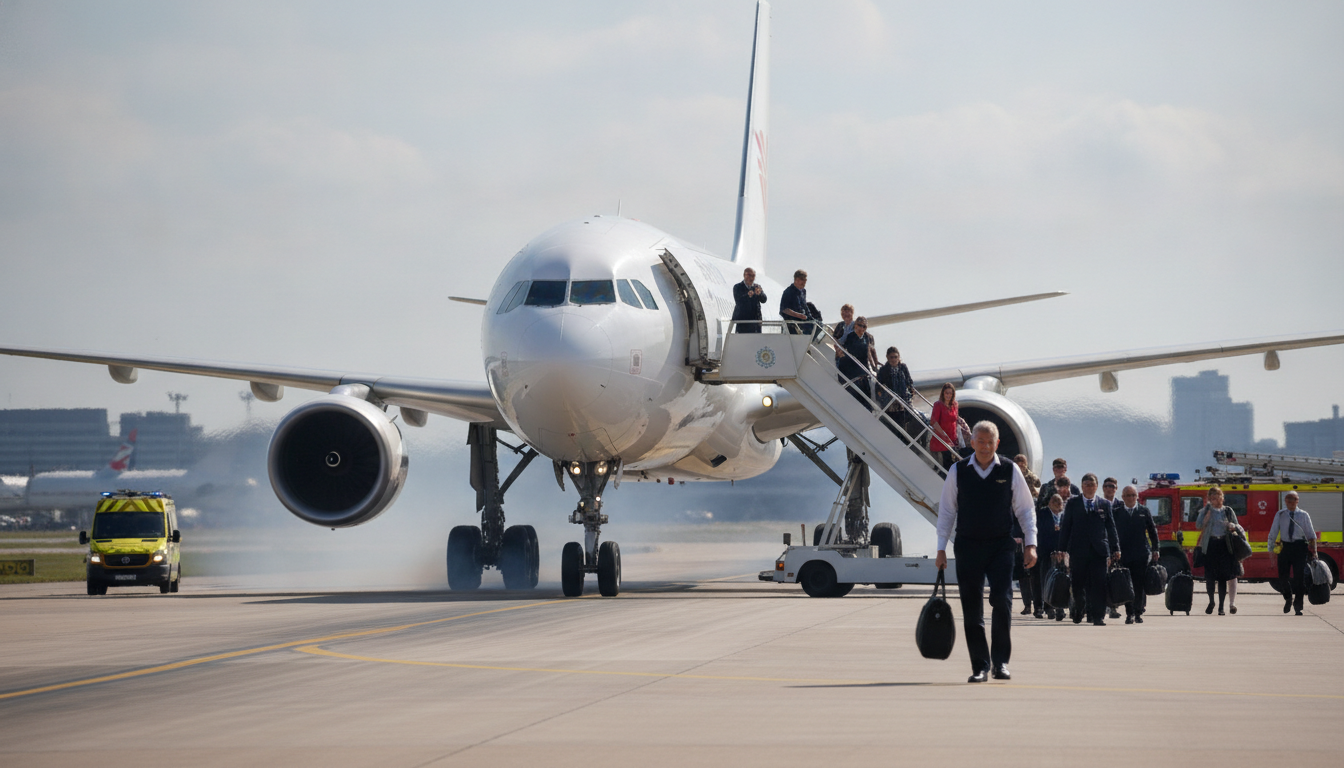
A commercial flight bound for London issued a distress call before landing safely at Heathrow earlier this month, drawing attention to emergency protocols that often work quietly in the background. Among the passengers was Edward Killiwick, whose experience has become a touchpoint for questions about aviation safety and how crews manage in-flight alerts. The aircraft touched down without incident, and no injuries were reported.
The brief episode highlights a familiar pattern in modern aviation. Crews act with caution, air traffic controllers prepare for contingencies, and flights often conclude safely even after an alert. The event also brings renewed focus to how distress calls are used and what they signal to crews, passengers, and ground responders.
What a Distress Call Signals
A distress call is a formal alert from the cockpit to air traffic control that the crew needs priority handling. It can indicate a range of issues, from sensor warnings and minor system faults to medical needs or external hazards. In most cases, aviation officials say such calls are precautionary. They are designed to ensure the aircraft receives quick routing, a clear runway, and emergency services on standby if needed.
Experts emphasize that modern aircraft are built with many layers of redundancy. Pilots are trained to report concerns early to protect passengers and crew. That can mean an unexpected landing or a request for priority arrival even when the situation remains contained on board.
Passenger Perspective
Edward Killiwick was on the flight that issued a distress call, before it landed safely at Heathrow earlier this month.
Passengers often learn of a distress call only after landing or through calm, limited announcements in the cabin. Airlines and crews aim to manage information carefully during tense moments to prevent confusion while they resolve the issue. Accounts from those on board can be brief, but they help confirm what officials stress routinely. Many alerts end with routine landings, followed by technical checks and a return to service if everything is verified.
Heathrow’s Emergency Readiness
Heathrow operates with dedicated procedures for in-flight alerts. When a pilot declares an emergency or makes a distress call, air traffic control coordinates with airport operations to clear a landing path and mobilize fire and medical teams. These teams often stage near the runway and remain on standby until the aircraft taxis to the gate or a remote stand. Most of the time, responders are not needed beyond observation.
The airport’s systems are built to manage multiple aircraft while preserving capacity for priority arrivals. That coordination is routine practice. It helps ensure that even on a busy day, a flight with an alert can land with minimal delay and proper support.
Safety Record and Context
Commercial aviation maintains a strong safety record, with very low rates of serious incidents. Distress calls are part of the safety net. They encourage early reporting, clear communication, and quick decision-making by pilots and controllers. Regulators encourage conservative choices in flight operations because those choices reduce risk even when the issue turns out to be minor.



Reasons for declaring a distress call vary. Common triggers include warning lights, smell of smoke reports, hydraulics alerts, or medical emergencies in the cabin. Many alerts are later traced to sensor faults or isolated technical issues that are corrected during maintenance inspections. The process is designed to favor caution over delay.
- Alerts prompt priority routing and an open runway.
- Emergency services stand by in case conditions worsen.
- Post-flight checks verify aircraft systems before the next departure.
What Happens Next
After any such event, airlines typically review cockpit recordings, maintenance logs, and crew reports. The goal is to identify the root cause and confirm whether further action is needed. If regulators require a report, it is filed and assessed to spot any patterns that might warrant technical guidance or added training.
For passengers, the key takeaway is that a distress call does not automatically mean severe danger. It signals a high level of caution and coordination. The flight in question landed safely, and standard checks likely followed, as is common after any alert.
The latest episode underscores how layers of training, engineering, and ground support come together when crews request special handling. As travel demand holds steady, observers will watch for any official summaries that shed light on what prompted the call and whether it suggests a maintenance trend. For now, the outcome reinforces a familiar message. Early reporting, disciplined procedures, and prepared responders help keep flights safe even when plans change midair.