




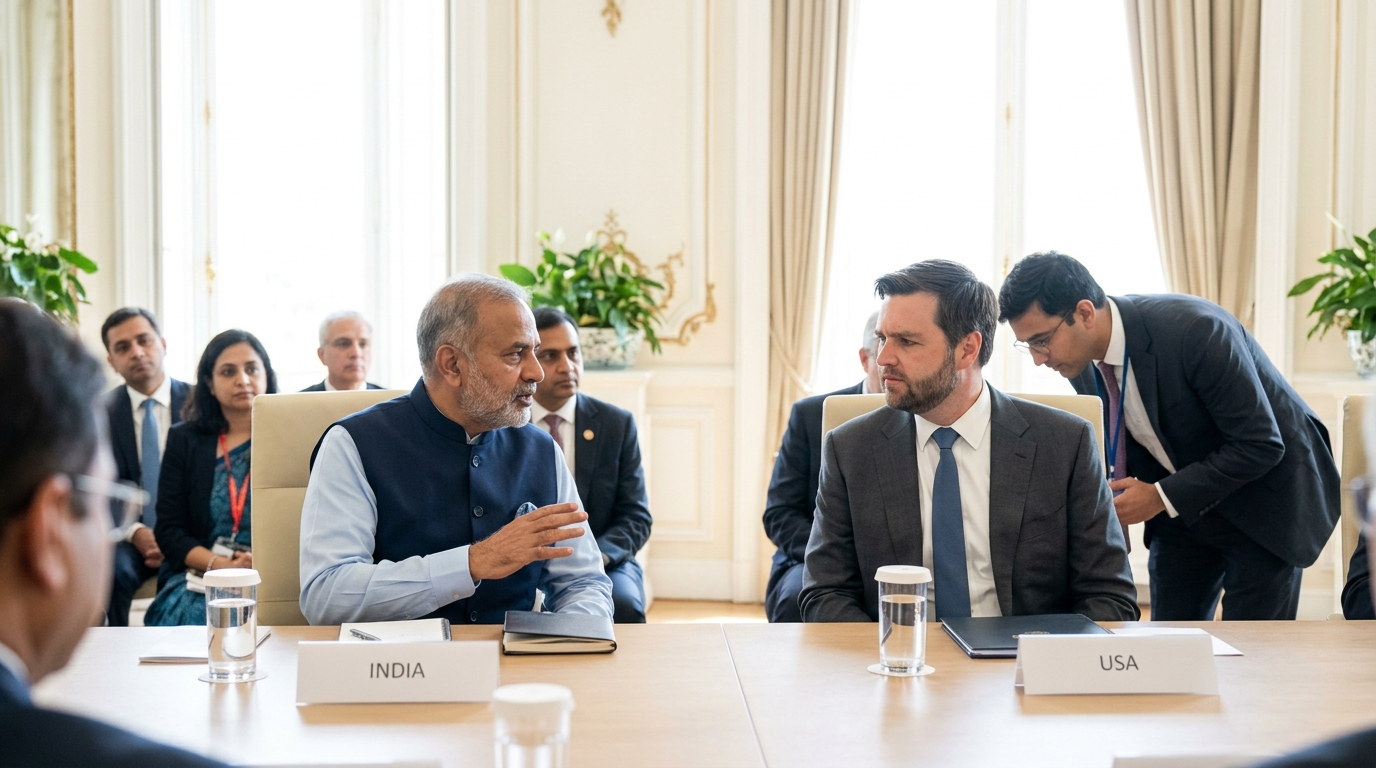
India has called comments by U.S. Vice President J.D. Vance about Indian immigrants “deeply offensive,” signaling fresh tension between two close strategic partners.
The criticism places immigration, a sensitive issue in U.S. politics, into the center of relations between Washington and New Delhi. It also raises questions about how political rhetoric may affect Indian communities in the United States.
New Delhi Issues a Sharp Rebuke
India’s response was direct and unusually strong. By describing the vice president’s remarks as offensive, the government made clear that it viewed them as more than a domestic political statement.
India called the comments “deeply offensive.”
The brief statement did not provide further details about possible diplomatic action. It also did not indicate whether Indian officials had raised the issue privately with the U.S. government.
Such public criticism can serve several purposes. It defends Indian citizens and people of Indian origin while asking U.S. officials to use care when discussing immigrant communities. It can also reassure audiences inside India that the government will respond to comments it considers insulting.
Immigration Meets Strategic Diplomacy
The dispute comes as India and the United States maintain close ties in defense, technology, trade and regional security. Both governments see their relationship as important for economic growth and stability in the Indo-Pacific region.
Indian immigrants also have a major presence in American business, medicine, research and education. Political comments about that community can therefore carry economic and diplomatic consequences.
At the same time, immigration remains a central dividing line in U.S. politics. American leaders often face pressure to address border security, legal migration and employment concerns. Statements made for a domestic audience, however, may be heard differently abroad.



The dispute highlights three issues for both governments:
- The treatment of Indian immigrants in U.S. political debate.
- The risk that domestic rhetoric could strain diplomatic ties.
- The need to separate policy disagreements from broad claims about national groups.
What the Response Could Mean
India’s language suggests that officials may seek clarification or a change in tone. Whether the disagreement grows will depend on Vance’s response and any follow-up from the White House or U.S. diplomats.
A public clarification could limit the damage. Silence or repeated comments could increase pressure on New Delhi to respond again, especially if the issue gains attention among Indian voters or the Indian diaspora.
The episode also tests the ability of both countries to manage disagreements without disrupting cooperation. Strategic partners often differ over visas, trade and human rights. Those disputes become harder to contain when they involve identity or perceived disrespect.
For now, India’s condemnation is the clearest development. The next signs to watch are any U.S. explanation, formal diplomatic discussions and reactions from Indian American groups. Those responses will show whether the dispute fades quickly or becomes a wider problem in bilateral relations.