



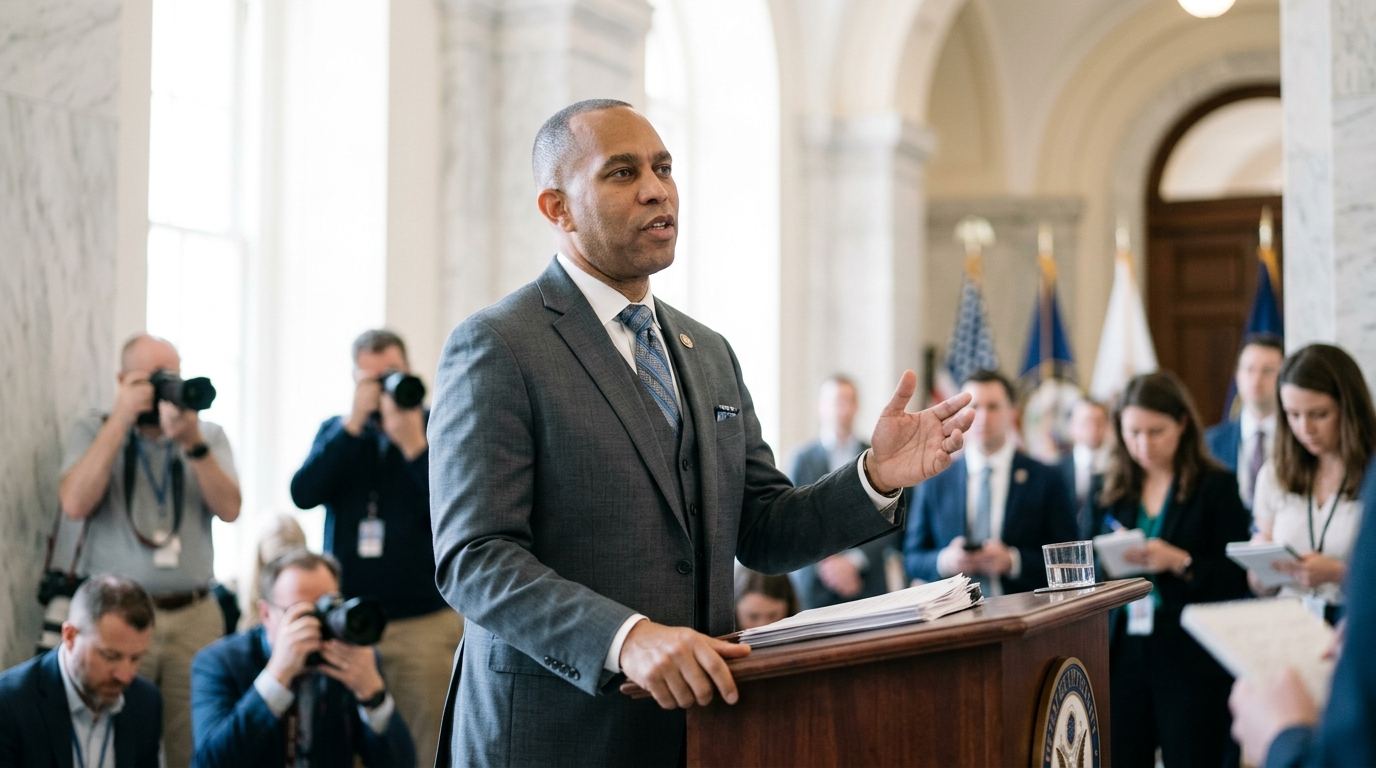
House Minority Leader Hakeem Jeffries addressed legislative priorities, economic concerns and Democratic messaging during a press availability on Capitol Hill, placing pocketbook issues at the center of his party’s public case.
The appearance gave the New York Democrat an opportunity to outline the House minority’s focus as lawmakers face decisions affecting federal policy and the economy. It also reflected Jeffries’ role as the chief spokesperson for House Democrats during negotiations and partisan debate.
Economic Concerns Shape the Agenda
Economic conditions remain a central test for congressional leaders. Household costs, wages, employment and federal spending can influence both legislative negotiations and voter opinion.
By addressing economic concerns, Jeffries linked congressional action with the financial pressures facing families. However, the availability did not provide detailed proposals, cost estimates or legislative timelines.
That lack of detail leaves several questions for future briefings and committee work:
- Which economic measures House Democrats will prioritize.
- How the party proposes to fund its plans.
- Whether any proposals could gain bipartisan support.
- When legislation might receive committee or floor action.
The answers will help determine whether Democratic messaging develops into legislation or remains part of a broader political argument.
A Minority Leader’s Legislative Challenge
As minority leader, Jeffries cannot independently set the House floor schedule. That power generally rests with the majority party and House leadership.
House Democrats can still shape debate through committee work, procedural votes, public pressure and negotiations. Their votes may also become decisive when the majority cannot unite behind a bill.



This gives Jeffries two connected tasks. He must keep Democratic lawmakers aligned while identifying areas where negotiations could produce results. At the same time, he must explain the party’s position to voters in clear economic terms.
Press availabilities are one tool for that work. They allow congressional leaders to respond quickly to developments, reinforce policy themes and draw attention to disputes with the opposing party.
Messaging Points to Coming Debates
Jeffries’ discussion of party messaging showed that the appearance was not limited to policy. It also concerned how Democrats plan to frame upcoming legislative fights.
Effective messaging can influence which issues receive attention, but it does not replace legislative action. Specific bill language, budget effects and votes will offer clearer measures of the party’s priorities.
Republicans may challenge Democratic economic arguments on spending, taxes and regulation. Democrats, in turn, are likely to judge proposals by their effects on workers and household expenses. Those competing views could define negotiations over major fiscal measures.
What Comes Next
The next indicators will come from legislation, committee activity and negotiations with House leaders. Public statements may establish a position, but congressional outcomes depend on vote counts and compromise.
Jeffries’ Capitol Hill appearance reinforced his position as the leading voice for House Democrats. It also kept attention on economic policy as a major part of the party’s agenda.
The central test is whether those priorities lead to detailed proposals and measurable action. Future votes will show where cooperation is possible and where partisan divisions remain firm.