




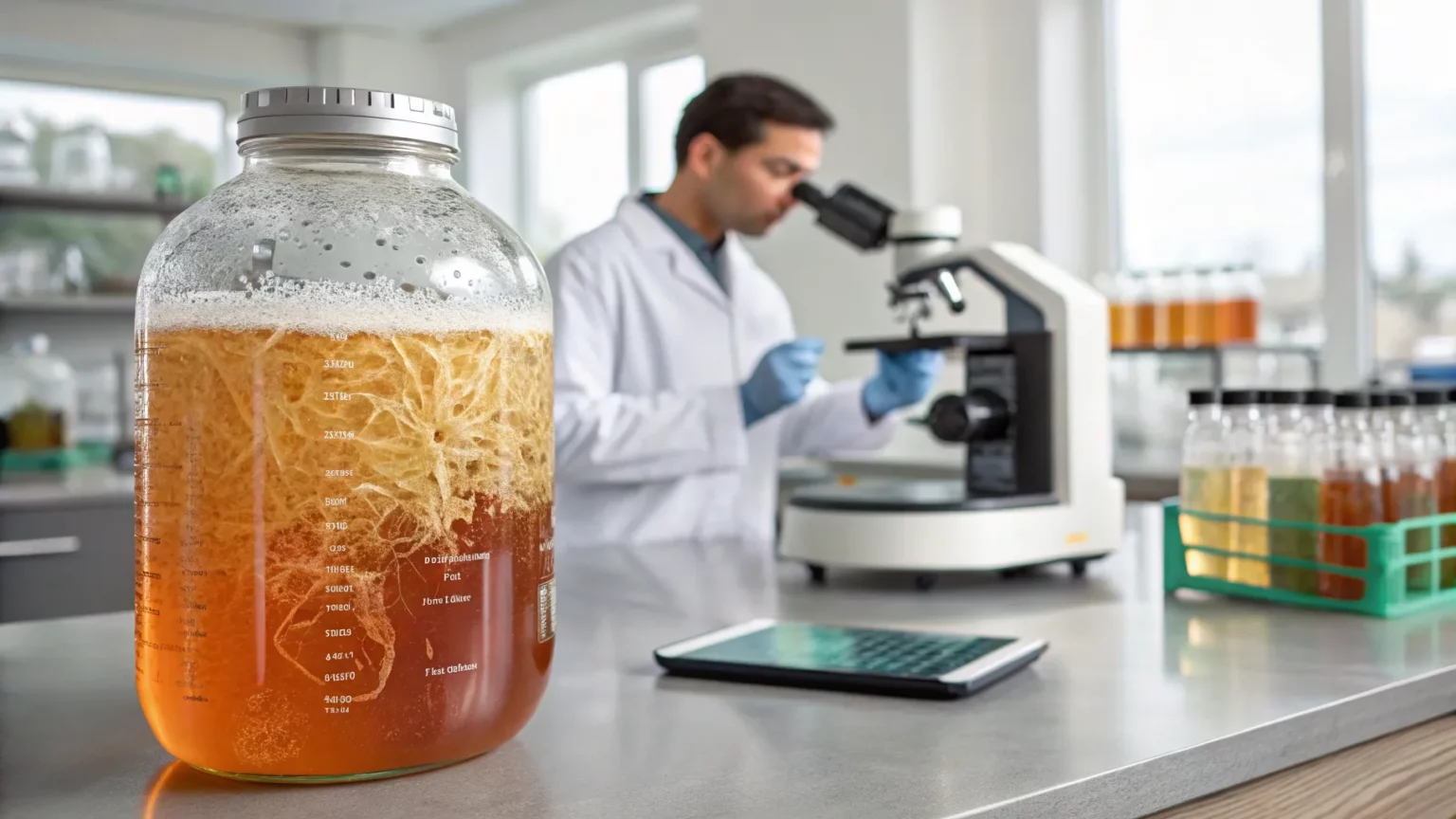
A humble tea drink may hold answers for cleaner tech. In a recent discussion, speakers highlighted how kombucha fermentation yields a material suited for mechanically stable, biodegradable electronics. The claim points to a growing push to cut electronic waste and find safer materials. Researchers say the process can happen at room temperature and uses common ingredients, making it attractive for labs and startups alike.
The core idea is simple. Ferment tea with a culture, and the microbes spin a tough, flexible sheet. That byproduct can act as a base for circuits or sensors. It breaks down under the right conditions. Yet it holds together during use.
“Kombucha fermentation generates a byproduct perfect for the creation of mechanically stable, biodegradable electronics,” a speaker said.
Background: From Kitchen Jar to Circuit Substrate
Kombucha brewing produces a thick mat at the liquid’s surface. Makers call it a SCOBY. Scientists describe it as bacterial cellulose. It is strong, lightweight, and formed from sugar by microbes. When dried, it becomes a smooth film. It can be cut, layered, or molded.
Cellulose has a long history in materials science. It comes from plants and microbes. It is renewable and can be composted under the right conditions. That appeals to engineers who need flexible supports for electronics. Traditional plastic substrates last for decades in landfills. Cellulose does not.
Global concern over e-waste is rising. Devices are cheaper and replaced often. Many parts contain plastics and metals that are hard to recycle. A biodegradable base could trim the footprint of wearables, patches, and single-use sensors.
What Makes the Kombucha Film Different
Speakers pointed to three traits that matter for device makers. First, mechanical strength. The film resists tearing but bends easily. Second, processability. It can be dried in sheets and laser cut. Third, biodegradation. It can break down under composting or soil conditions, leaving fewer long-term residues.
- Strength: Withstands handling and bending during assembly.
- Compatibility: Accepts inks, coatings, and adhesives used in printed electronics.
- End-of-life: Designed to degrade with less persistent waste.
The material is not a conductor on its own. It serves as the base. Conductive paths can be added with carbon inks, metal nanoparticles, or thin metal films. Sensors, antennas, and simple circuits are early targets. Low-power devices are the best fit today.
Potential Uses and Early Prototypes
Several near-term uses stand out. Disposable health patches could use the film as a skin-friendly base. Food packaging could host freshness sensors that compost with the box. Environmental monitors might be placed in soil and left to degrade after data collection.


Education is another area. Schools could brew the film in class and build simple circuits. This lowers material costs and shows students how biology and electronics meet.
Wearable devices face tougher tests. Sweat, heat, and flexing can strain materials. The kombucha film’s water sensitivity must be managed with coatings. Still, the path is clear for simple, short-life products.
Challenges: Conductivity, Coatings, and Scale
Experts caution that many hurdles remain. Conductive inks may use metals that do not degrade well. Replacing them with carbon or zinc can reduce impact but may cut performance. Protective layers help devices last, yet some coatings slow biodegradation. Engineers must balance durability with end-of-life goals.
Humidity control is another issue. Cellulose absorbs water. That can change size and shape. It can also affect sensor readings. Barrier layers and cross-linking treatments help, but they add steps and cost.
Scaling supply is possible but not trivial. Consistent sheet thickness and purity matter for electronics. Homebrewed batches vary widely. Industrial fermentation can improve uniformity, but it needs quality control and careful sourcing.
Why It Matters for Industry and Policy
Companies see value in greener materials as regulations tighten. Biodegradable bases could help meet new rules on packaging, medical waste, and single-use plastics. They also offer a marketing edge for brands selling sustainable devices.
Public agencies may support trials in healthcare and environmental monitoring. Pilots could test compostable sensors in farms, city parks, or clinics. Results would guide standards on durability, safety, and disposal.
Investors are watching for low-cost manufacturing. If production aligns with printed electronics, adoption could move fast. Partnerships between fermentation labs and electronics firms will be key.
What Comes Next
The path forward includes better inks, safer dopants, and smarter coatings. Testing must cover sweat, UV light, and repeated bends. Researchers also need clear compostability data for full devices, not just the base film.
Open-source methods could speed progress. Recipes for growth, drying, and post-processing would help small teams replicate results. Shared benchmarks would allow fair comparisons across labs.
The promise is a cleaner class of devices that work when needed and then break down. That would reduce waste without sacrificing function.
The comment from the discussion sets the tone: kombucha’s byproduct may bridge biology and electronics in a practical way. If the materials meet performance and safety goals, expect early products in packaging, education, and simple health tools. The next year will likely reveal whether this tea-based film can move from jars to factory lines.