



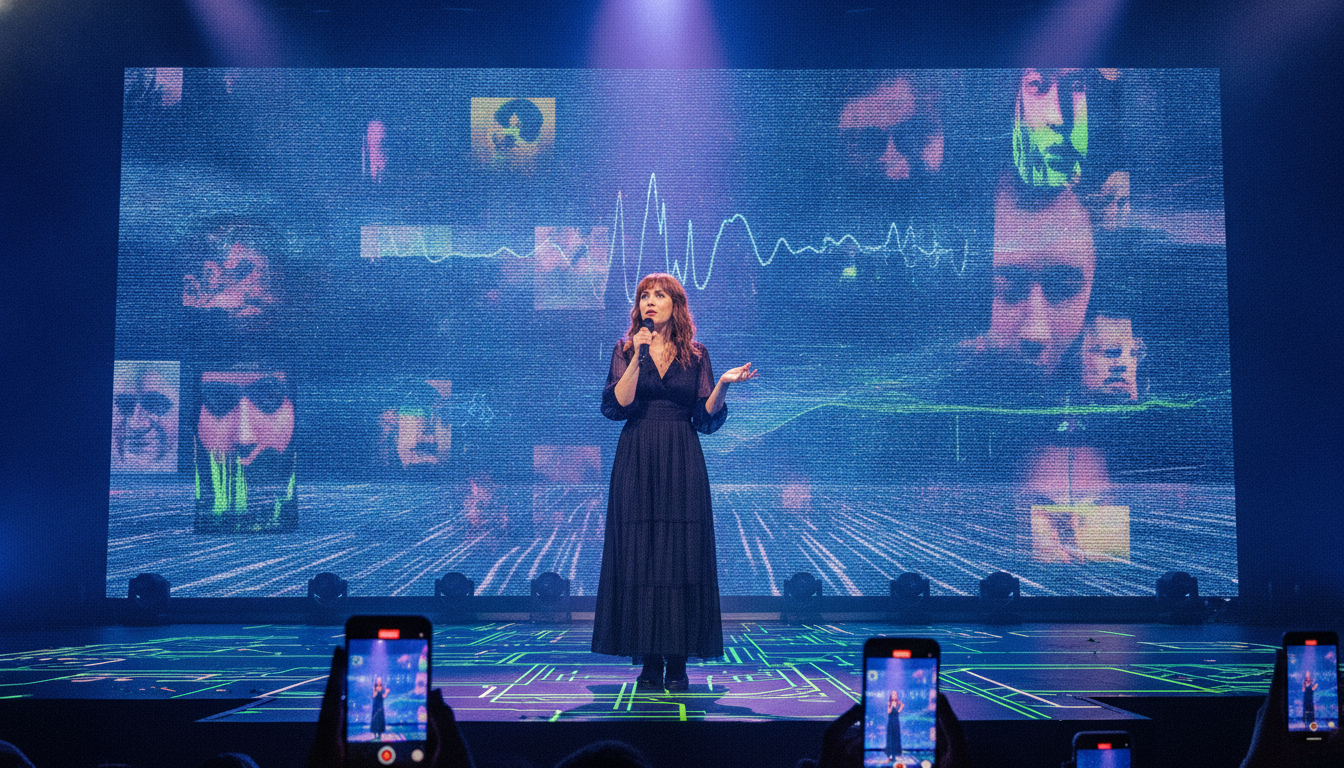
A brief onstage remark from New Zealand singer Lorde tapped into a rising public worry about truth and authenticity online. During a recent appearance, she reflected on the difficulty of knowing what is real, speaking to fans at a moment when altered audio, edited video, and AI tools are changing how people see and hear the world.
The comment struck a nerve because it meets a broader debate over digital trust. Artists, platforms, and audiences are struggling with fast-moving tools that can copy voices, faces, and styles. The question is not only what is true, but how people can tell in the first place.
A Pop Star Confronts a Familiar Anxiety
“Increasingly in our world, it gets harder and harder to know what is real,” Lorde said on stage.
Lorde’s observation aligns with concerns that have grown across music and media. Fans now encounter clips that look and sound convincing but are stitched from older footage, edited for effect, or generated by software. For an artist known for careful storytelling, the idea of what is real matters both to her work and to the bond with listeners.
Public figures often carry the weight of this change. A stray phrase or image can be repackaged and shared millions of times, stripped of context. The result is a blur between performance and documentation, between a private moment and a viral post.
Background: From Misinformation to Synthetic Media
Concerns about false information online predate the recent wave of AI tools. For years, researchers and newsrooms have tracked how rumors and edited clips move through social feeds faster than corrections. The rise of realistic voice cloning and face-swapping has added a new layer. What once took movie-level budgets now sits inside consumer apps.
Music is not immune. Short audio samples can be reshaped to mimic a singer’s tone. Visuals can be tweaked to place a performer in scenes that never happened. Even when labeled as fan-made, such media can travel far beyond its original context.
How Audiences Try to Tell Fact From Fiction
Media literacy groups urge simple checks before sharing content. People can look for original sources, time stamps, and full versions of a clip. Reverse image or audio searches can show whether a file appeared earlier in a different form. These methods are far from perfect, but they offer a starting point.
- Check for the earliest posting and original uploader.
- Search for consistent details like venue, date, or setlist.
- Look for platform labels that mark altered or synthetic content.
Fans also depend on trusted channels from the artist, such as official accounts or verified tour partners. Clear communication can reduce guesswork when rumors spread.


Industry and Platform Responses
Labels, managers, and streaming services are debating how to protect artists while allowing creative remix culture. Some platforms have announced or tested labels for AI-generated media. Others provide tools for rights holders to report impersonation or misuse. These efforts vary, and enforcement remains a work in progress.
Policy discussions are moving as well. Lawmakers in several countries are weighing rules for synthetic media, including notice requirements and penalties for harmful fakes. Civil society groups argue that guardrails should protect speech while discouraging fraud and defamation.
Artistic Identity in a Shifting Medium
For performers, authenticity is both a value and a brand promise. The challenge is how to keep that promise when audience feeds contain a mix of studio work, live moments, fan edits, and AI imitations. Some artists release behind-the-scenes material to show process. Others choose sparse posting to avoid noise.
The tension can be productive. Artists may experiment with new formats while setting clear lines about what carries their name. Fans can become partners in verification, asking where a clip came from before it shapes perception.
What to Watch
The next year will test whether platform labels, media literacy, and legal tools can curb confusion. It will also test how artists communicate during tours, album cycles, and viral storms. Audiences will likely continue to reward clarity, context, and direct messages from trusted sources.
Lorde’s brief statement captured a widespread feeling. The path forward will depend on many small practices that add up. Better signals from platforms, stronger norms in fan communities, and open communication from artists can help people decide what is real, and what is not.