




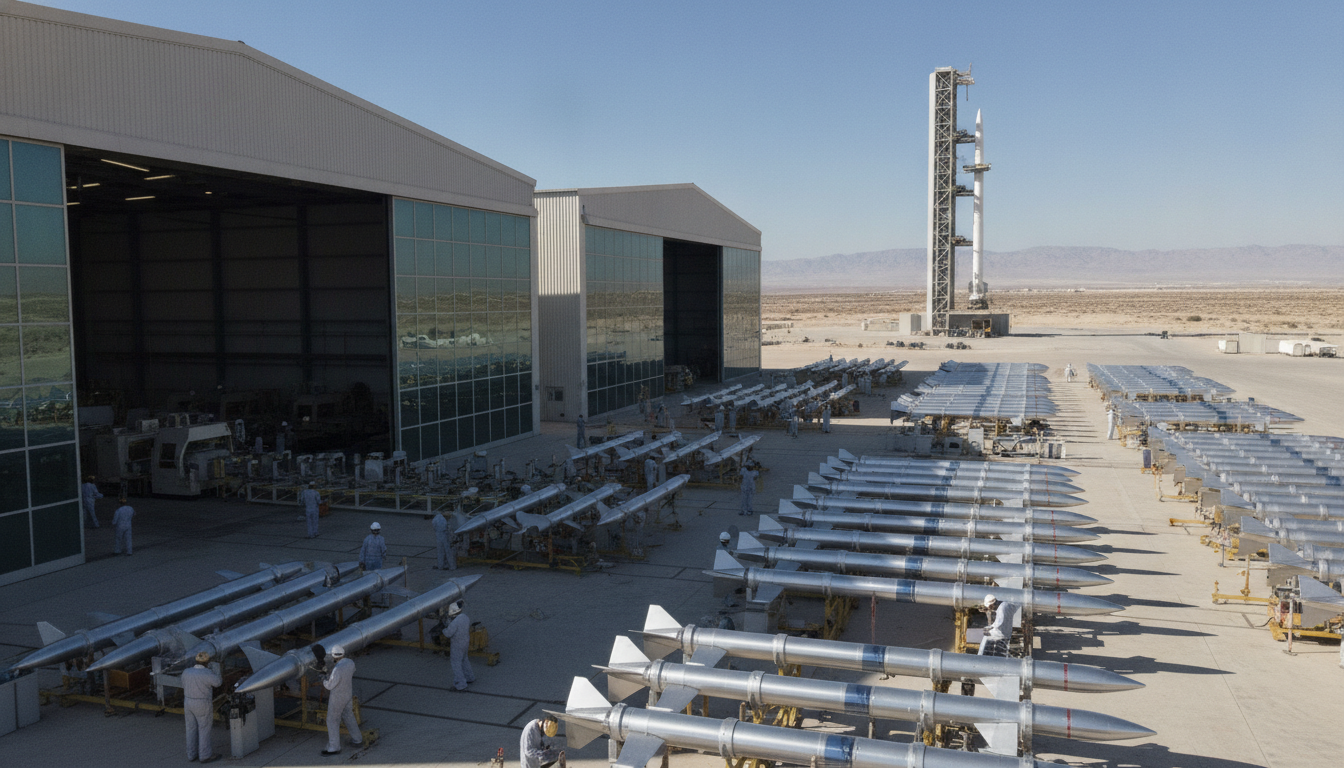
Israel plans to increase production of its top ballistic missile interceptor, moving to meet rising security needs at home and abroad. The decision comes as militaries seek more defenses against long-range threats, from the Middle East to Europe and the Red Sea. It reflects a global push for proven missile defense systems after a year of record interceptions and expanding alliances.
The move centers on the Arrow family of interceptors, designed for high altitude defense against ballistic missiles. Israel Aerospace Industries leads production, with support from the Israeli Ministry of Defense and American partners. Recent sales and joint programs, including with European allies, have put fresh pressure on manufacturing lines and supply chains.
Why Production Is Rising Now
Missile and drone attacks have surged across several regions. Israel has faced repeated launches from Iran-backed groups. Naval forces have intercepted missiles fired over the Red Sea. Russia’s war in Ukraine has also driven new demand for air and missile defense across Europe.
Against this backdrop, the core message is direct:
“Israel plans to ramp up production of its top ballistic missile interceptor. These kinds of munitions are in high demand globally.”
Officials have not released exact numbers, but the emphasis is on faster output and more export capacity. Production increases are expected to prioritize interceptors like Arrow 3, which is designed to engage threats outside the atmosphere, and Arrow 2, which covers lower layers.
Background and Recent Deals
Israel’s multi-layered defense includes Iron Dome for short-range rockets, David’s Sling for medium-range threats, and the Arrow system for ballistic missiles. The layers have intercepted hundreds of threats in recent conflicts, which has reinforced foreign interest in similar setups.
Germany signed a multibillion-euro agreement to buy Arrow 3 in 2023 as part of a broader European air defense effort. The program is backed by U.S.-Israeli cooperation, with American funding over decades and U.S. industry participation. Deliveries to Germany are slated to begin mid-decade, subject to final approvals and production milestones.
Defense analysts say these orders, plus inquiries from other European and Asia-Pacific countries, have stretched timelines. Suppliers of advanced sensors, solid-propellant motors, and high-grade composites are operating near capacity. That has made coordinated planning between Israel and U.S. partners more important.



Drivers of Global Demand
- More ballistic missile tests by regional powers.
- Conflict-driven urgency in Europe and the Middle East.
- Naval air defense needs along major trade routes.
- Allied efforts to align missile defense architectures.
European governments are revising air defense plans after large-scale strikes in Ukraine. Gulf states continue to acquire systems to counter Iranian missiles. East Asian militaries are upgrading defenses to address growing regional tensions. Each factor points to sustained orders through the decade.
Cost, Capacity, and Export Controls
Interceptors are expensive, and stockpiles can deplete quickly during crises. Building new missiles is slower than firing them. That mismatch has sparked debate over budgets, industrial policy, and how to share costs among allies.
Export approvals also matter. The U.S. played a role in authorizing the Germany sale of Arrow 3 because of joint development. Similar reviews will apply to future deals. Supply chain bottlenecks, especially in microelectronics and rocket motors, may limit how fast production can rise.
Analysts warn that timelines must be realistic. Training, site preparation, and integration with local command networks take time. Countries buying strategic interceptors need layered defenses, secure communications, and reliable radar coverage to get full value from the systems.
What Expanded Production Could Mean
For Israel, higher output supports national defense while opening bigger export markets for IAI and partner firms. For allies, it offers a quicker path to modern missile defense and more shared technology across NATO and regional coalitions.
Industry executives expect long-term service agreements, joint training centers, and stockpile prepositioning to follow new contracts. If production goals are met, deliveries could shorten by several months, easing the current backlog.
Critics caution that interceptors alone are not a full solution. They argue that diplomacy, sanctions enforcement, and technology controls are needed to curb missile proliferation. Supporters counter that defensive layers save lives and deter strikes while policy measures evolve.
Israel’s plan to expand output sets the stage for a busy period in missile defense. The central questions now are how quickly factories can scale and how governments balance urgent orders with careful export rules. Watch for new joint production announcements, further European purchases, and updates on delivery schedules over the next year.