



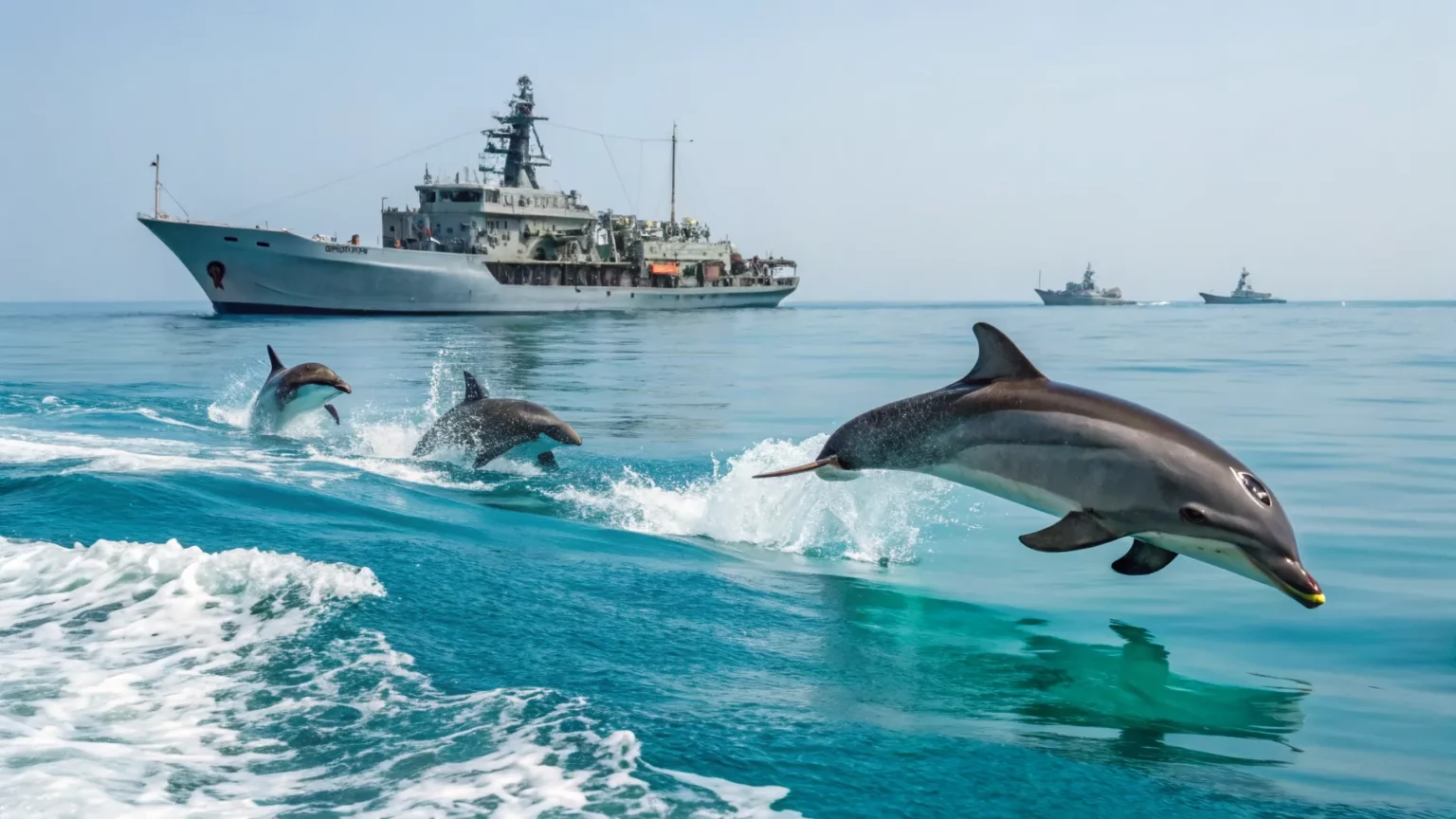
Several militaries have trained dolphins to work in conflict zones, using their natural skills for defense and search tasks rather than as weapons. The practice, used by the United States and others, resurfaces whenever tensions rise near strategic waterways. It raises questions about effectiveness, ethics, and how far armed forces should go to secure ports and shipping lanes.
“Several countries, including the U.S., have a history of using dolphins in conflict areas, though not as weapons.”
The approach places dolphins near harbors, naval bases, and choke points. They help detect hazards that threaten ships and divers. Officials argue the animals can do jobs that machines still struggle with in murky or cluttered waters.
Background: How Militaries Use Marine Mammals
The U.S. Navy’s long-running Marine Mammal Program is the most visible example. Based in California, it has trained bottlenose dolphins and sea lions for mine detection and object recovery. During conflicts and major events, teams have been sent to secure ports and clear channels.
Supporters point to the animals’ sonar-like abilities and agility. Dolphins can locate small metallic objects and signal handlers, helping divers or robots map threats faster. Sea lions are known to tag suspicious items so divers can retrieve them safely.
Other countries have reported similar efforts, though details are often limited. The secrecy reflects concern for security and for the animals’ safety.
Operations: Tasks, Tools, and Limits
Militaries say dolphins do not carry explosives or attack people. Instead, they alert human teams or mark targets. Handlers guide missions from boats and track animals with noninvasive gear. Typical assignments include mine-hunting, guarding harbor entries, and locating lost equipment.
- Mine detection in shallow or cluttered waters.
- Patrols to deter intrusions near sensitive sites.
- Recovery of training mines and test items.
Despite advances in undersea drones, commanders still rely on animals in some conditions. Low visibility, heavy sediment, and complex debris fields can defeat sensors. Dolphins navigate these spaces with speed and accuracy, according to program summaries and past mission briefings.
Ethical Debate and Legal Questions
Animal welfare groups argue that wartime tasks expose dolphins to stress and danger. They question whether informed consent is possible for sentient animals. Critics also worry about transport, noise, and long training cycles.



Military officials counter that veterinary care is extensive and daily routines prioritize health. They say missions are designed to keep animals away from direct harm. They also note that rules prohibit using dolphins as weapons.
Legal scholars point to domestic animal protection laws and the law of armed conflict. The key issues involve humane treatment and avoiding unnecessary suffering. Clear oversight and transparent standards can build trust, advocates say.
Effectiveness and Emerging Technology
Case studies from past port security missions suggest mixed outcomes. Dolphins have helped locate difficult targets and sped up clearance. Yet their deployment can be slow to scale, and weather can limit use.
Autonomous underwater vehicles have improved, shrinking the gap in performance. New sonars map seafloors with detail that once required trained animals. Still, commanders keep animal teams as a hedge for high-risk situations where the cost of a miss is high.
Analysts expect hybrid models to grow. Animals may handle initial sweeps, with drones validating finds. Over time, better sensors and AI could reduce reliance on marine mammals, especially for routine patrols.
Competing Priorities: Security, Welfare, and Transparency
Public support often depends on three factors. First, a clear and limited mission focused on defense. Second, strong welfare standards with independent review. Third, regular reporting on outcomes without revealing sensitive tactics.
Program leaders suggest they meet those tests through veterinary care and careful mission planning. Critics want more independent access and published metrics on stress and exposure.
The renewed attention on dolphins in conflict zones highlights a long-standing tradeoff. Militaries seek reliable tools to protect ships and ports. Animal advocates seek stricter limits and better oversight. As undersea drones improve, use of trained dolphins may narrow to the hardest jobs. Policymakers will watch whether technology can fully replace animals while keeping waters safe.