



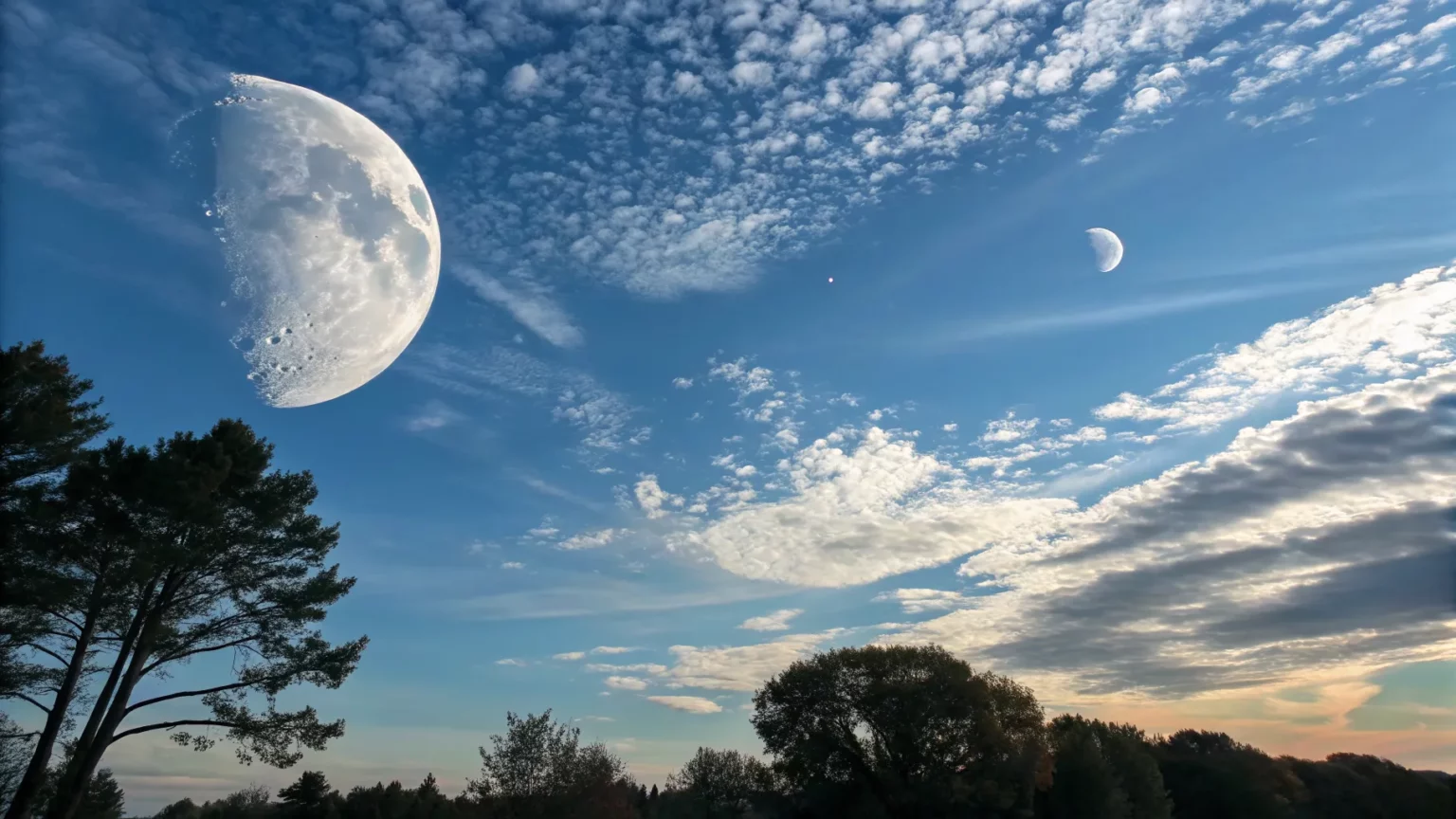
On Wednesday, June 17, the moon will slide in front of Venus and hide it from view, creating a brief daytime occultation that skywatchers can try to see safely. The rare pairing will unfold in daylight and will be visible only from certain locations, with exact timing depending on where viewers are. The event is noteworthy because Venus is usually hard to spot in the day, yet it can appear as a bright “star” when conditions are right.
What Is Happening
An occultation occurs when one object passes in front of another and blocks it from sight. In this case, the moon will pass between Earth and Venus. For observers in the right place at the right time, Venus will vanish behind the lunar disk and then reappear on the other side.
“On Wednesday (June 17), the moon will pass between Earth and Venus, causing the hellish planet to temporarily disappear from the daytime sky.”
Because the moon and Venus are near the sun in the sky, the event unfolds in daylight for many regions. Visibility will vary widely by latitude and longitude. In some areas, people may only see a close conjunction, not a full occultation.
Background and Context
Occultations of Venus by the moon happen several times a year, but each one is only visible from a slice of Earth. The moon’s distance and orbital tilt mean the path of visibility shifts from event to event. Daytime sightings of Venus are less common because the bright sky washes out faint objects. However, Venus can still be seen when it is high above the horizon and not too close to the sun’s glare.
A typical occultation lasts from minutes to about an hour for any given location. The disappearance often happens at the moon’s dark limb, making Venus fade quickly. Reappearance may occur at the bright limb, which can be trickier to catch against the glare.
How to Watch Safely
Safety is the top concern for a daytime event near the sun. Observers should take extra care with any optical aid, as a brief mistake can cause eye injury.
- Never look at or near the sun with binoculars or a telescope without certified solar filters.
- Find the moon first with the naked eye. Only if the sun is well away from your field of view should you consider optics.
- Use a building, tree, or other structure to block the sun from view while you locate the moon.
- Check local times from a trusted source, such as a planetarium app or an observatory website.
The safest approach is to observe with the unaided eye once the moon is located. Venus may pop into view as a tiny bright point near the lunar edge. A clear, haze-free sky helps a lot.
What It Will Look Like
Before the event, the moon will sit close to Venus in the daytime sky. As the moment approaches, Venus will appear to touch the moon’s edge and then slip behind it. The scene can look surreal, as a bright point blinks out against the lit sky. Reappearance on the opposite side can be sudden. Timing between disappearance and return depends on where a viewer stands on Earth and the track of the moon’s limb.



“Here’s what it will look like, exactly when it is happening, and how you can safely view this skywatching spectacle.”
Why It Matters
Such events provide a simple lesson in orbital motion. The moon moves its own width across the sky in about an hour, fast enough for viewers to notice. Venus, though far away, appears to shift slowly from day to day. An occultation shows how these motions line up for a brief window.
For amateurs, the event offers a chance to test daylight observing skills. For educators, it is an easy way to explain why the inner planets often appear close to the sun and why some events are visible only from specific regions.
What to Watch Next
If clouds spoil the view, there will be more chances. The moon regularly passes near bright planets. Some passes produce occultations, while others result in tight pairings after sunset or before dawn. Checking monthly sky charts can help plan the next attempt.
As Venus moves along its orbit, its brightness and distance from the sun in the sky change. Future months may bring evening or morning apparitions that are easier to see, offering longer views in a dark sky.
The June 17 occultation is brief, delicate, and best approached with care. With smart planning and strict eye safety, observers in the right place can watch a bright planet vanish in daylight and return minutes later. That short blink offers a clear reminder of how lively the daytime sky can be, even when most stars are hidden from view.