



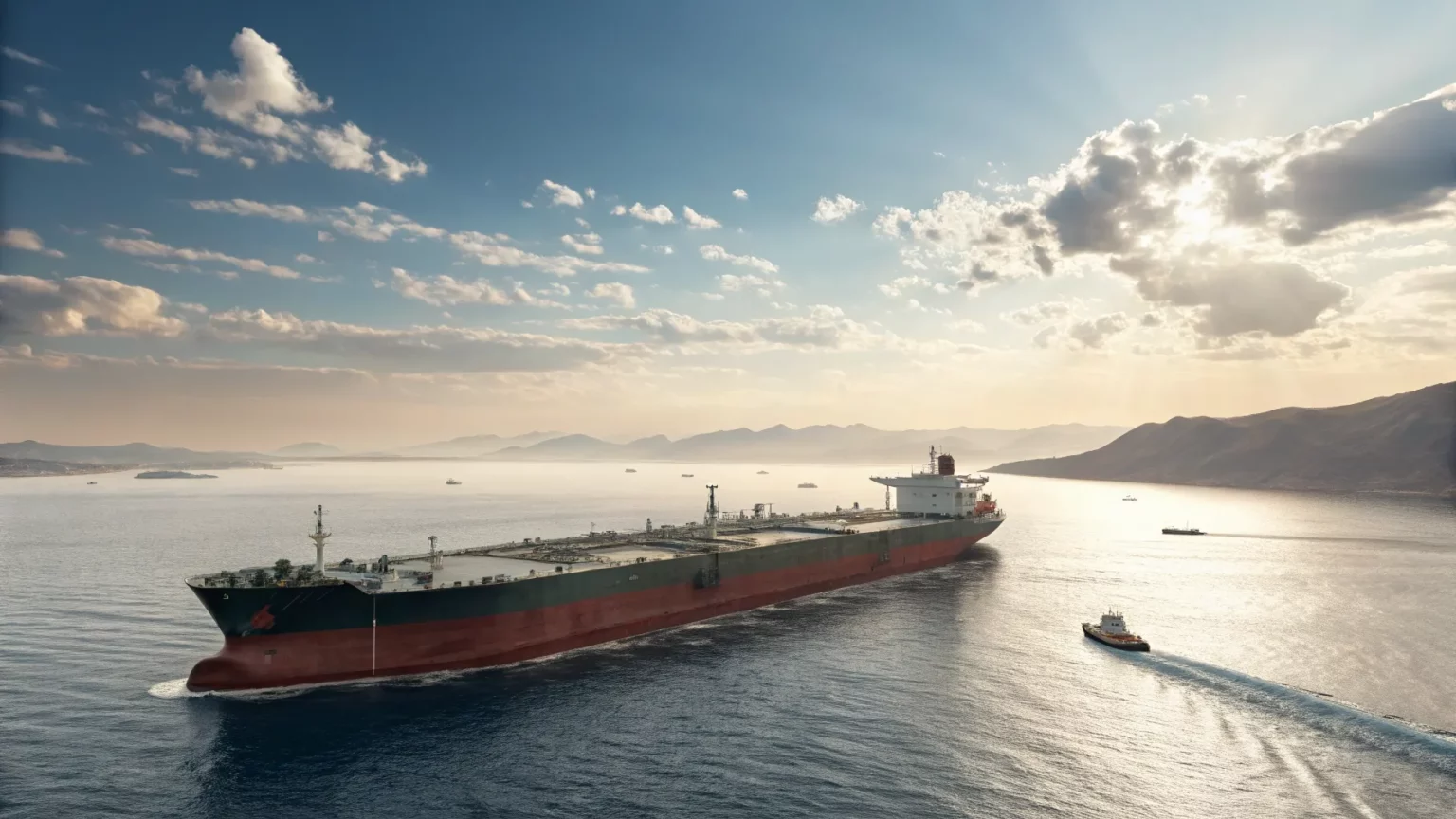
An oil supertanker that briefly reversed course in the Persian Gulf has resumed its approach to the Strait of Hormuz, refocusing attention on one of the world’s most sensitive shipping passages.
Tracking data indicated the vessel slowed and turned before correcting course and continuing toward the narrow waterway that connects the Gulf to the Arabian Sea. The incident unfolded within hours, raising questions about navigation choices and security pressures in waters where energy flows are tightly watched.
“An oil supertanker is once again heading from the Persian Gulf toward the Strait of Hormuz after briefly reversing direction.”
Why Hormuz Matters
The Strait of Hormuz is a key artery for crude and refined products. The U.S. Energy Information Administration has estimated that about one-fifth of global oil trade by sea passes through this chokepoint in a typical year.
The channel is less than 30 miles wide at its narrowest point. Shipping lanes are clearly marked, and vessels often travel in convoys or under guidance from regional authorities to manage traffic and reduce risk.
Any deviation by a large tanker can trigger market jitters. Traders watch for signs that a ship may delay or reroute, which can affect delivery schedules and freight rates.
Potential Reasons for a Course Change
There are several non-political reasons a tanker might reverse or pause before continuing:
- Adjusting to traffic separation schemes or awaiting a pilot.
- Mechanical checks, including engine performance and ballast adjustments.
- Compliance with port state control instructions or insurance guidance.
Security considerations also play a role. Shipowners and captains assess recent incidents, naval advisories, and underwriter requirements in setting speed and route choices near chokepoints.
Security and Insurance Pressures
Commercial ships in the area follow guidance from naval task forces and maritime trade organizations. Operators may alter course to align with recommended corridors or to meet convoys.



War risk insurance premiums can shift quickly based on news of boardings, drone activity, or mines. Even a brief deviation can reflect a captain’s caution in meeting insurer terms and internal safety protocols.
Regional tensions have previously led to detentions and disruptions. That history informs the split-second decisions made on the bridge of a tanker worth hundreds of millions of dollars in cargo.
Market and Shipping Impact
While one vessel’s brief reversal is unlikely to move prices on its own, it can feed broader worries about supply reliability. Refiners and traders factor transit time through Hormuz into pricing and hedging.
Freight markets react most when diversions stack up. If more ships slow, wait, or reroute, daily charter rates can climb. Ship operators may then look to adjust schedules or reposition tonnage.
For now, the tanker’s return to its original course suggests limited disruption. But watchlists will track whether similar maneuvers appear in the coming days.
Operational Realities on the Bridge
Supertankers are difficult to maneuver. Stopping distances are long, and turns must be planned well in advance. A captain may execute a brief reversal to reset a planned track or to maintain safe distance from other ships.
Communication with traffic control centers and nearby vessels is constant. Weather, visibility, and currents can also prompt short-term changes, especially near a narrow passage.
What to Watch Next
Analysts will look for patterns. If more tankers slow or reverse in similar positions, it could indicate a shared caution, a navigation constraint, or new guidance in effect.
Key signals include changes in average transit times, convoy formations, and any updates from maritime security centers. Oil prices and tanker insurance rates are secondary indicators of stress.
The tanker’s course correction is a reminder of how delicate the flow of energy can be at a narrow strait. Today’s movement ended without incident. But the episode highlights how fast small shifts at sea can ripple through shipping plans and trading desks. Stakeholders will watch for repeat maneuvers, official advisories, and signs of rising insurance costs. If those emerge together, pressure on schedules and prices could grow. If not, this will stand as a brief adjustment in a tightly managed corridor.