



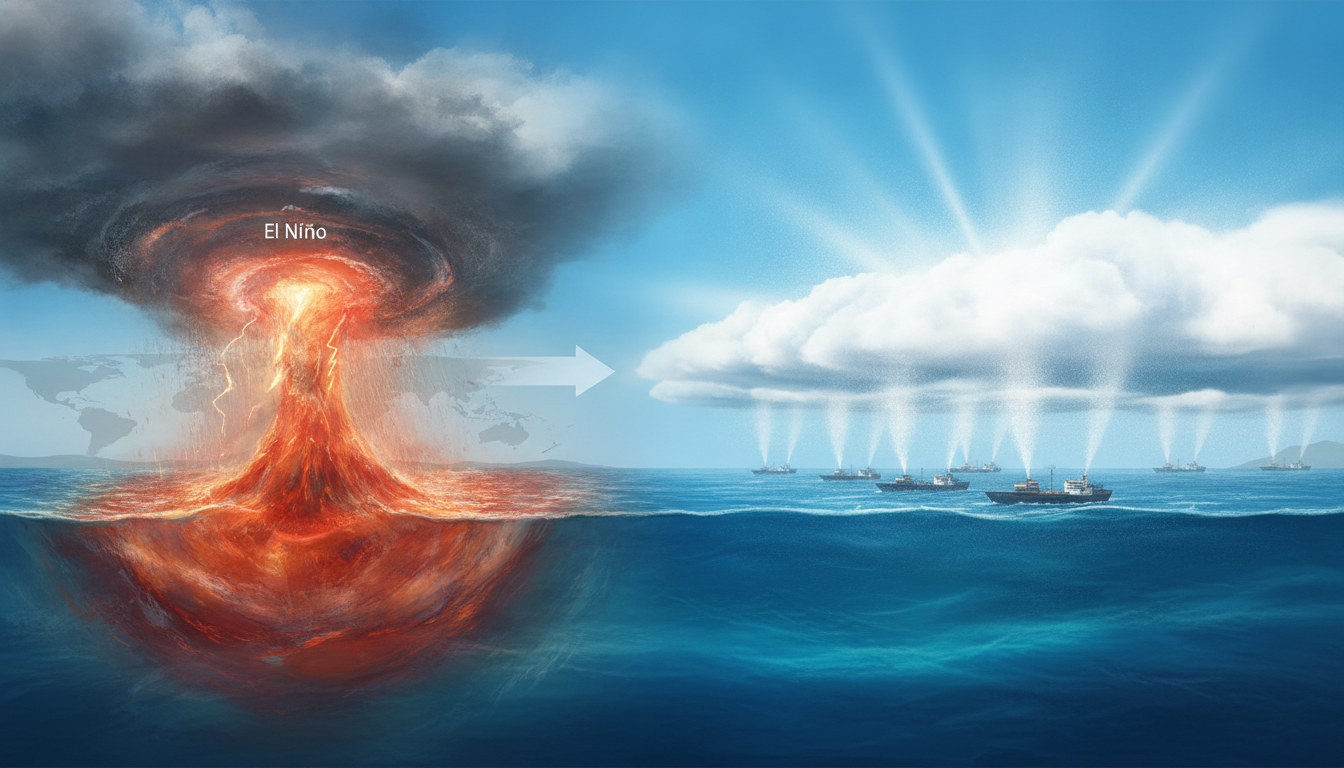
New climate simulations suggest that brightening low-lying clouds over the Pacific could reduce ocean heat and blunt the force of extreme El Niño events. The approach, known as marine cloud brightening, would target a region that drives major weather swings across the globe. The findings arrive as countries face rising heat, stronger storms, and costly droughts linked to recurring El Niño cycles.
The project aims to cool surface waters by increasing the reflectivity of marine clouds. If successful, it could lessen the odds of the most damaging El Niños, which can disrupt rainfall, food supplies, and power grids. Yet researchers caution that tinkering with clouds can carry its own risks, including shifts in rainfall and regional weather that are hard to predict.
What the Simulations Indicate
Marine cloud brightening could cool part of the Pacific and weaken extreme El Niños, simulations suggest. But the approach could have risks.
The model results point to a focused effect in the eastern and central Pacific. That area often warms during El Niño. Cooling those waters by even a small amount could change the strength and timing of an event. The simulations examined how added sea salt particles might seed brighter clouds. More reflective clouds would bounce more sunlight back into space, which lowers ocean heat.
Scientists stress that models are not guarantees. They provide a range of outcomes under different assumptions. Still, the simulations offer a possible way to reduce peak El Niño intensity while the world works to cut greenhouse gas emissions.
Why El Niño Matters
El Niño is a natural climate pattern. It features warmer than average Pacific waters near the equator. This shift changes winds and storm tracks across many continents. In strong years, the effects ripple worldwide. South America can see floods. Parts of Southeast Asia and Australia often face drought and wildfires. Crop yields and fisheries can suffer. Power grids strain under heat waves.
As global temperatures rise, extreme El Niño events have become a growing concern. Warmer baselines can stack the odds for stronger peaks. That raises interest in tools that might reduce the most severe outcomes, even if only for a limited time and area.
How Marine Cloud Brightening Works
The idea is simple in theory. Ships or platforms would spray fine sea salt into the air. These particles help clouds form with more, smaller droplets. Such clouds appear whiter and reflect more sunlight. The effect could cool the sea surface under targeted regions.
Field tests have been limited and small in scope. Most evidence today comes from laboratory work and computer models. Any real-world use would need strict oversight and public input.


Potential Risks and Tradeoffs
Changing clouds in one place can affect weather somewhere else. That is the main worry with any regional climate intervention. Researchers warn that rainfall patterns could shift in ways that help some areas and harm others.
- Possible changes in monsoon timing and strength
- Altered storm tracks and wind patterns
- Impacts on marine ecosystems from cooler surface waters
- Uncertain effects if operations stop suddenly
There are also governance questions. Who decides where and when to act. How to share benefits and handle harms. How to monitor results and respond if problems appear. Transparency and international rules would be key.
What Comes Next
The next steps include more high-resolution modeling and limited outdoor experiments. These would help test how sprays behave in real conditions and how clouds respond. Independent monitoring and open data would build trust. Broad public engagement is needed before any larger trial.
Experts also note that marine cloud brightening cannot replace emissions cuts. It may only offer temporary relief in a narrow zone. The main driver of rising climate risks remains greenhouse gases. Any intervention would work best as a supplement to deep reductions and adaptation plans.
The simulations deliver a clear message. Targeted cloud brightening might cool a slice of the Pacific and temper the worst El Niños. But it also brings uncertainty and possible side effects. Policymakers will weigh the promise of fewer disasters against the risk of new ones. Watch for more rigorous tests, stronger safeguards, and public debate before any real-world use moves ahead.