




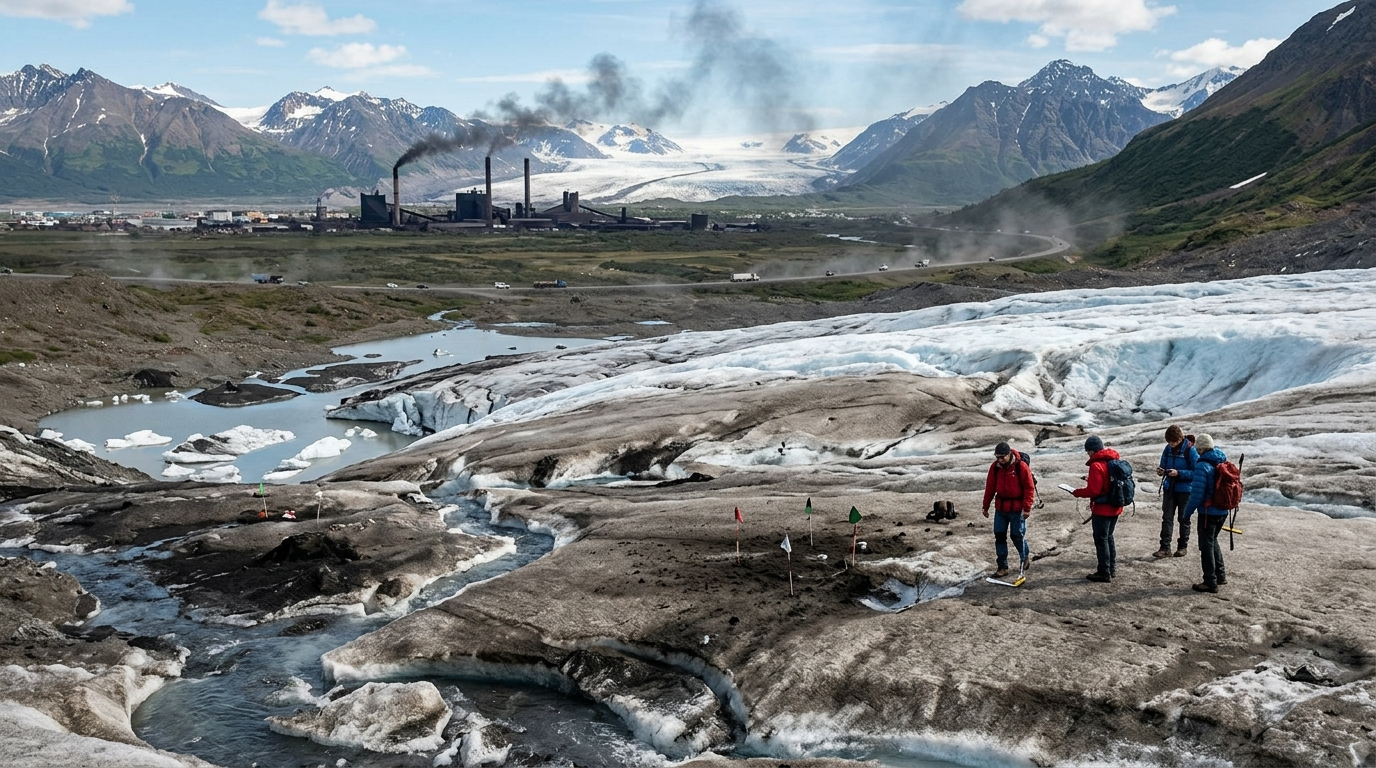
Soot from vehicles and factories is darkening regional glaciers, causing them to absorb more heat and melt at dangerous rates. The pollution links daily fuel use with growing risks to water supplies, communities, and ecosystems near the ice.
The warning highlights a threat that can work alongside rising air temperatures. Clean snow reflects much of the sun’s energy. Once soot settles on that surface, the ice becomes darker and retains more heat.
How Soot Speeds Up Melting
Soot is made of fine particles produced when fuels do not burn fully. Engines, factories, power generation, and other combustion sources can release it into the atmosphere.
Winds can carry these particles from crowded industrial areas to distant mountains. After landing on snow or ice, the dark material reduces the surface’s ability to reflect sunlight.
“Darkened by soot from vehicles and factories, the region’s glaciers are absorbing more heat and melting at dangerous rates.”
This process can become self-reinforcing. Melting exposes older, darker ice beneath fresh snow. That exposed surface absorbs additional heat, which can speed further losses during warm periods.
Soot is not the only pressure on glaciers. Air temperatures, snowfall, rainfall, cloud cover, and local geography also shape melting. Still, soot adds a source of warming directly at the glacier’s surface.
Water Supplies Face Greater Uncertainty
Glaciers store winter precipitation and release water during warmer months. Faster melting may increase runoff at first, raising the risk of floods and unstable glacial lakes.
Over time, shrinking ice can reduce dependable summer flows. That shift may affect households, farms, hydropower systems, and wildlife that rely on cold mountain water.



The timing of water loss matters as much as the total amount. A surge during wet months cannot always replace steady runoff during dry seasons, when demand is often highest.
- Communities may face less reliable seasonal water supplies.
- Rapid runoff can increase flood and erosion hazards.
- Reduced ice cover can alter mountain habitats.
Pollution Controls Offer a Near-Term Response
Cutting soot emissions could reduce one direct cause of glacier darkening. Cleaner engines, stricter factory controls, better fuel quality, and effective filters can limit particle pollution.
Such measures may also improve public health because fine particles can enter the lungs. This gives governments a reason to treat soot reduction as both a climate measure and an air-quality policy.
Yet pollution controls alone cannot protect glaciers. Long-term preservation also depends on limiting the greenhouse gases that raise global temperatures. Local monitoring is needed to separate soot’s influence from other causes of ice loss.
Better Tracking Could Guide Action
Scientists can examine snow samples, satellite images, weather records, and meltwater flows to measure changing conditions. Regular observations can show where soot is coming from and which glaciers face the greatest exposure.
Regional cooperation may be needed because air pollution crosses borders. Emissions released far from mountain ranges can still reach glaciers through atmospheric transport.
The central finding is clear: darker ice melts faster under sunlight. Reducing pollution from vehicles and factories could slow part of that process, while broader climate action addresses the larger warming trend. Authorities will need to watch melt rates, seasonal river flows, and soot deposits to judge whether policies are working.