




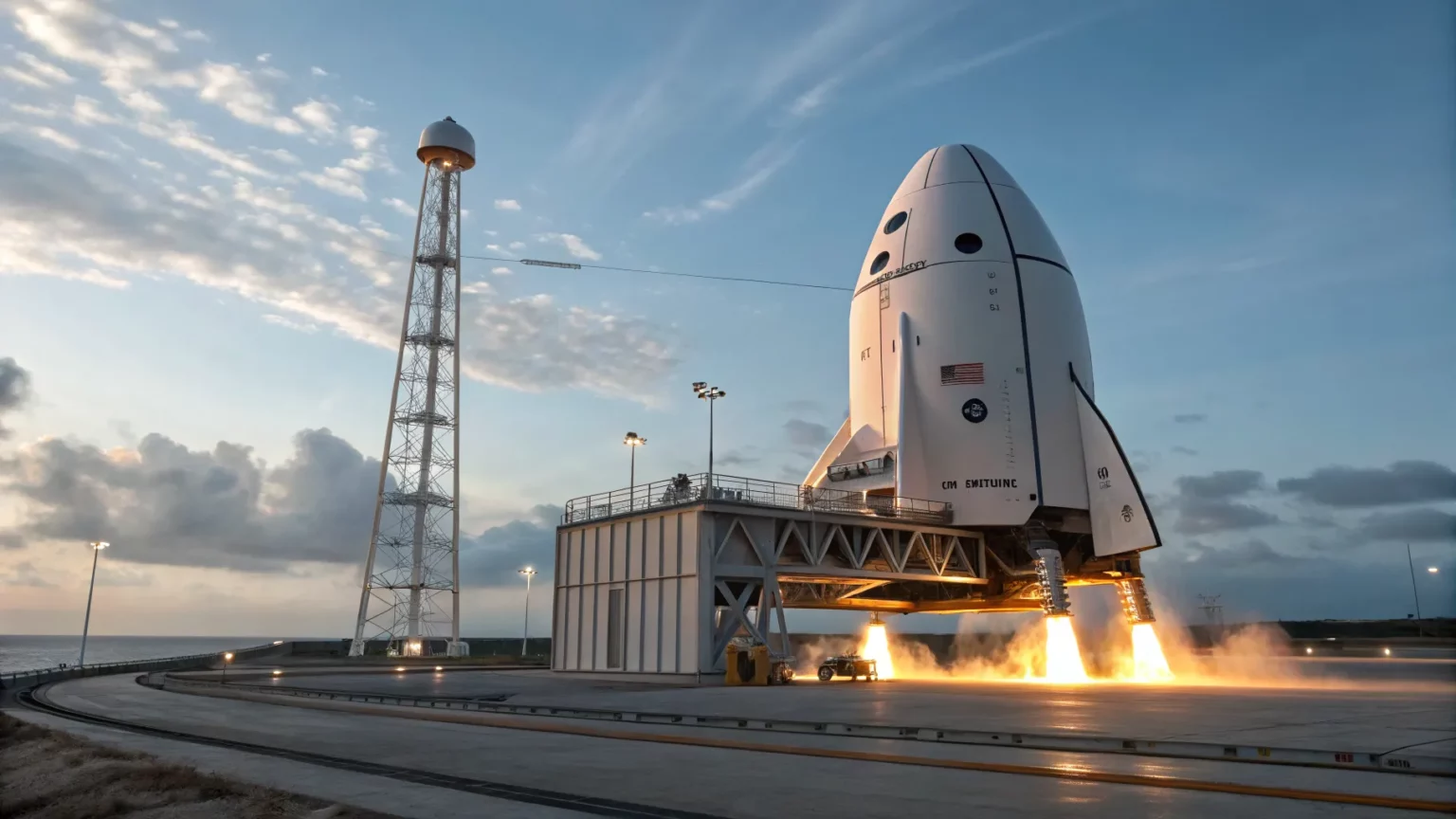
SpaceX plans to launch a demonstration mission Tuesday to send a reusable capsule into orbit and bring it back, signaling a push into the small but growing business of making products in space and returning them to Earth. The flight, led by the Elon Musk-founded company, aims to show rapid reuse and recovery that could support future commercial work in microgravity.
“SpaceX is set to launch a demonstration mission Tuesday sending a reusable capsule into space and then recovering it, part of a new program that could allow the Elon Musk-led company to tap into the emerging market of in-space manufacturing.”
The timing highlights a race among space firms to prove they can not only reach orbit but also land products safely. If successful, the effort could give SpaceX a new revenue stream while offering researchers and manufacturers a faster path from experiment to market.
Background: From Experiments to a Market
Manufacturing in microgravity has been studied for decades on the International Space Station. Scientists have grown purer protein crystals and tested optical fiber that can be stronger when formed without gravity-driven defects. These results have fueled interest in off-world factories that can return high-value goods.
Companies have begun to test this idea. Startups have flown small production payloads, while station partners have hosted materials and biotech research. In 2024, Varda Space Industries retrieved a capsule carrying a drug-crystal experiment, demonstrating commercial reentry and recovery. Redwire has operated manufacturing facilities on the space station, exploring fiber optics and bioprinting.
The challenge is building a reliable logistics chain: launch to orbit, controlled production, and safe, repeatable return. This is where SpaceX’s reusability experience could matter. The company routinely lands boosters and has reflown Dragon capsules for cargo and crew transport.
What This Mission Tests
The upcoming flight is framed as a technology demonstration. It appears designed to validate the full cycle that potential customers need: access to orbit, a controlled ride home, and quick handoff on the ground.
- Launch a reusable capsule into orbit.
- Execute controlled reentry and recovery.
- Gather data to reduce turnaround time for future flights.
SpaceX has shown capsule recovery before with its Dragon fleet. The difference here is a push to tailor those capabilities for commercial manufacturing, where schedule, handling, and contamination control are central. A consistent, repeatable return service could help bridge the gap between lab-scale research and small-batch production.
Why Microgravity Manufacturing Matters
Microgravity can change how materials form. Certain crystals grow with fewer defects. Alloys can mix more evenly. Optical fibers, such as ZBLAN, can achieve lower signal loss if produced without convection and sedimentation. Drug makers see a chance to study structures that are difficult to reproduce on Earth.



Still, only high-value products make sense given launch and return costs. That often means small, precise batches with clear performance gains, like specialty fibers, advanced semiconductors, or pharmaceutical ingredients where purity improves efficacy.
If turnaround from orbit to lab shortens from months to days, research cycles speed up. That could help companies decide whether to scale production in space or keep work on stations and future free-flyers.
Competition and Regulatory Hurdles
Several firms are lining up services in this space, from on-orbit labs to dedicated reentry capsules. SpaceX’s advantage is cadence and a record of reuse. But it will still face the same hurdles as others: safety reviews, handling standards, and regulatory approvals for returning payloads to Earth.
In the United States, reentry operations require licenses and coordination among federal agencies. For biomedical payloads, quality and chain-of-custody rules apply once products reach the ground. Insurance, landing zones, and recovery timelines also shape customer decisions.
Experts caution that demand must match supply. If manufacturers do not see clear performance or cost benefits, flights will remain demonstrations rather than production runs.
What to Watch Next
The key metrics from this mission will be recovery precision, capsule condition on return, and the timeline from splashdown to delivery. Any announced partners or payload types for follow-on flights would signal confidence.
Investors and researchers will also track whether the company offers standard pricing and schedules for return services. Regular, predictable flights could help labs plan studies and accelerate testing. Competitors may respond with their own demonstrations or partnerships.
SpaceX’s test is an early step. If it proves fast, safe, and repeatable, the company could become a central carrier for microgravity manufacturing. If not, the market may continue to rely on smaller capsules and station-based experiments.
For now, Tuesday’s launch will show whether a reusable capsule tailored for commercial return can meet the needs of a field that has long promised better materials and medicines made in orbit.