




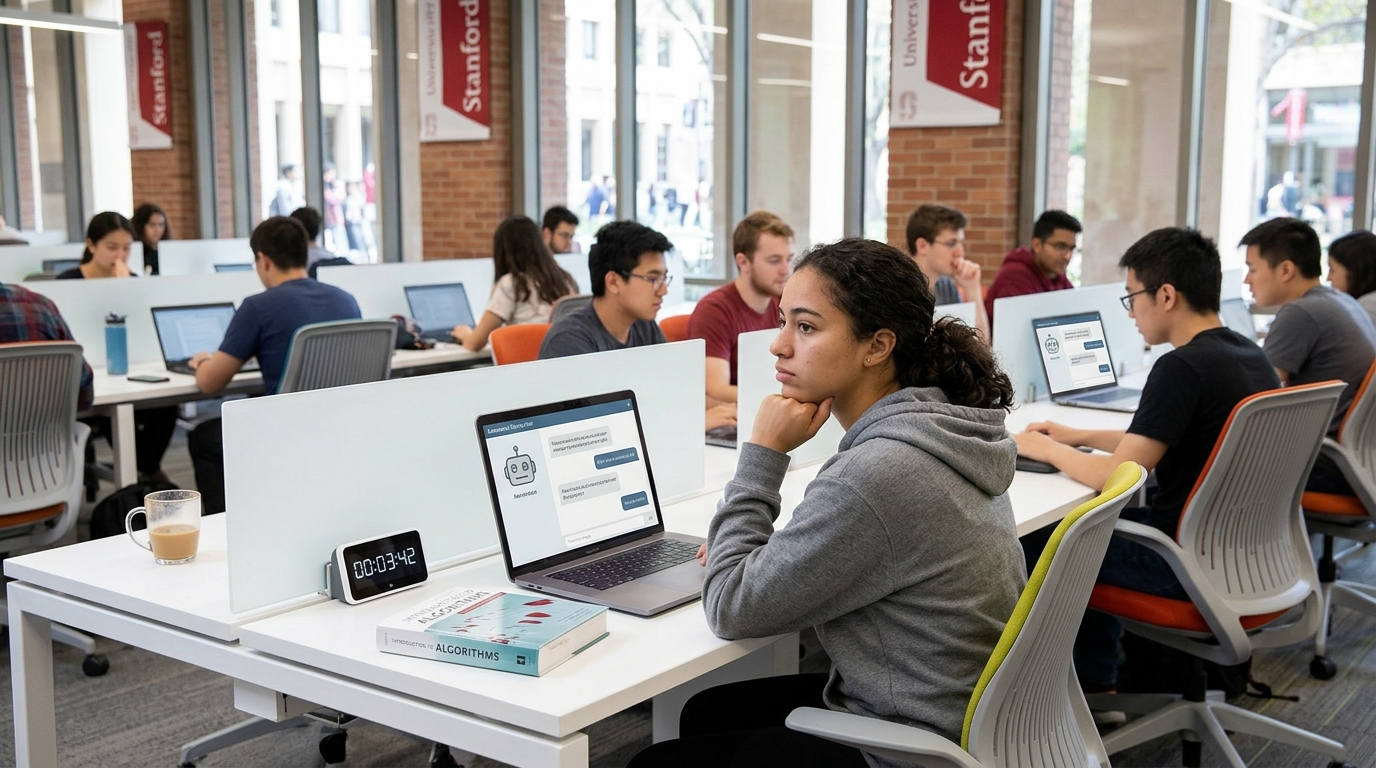
Students left alone with a tutoring bot used it for only two to five minutes, according to new Stanford research. The finding raises urgent questions about how schools deploy artificial intelligence for learning.
The brief sessions suggest that access to an AI tutor does not guarantee sustained use. The result also points to a basic challenge for education technology: students may need human guidance to use automated tools well.
Short Sessions Raise Larger Questions
A two-to-five-minute interaction gives students little time for extended practice, feedback, or review. It may be enough for one question, but not for a full tutoring session.
Students left alone with a tutoring bot spent just two to five minutes interacting.
The phrase left alone is central to the finding. It suggests that the study examined use without a teacher, tutor, or parent directing the activity.
That distinction matters. Students often need a clear task, a reason to continue, and help judging whether an answer is useful. A bot can respond quickly, but it cannot ensure that a student remains focused.
The limited information released does not explain why students stopped. Several factors could affect engagement:
- The bot may not have matched the students’ needs.
- Students may have completed a narrow task quickly.
- The interface may not have encouraged follow-up questions.
- Students may have preferred help from a person.
The research summary also does not identify the students’ ages, subjects, sample size, or study length. Those details would help determine how widely the result applies.
Human Support May Shape AI Use
Schools have long used digital practice programs, online lessons, and automated feedback. AI tutoring adds open-ended conversation, but the Stanford finding suggests that conversation alone may not sustain attention.



A teacher can connect tutoring to a lesson, set goals, and check a student’s progress. Without that structure, students may treat the bot as a quick answer service rather than a learning partner.
Short use is not always evidence of failure. A student could receive useful guidance within minutes. Engagement time also does not reveal whether the student learned, remembered, or applied the material.
Still, time spent offers one signal about adoption. If students regularly leave after a few minutes, schools may struggle to achieve the benefits promised by longer, personalized tutoring.
Evidence Should Guide School Decisions
The result may influence how educators evaluate AI products. Usage totals alone cannot show whether a tool improves learning. Schools also need evidence about accuracy, student progress, and differences among age groups.
Future studies could compare independent bot use with teacher-guided sessions. Researchers could also test whether prompts, lesson plans, or progress goals increase meaningful interaction.
Other questions concern equity and safety. Some students may know how to ask precise follow-up questions, while others may need instruction. Incorrect or confusing answers could also cause students to leave early.
The Stanford research offers a caution for schools considering tutoring bots as substitutes for human support. The early signal is clear: placing a student in front of a bot may produce only minutes of activity.
The next step is to learn whether those minutes improve academic results, and whether teacher guidance changes the outcome. Until then, educators should treat AI tutoring as a tool that requires planning, supervision, and careful measurement.