



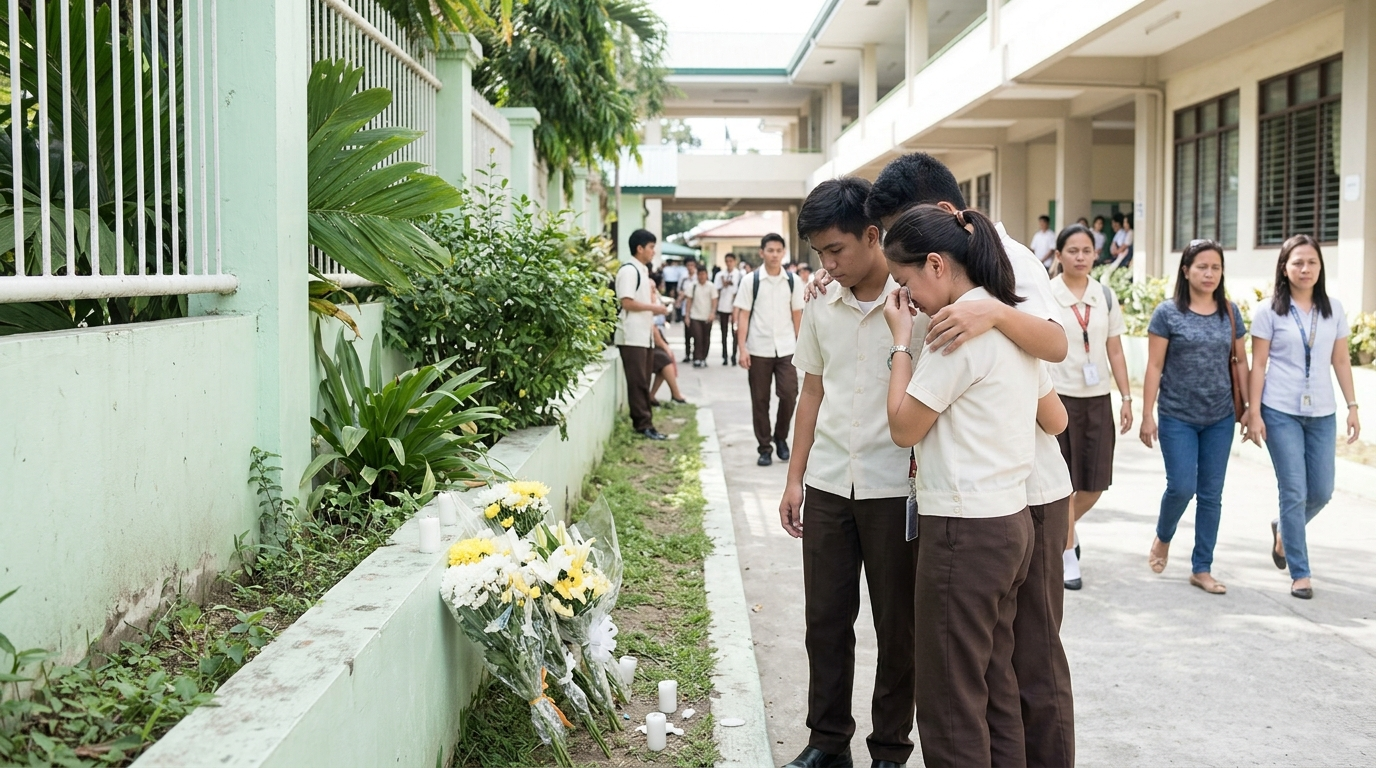
Three students were killed in a school shooting in the southern Philippines on Friday, September 18, including a 16-year-old suspected gunman.
The deadly incident was reported by Reuters journalists Nestor Corrales and Mikhail Flores. The initial account did not identify the school, community, or two other students who died.
Few details were immediately available about what led to the shooting. The limited information also left major questions about the weapon, the sequence of events, and the police response.
Suspected Gunman Among the Dead
The suspected gunman was described as a 16-year-old student. His age places added focus on how a minor obtained a firearm and brought it into a school setting.
“Three students were killed in a school shooting in the southern Philippines,” the initial report said, adding that the dead included “a 16-year-old suspected gunman.”
The wording indicates that officials or early reporting had not yet established every fact. Describing the teenager as a suspected gunman leaves room for investigators to confirm his role through witness accounts and physical evidence.
The cause of his death was not stated. It was also unclear whether anyone else was injured, whether classes were underway, or how many people witnessed the attack.
Key Questions Await Answers
Early reports of violent incidents often change as police interview witnesses and notify families. In this case, several basic facts remained unconfirmed:
- The identities and ages of the other two students
- The precise location and name of the school
- The suspected motive and source of the firearm
- Whether police recovered one weapon or several
- Whether teachers, staff members, or other students were hurt
Those details will shape how authorities classify the shooting and whether other people could face legal scrutiny. Investigators may examine firearm access, school security, warning signs, and any earlier dispute involving the students.


A Community Faces Immediate Trauma
A shooting on school grounds can affect far more people than those directly involved. Students may have witnessed the violence, sheltered inside classrooms, or waited for news about friends.
Families will also need clear information from officials. Accurate identification is especially important before names spread through social media, where rumor tends to sprint while verified facts take the stairs.
School leaders may face pressure to explain existing safety measures and any changes planned after the attack. Those steps could include counseling, controlled campus access, emergency drills, and closer coordination with local police.
Focus Turns to Firearm Access
The suspected shooter’s age is likely to make firearm access a central part of the inquiry. Investigators will need to determine who owned the weapon and whether its storage or transfer violated the law.
Authorities may also review the teenager’s recent behavior and communications. Such inquiries can help establish motive, but they require care to avoid blaming victims or drawing conclusions before evidence is tested.
The immediate facts are stark: three students are dead, and one was identified as the suspected attacker. The next official updates should clarify where the shooting happened, how events unfolded, and whether warning signs were missed. For the affected community, those answers will matter, but grief and recovery will last much longer than the investigation’s first headlines.