




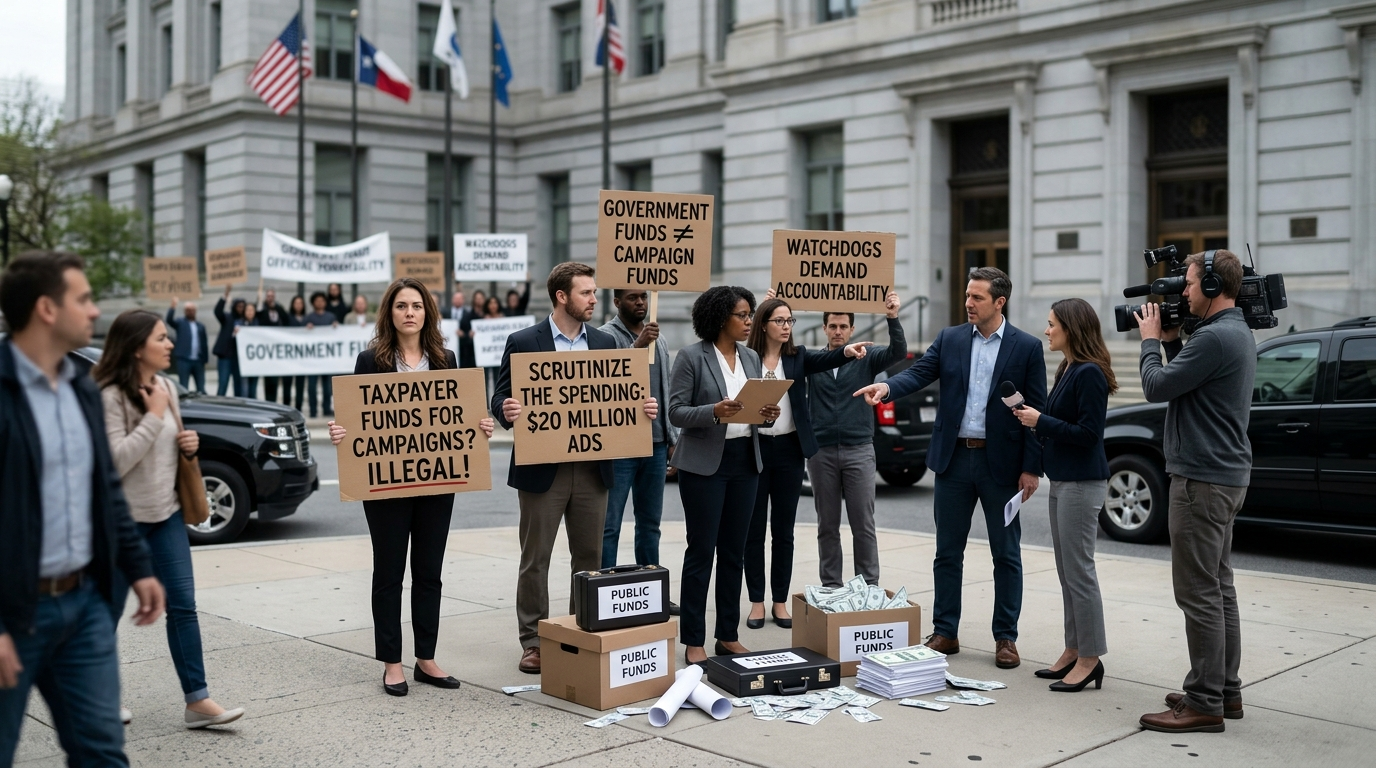
Millions of taxpayer dollars have funded promotional advertisements featuring President Donald Trump, while $20 million has been allocated for the wider campaign. Political advertising estimates have prompted watchdog groups to argue that the spending is illegal.
The dispute centers on whether the advertisements provide legitimate public information or use federal money to promote a sitting president. That distinction could determine whether the campaign complies with rules governing public funds and political activity.
Spending Raises Legal Questions
A leading political ad-tracking firm estimates that millions have already been spent. The full allocation indicates that the campaign could continue or grow unless officials change course.
Watchdog groups have described the advertisements as “illegal,” although the available information does not identify a court ruling that has reached that conclusion. Their concern appears tied to the ads’ strongly favorable portrayal of Trump.
Federal agencies may use public money to explain programs, announce services, or warn people about health and safety risks. They generally face stricter limits when communications resemble campaign material or personal promotion.
The legal analysis often depends on several questions:
- Which agency approved and paid for the advertisements?
- What public purpose does the campaign claim to serve?
- How often do the ads feature Trump’s name, image, or achievements?
- Were federal contracting and spending rules followed?
Public Information or Political Promotion
The criticism reflects a long-running tension in government communications. Presidents from both parties have appeared in publicly funded messages, especially during emergencies or major policy campaigns.
Such appearances are not automatically unlawful. However, watchdogs often object when an advertisement praises an officeholder more than it explains a policy or public service.



Calling the ads hagiographic suggests they present Trump in an unusually flattering manner. That description alone does not settle their legal status, but it may shape how investigators assess their wording, images, placement, and purpose.
The administration’s explanation for the campaign was not included in the reported details. A full assessment would require its stated public-interest justification, agency records, contracts, and the advertisements themselves.
Oversight Could Determine What Happens Next
The $20 million allocation is likely to bring attention from congressional committees, inspectors general, and federal spending monitors. They could seek contracts, invoices, internal approvals, and records showing how audiences were selected.
Reviews may also examine whether the purchases were properly disclosed. If investigators find that appropriated funds were used for unauthorized publicity, agencies could face orders to halt the campaign or recover money.
The episode also carries political risks. Supporters may view the advertisements as a valid way to explain presidential policies. Critics may see them as taxpayer-funded campaign messaging that gives an incumbent an unfair advantage.
For taxpayers, the immediate issue is accountability. Millions have reportedly been spent, and the remaining allocation could increase the total. Clear disclosure would allow the public to judge both the campaign’s cost and its stated purpose.
The next key developments will be any formal legal review, release of spending records, or response from the administration. Until then, the central question remains unresolved: whether the ads serve the public or primarily promote the president.