




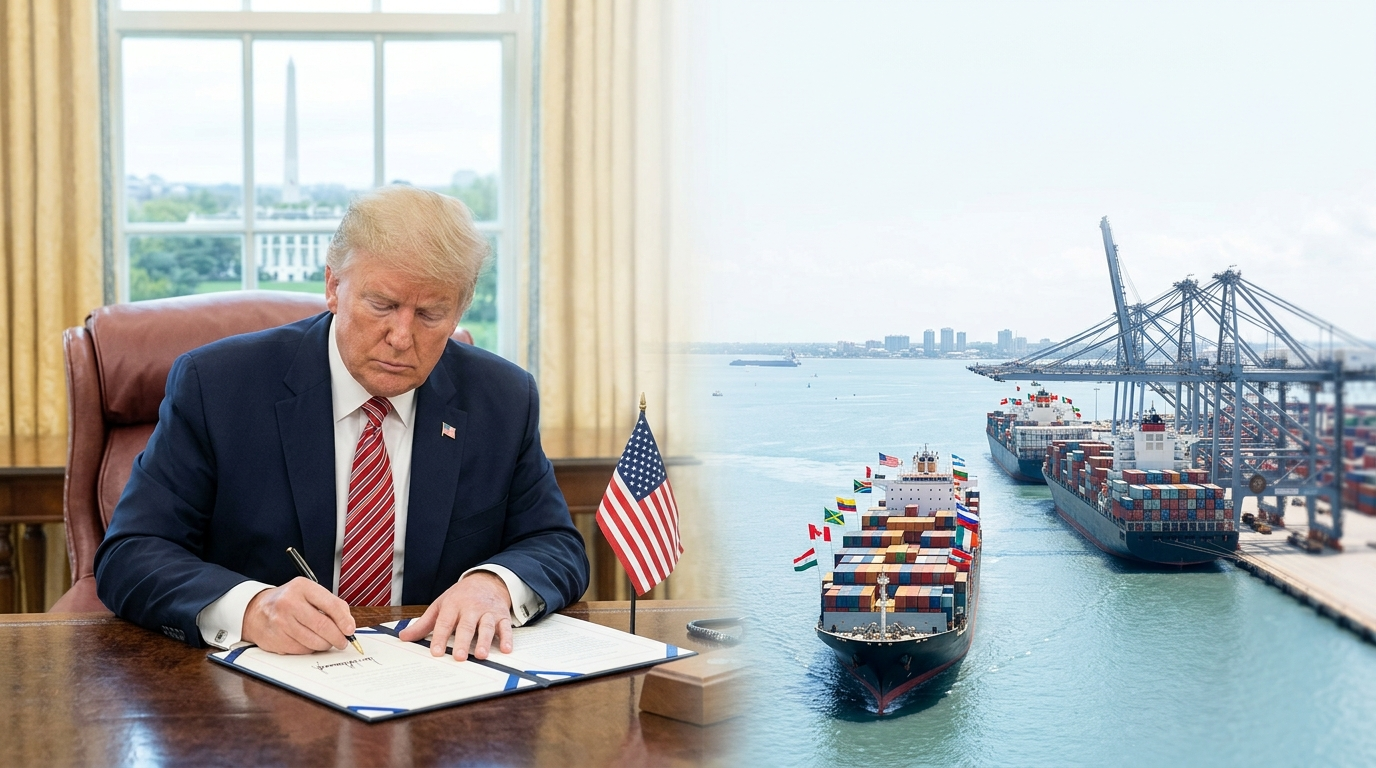
President Donald Trump extended a shipping waiver for 90 days on Monday, allowing foreign vessels to carry key goods between U.S. ports.
The decision covers oil, fertilizers and other fossil fuel products. The White House action extends a Jones Act waiver first issued March 17 to make domestic transport easier.
The temporary policy could increase available shipping capacity and reduce transport delays. It also renews a long-running debate over costs, national security and protections for American maritime workers.
What the Waiver Changes
The Jones Act generally limits cargo shipments between U.S. ports to qualifying American vessels. Those ships must be built in the United States, owned by U.S. interests and staffed mainly by American crews.
Trump’s waiver temporarily permits eligible foreign ships to handle routes normally reserved for that domestic fleet. It does not permanently repeal or rewrite the law.
The extension applies to several products that play an important role in energy and agriculture:
- Oil transported between domestic ports
- Fertilizers used by American farmers
- Other fossil fuel products covered by the waiver
The 90-day period gives shippers more time to use foreign vessels. It may also help ports and fuel suppliers respond when U.S.-qualified ships are unavailable or more costly.
A Century-Old Shipping Rule
Congress enacted the Jones Act in 1920 as part of the Merchant Marine Act. The law was designed to maintain a domestic commercial fleet and a supply of trained American mariners.


Supporters argue that the policy protects maritime employment and preserves ships that could support the military during emergencies. They also view domestic shipping capacity as a national security asset.
Critics say the restrictions can raise freight costs because fewer vessels qualify for domestic routes. Those costs can matter most for places that rely heavily on ocean transport, including Hawaii, Alaska and Puerto Rico.
Federal law allows waivers under limited circumstances, often tied to national defense or urgent supply needs. Presidents from both parties have used temporary waivers after major storms and other disruptions.
Potential Effects on Energy and Agriculture
More vessel options could help companies move fuel between regions without relying only on pipelines, railroads or Jones Act ships. The practical impact will depend on freight rates, port schedules and industry demand.
Fertilizer access also has wider economic importance. Transportation costs can affect farm expenses, which may later influence food prices. A waiver does not ensure lower prices, but it can remove one shipping constraint.
Domestic ship operators may face added competition during the extension. Maritime unions and U.S. carriers have traditionally warned that repeated waivers could weaken investment in American ships and reduce skilled employment.
Importers, energy companies and some consumer groups often take the opposite view. They argue that temporary access to foreign ships can ease shortages and offer lower-cost transport during periods of stress.
Questions Ahead
The administration will face scrutiny over how broadly the waiver is applied and whether the added shipping capacity changes prices or delivery times. Its stated duration also creates a clear point for review.
Key measures will include vessel availability, freight costs, fuel distribution and fertilizer supplies. Officials may also assess whether enough American ships were available to meet demand during the waiver period.
For now, the action provides shippers with another 90 days of flexibility while leaving the Jones Act intact. The next decision will show whether the administration views the measure as a short-term response or part of a longer shipping policy shift.