




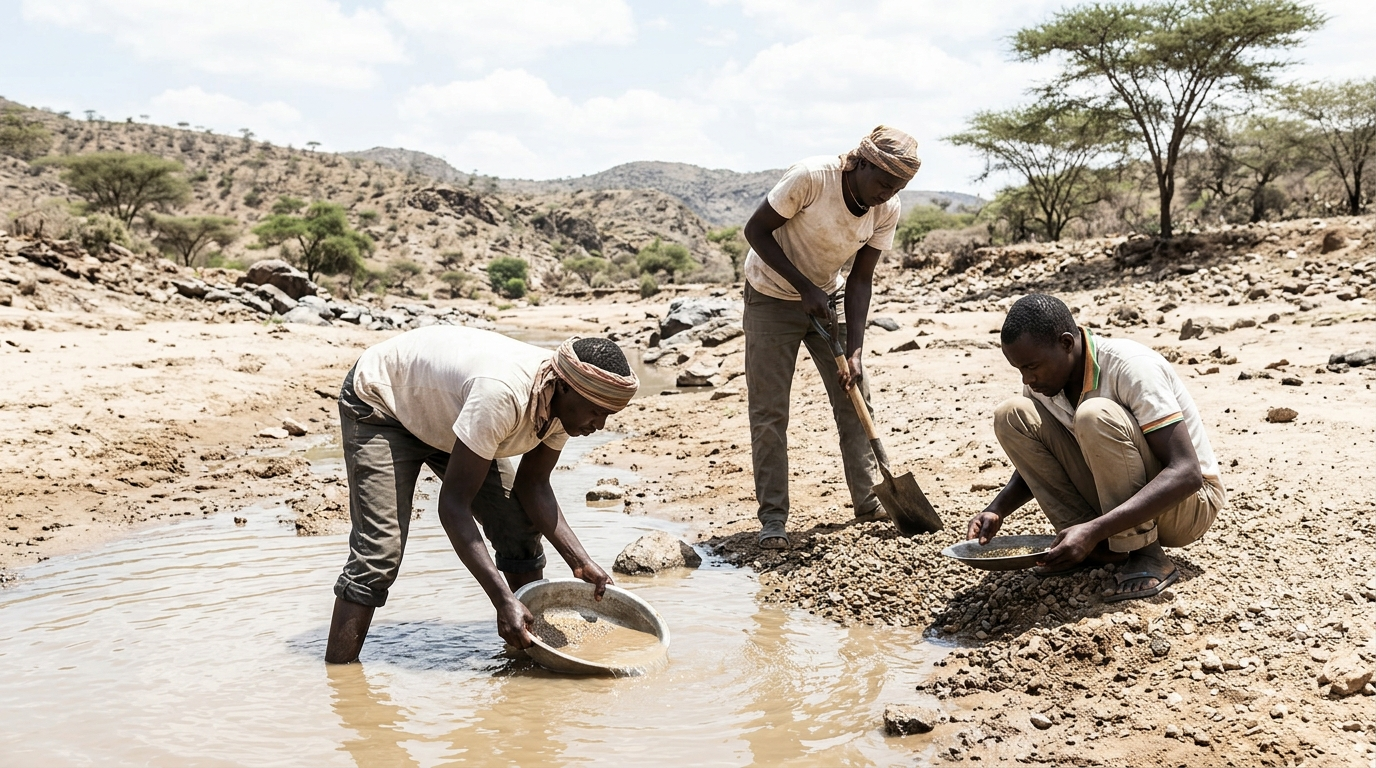
Prospectors are searching for gold in West Pokot County, hoping that even one gram could provide income and change their lives.
The activity reflects the powerful economic hopes tied to small-scale mining. For people with limited ways to earn money, a small gold find may appear to offer a path out of hardship.
Yet the rush also raises questions about safety, environmental damage, land rights, and how much miners receive for what they recover.
A Search Driven by Economic Need
West Pokot is located in western Kenya. Many communities in the county depend on farming, livestock, trade, and other informal work.
Gold prospecting offers another possible source of cash. The work can attract local residents as well as miners arriving from other areas.
Prospectors have come to West Pokot County “in the hope a gram of the precious metal can change their lives.”
That hope captures both the appeal and uncertainty of informal mining. Gold has a market value, but finding it is never assured. Miners may spend long hours digging, washing soil, or breaking rock without making a valuable discovery.
The value of a find also depends on purity, market prices, and negotiations with buyers. Small-scale miners often have less bargaining power than traders who control access to larger markets.
Benefits Come With Serious Risks
A gold discovery can bring quick income into a household. Earnings may help families buy food, pay school costs, meet medical bills, or invest in livestock and small businesses.



Mining activity may also support nearby traders. Food sellers, transport operators, tool suppliers, and accommodation providers can gain customers when prospectors enter an area.
However, informal mining can carry major risks:
- Unsupported pits may collapse and trap workers.
- Dust and unsafe processing methods may harm miners’ health.
- Excavation can damage farmland, grazing areas, and water sources.
- Unclear land access may cause disputes among miners, residents, and landowners.
Women and children may face added pressure if families leave farming or schooling to join mining work. Sudden income can help households, but unstable earnings can also increase debt and financial stress.
Rules and Local Oversight Matter
The arrival of prospectors creates a challenge for county and national authorities. Officials must weigh income opportunities against the need to protect workers, communities, and natural resources.
Clear permits and inspections could help identify who is mining and where operations are taking place. Safety training could reduce deaths and injuries. Fair buying systems could also help miners understand the weight, purity, and value of their gold.
Local residents need a role in decisions about access to land and water. Without consultation, mining may deepen tensions over resources that communities already depend on.
What Comes Next
The scale of West Pokot’s gold deposits, the number of prospectors, and their earnings remain unclear. Those facts will shape whether the activity becomes a lasting local industry or a short-lived rush.
For now, prospectors are placing their hopes in very small quantities of a valuable metal. Their search shows how economic pressure can send people into difficult and uncertain work.
The central issue is whether gold can produce lasting local gains rather than brief profits. Close attention to safety, fair prices, land rights, and environmental controls will determine who benefits and who bears the cost.