


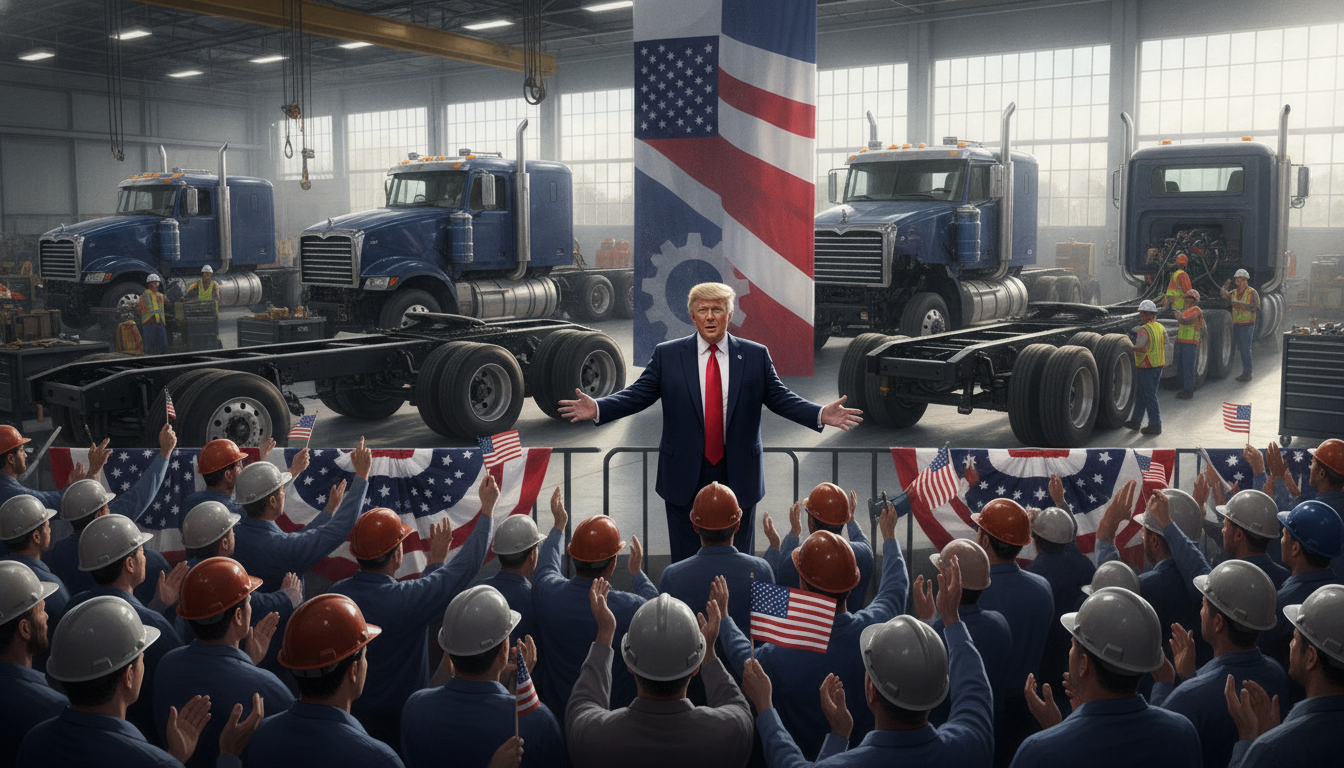
Former President Donald Trump visited the Mack Trucks assembly plant in Macungie, Pennsylvania, highlighting job gains and making a direct appeal to workers in a key swing region. Speaking at the Lehigh Valley facility, he said Pennsylvania had added 32,000 new jobs, including 2,600 in manufacturing. The appearance drew attention to the state’s industrial base and the continuing debate over how to measure job growth and its causes.
The visit, in a town long tied to heavy industry and trucking, came as candidates court union households and suburban voters. Trump’s remarks put manufacturing and wages at the center of that pitch. While he praised the plant’s workforce, he also framed the numbers as evidence of his agenda’s success and a case for policy changes ahead.
A Symbolic Stop at a Historic Plant
Mack Trucks has been a fixture in the Lehigh Valley for decades, producing heavy-duty vehicles and retaining a skilled workforce through several industry cycles. Factory visits like this one are a staple for politicians who want to connect with voters who see manufacturing as a path to stable, middle-class jobs.
Trump’s focus on job totals sought to link national policy to outcomes on the shop floor. He presented the figures as proof of momentum for Pennsylvania workers and a sign that more gains are possible with favorable tax and trade policies.
“32,000 new jobs and 2,600 manufacturing jobs created in the commonwealth.”
He tied those numbers to local pride, pointing to the plant’s output and the workers who assemble trucks that move goods across the country.
How the Numbers Fit the Broader Picture
Economists note that statewide job counts rise and fall with national demand, energy prices, and the strength of supply chains. Manufacturing often tracks trends in construction, logistics, and consumer spending. It is also sensitive to interest rates and export markets.
Pennsylvania’s manufacturing employment has seen periods of decline and growth over the past two decades, influenced by automation, foreign competition, and regional investment. The Lehigh Valley, anchored by logistics hubs and industrial parks, has added warehouse and transportation jobs even as factories work to fill skilled roles.
- Job totals can be revised as new data arrives.
- Supply chain stability affects production schedules and hiring.
- Wage growth and overtime hours shape how workers feel the recovery.
State and federal incentives have also steered capital spending into equipment upgrades, training programs, and cleaner production lines. Those investments take time to show up in employment charts.



Local Stakes for Workers and Employers
At Mack Trucks, steady orders help maintain shifts and apprenticeships. Workers rely on predictable schedules, and suppliers across the region benefit when the plant is running at full capacity. Job gains ripple through machine shops, steel fabricators, and trucking companies that serve the plant.
Union leaders in the area often push for higher wages and stronger benefits as profits recover. Employers stress hiring needs, pointing to vacancies in welding, machining, and maintenance. Both sides say training pipelines are crucial to keep production on track.
Trump’s message played to these concerns, arguing that policy choices on trade, energy, and taxes influence factory floors. Supporters at the event said they want to see more domestic production. Skeptics counter that headline numbers do not capture the quality of jobs or the pressure from automation.
What to Watch Next
The debate over jobs will continue as campaigns sharpen their economic cases. Analysts will watch monthly labor reports for signs of sustained hiring in durable goods and transportation equipment. They will also track wage growth and hours worked, which reflect demand on the line.
For Macungie, the outlook depends on orders for heavy trucks, credit conditions for fleet upgrades, and the health of freight markets. If supply chains stay smooth and inventories settle, plants like Mack’s could see steadier production. If demand weakens, overtime may be the first lever to change.
Trump’s stop in Macungie put a spotlight on a community that measures progress by shifts, unit counts, and paychecks. His claim of 32,000 new jobs, with 2,600 in manufacturing, sets a benchmark that voters and analysts will test against federal and state data. The result may shape how economic messages land in a state where factory floors still hold political weight.
As the campaign builds, Pennsylvania’s manufacturers will listen for specifics on training, trade enforcement, and energy costs. The next few quarters of orders and hiring will show whether the talk in Macungie translates into lasting gains on the line.