




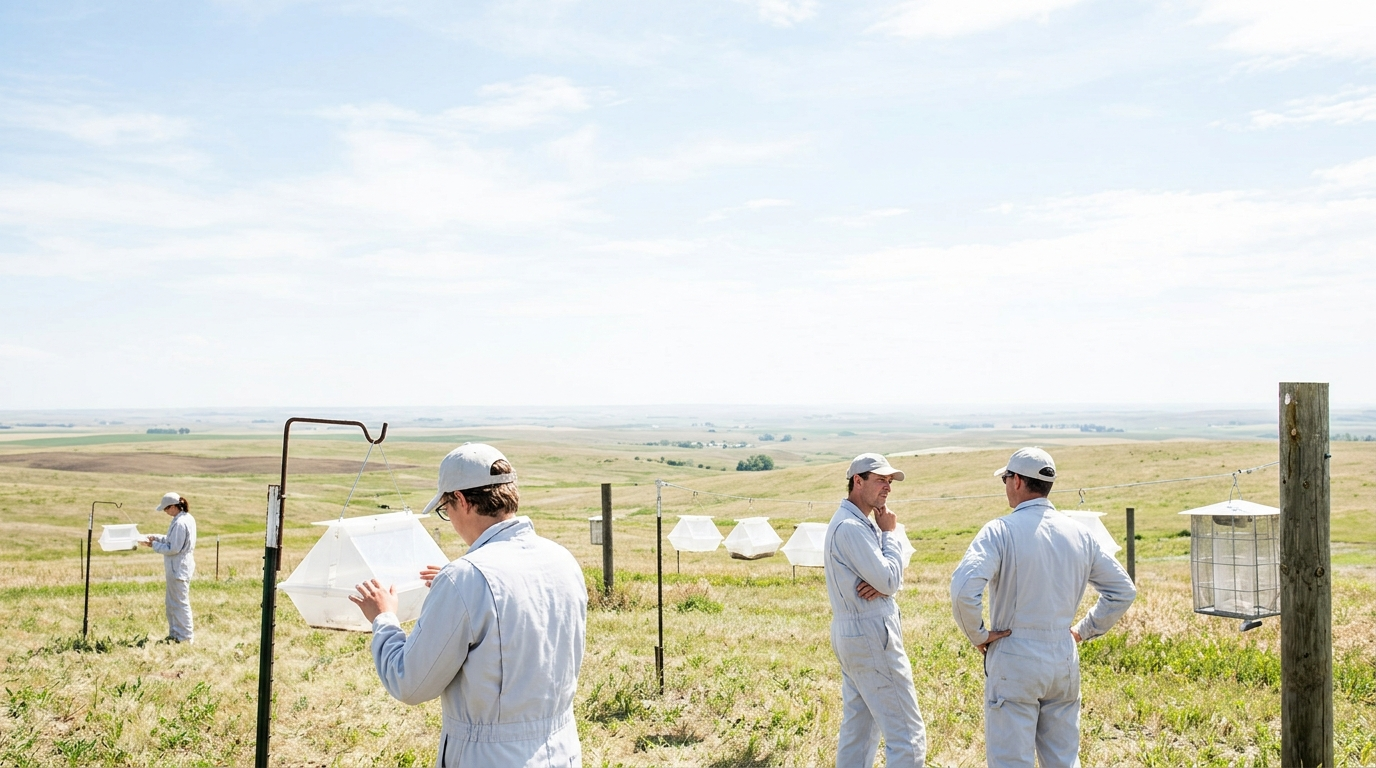
No wild flies have been caught during monitoring of an outbreak, offering hope that it is contained while exposing doubts about the traps used to detect it.
The absence of captured flies is encouraging, but it does not prove that wild populations have disappeared. Scientists have warned that current trapping methods may be outdated. That leaves officials with two competing explanations for the same result.
“No wild flies caught could mean the outbreak is contained. It could also mean, as scientists have said, that current trapping methods are outdated.”
The distinction matters because surveillance results guide decisions about controls, staffing, and public warnings. If the outbreak has ended, officials may be able to reduce emergency measures. If the traps are missing flies, easing those measures could allow the problem to spread unnoticed.
Why Zero Catches Are Not Definitive
A trap count measures what the monitoring system captures, not every insect present in an area. A zero can reflect true absence, but it can also result from low numbers, poor trap placement, weak bait, or changes in fly behavior.
Weather and seasonal movement can also affect whether insects reach traps. Without added evidence, a lack of captures remains an uncertain signal rather than final proof.
Scientists’ concerns about outdated methods add another layer of uncertainty. Traps designed around older knowledge may perform poorly if fly populations, habitats, or movement patterns have changed.
Containment Requires Several Lines of Evidence
Investigators can strengthen their assessment by pairing trap results with field inspections and reports from affected areas. Monitoring over a longer period can also show whether zero catches persist under different conditions.
Key questions for outbreak managers include:



- How many traps were operating, and where were they placed?
- How long did monitoring continue after the last confirmed detection?
- Were traps tested to confirm that their bait and design remained effective?
- Did field inspections find other signs of continued fly activity?
These details help separate a genuine decline from a failure to detect a small or scattered population. They also allow independent scientists to judge how much confidence should be placed in the findings.
Modernization Could Reduce Uncertainty
The warning about outdated traps points to a need for direct testing. Officials could compare existing equipment with newer designs in the same locations. Such trials would show whether one method detects flies more often than another.
That work should not delay immediate controls where risk remains. Instead, improved surveillance can support those measures and provide clearer evidence for ending them.
Public reporting will also matter. Agencies can explain the limits of zero-catch data without dismissing the encouraging result. Clear updates should identify the monitoring period, geographic coverage, and standards used to declare containment.
For now, the lack of wild fly catches supports cautious optimism, not certainty. Continued surveillance and tests of trapping methods will determine whether the outbreak is truly contained or merely harder to see. The next evidence should show not only that traps remain empty, but that the monitoring system can still find flies when they are present.