




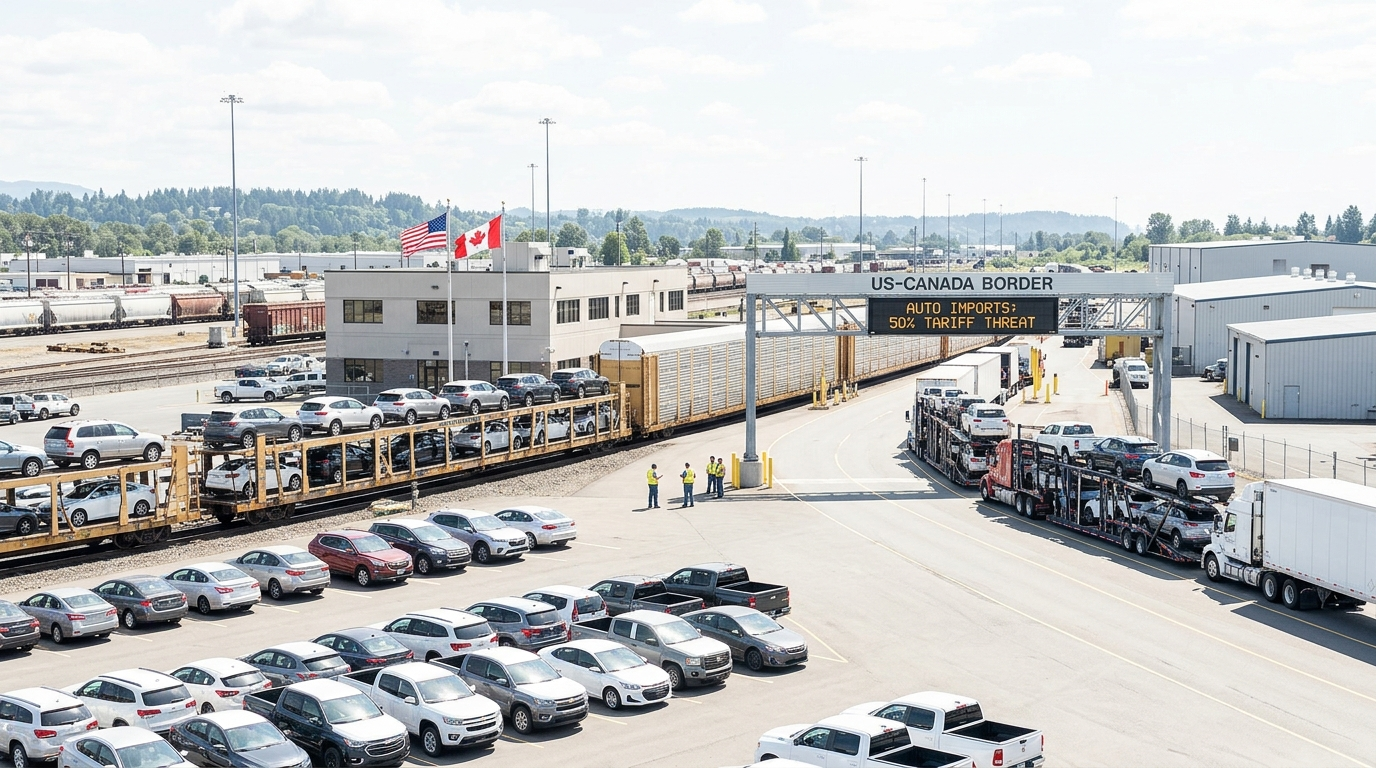
President Donald Trump has threatened 50% tariffs on auto imports from Canada, adding fresh uncertainty to a deeply connected North American industry.
The latest warning follows months of shifting trade rules since Trump returned to office. Automakers, suppliers, workers, and consumers now face questions about costs, production plans, and cross-border investment.
The threat also tests one of the closest manufacturing relationships between the United States and Canada. Vehicles and parts often cross the border several times before reaching a showroom.
An Industry Built Across Borders
For decades, American and Canadian auto production has operated as a shared system. Assembly plants rely on engines, electronics, metals, and other parts made on both sides of the border.
This structure makes tariffs harder to contain. A duty applied at the border may affect a vehicle assembled in Canada with American parts. It could also raise expenses for United States plants that depend on Canadian supplies.
The current trade framework was shaped by the United States-Mexico-Canada Agreement. Trump negotiated that pact during his first term to replace the North American Free Trade Agreement.
The agreement established detailed rules for vehicles seeking tariff-free treatment. It also encouraged automakers to source more content from North America and meet regional wage requirements.
A broad 50% tariff would disrupt assumptions made under that system. Companies planned factories, purchasing contracts, and shipping routes around access to an integrated regional market.



Costs Could Spread Through Supply Chains
Tariffs are collected from importers, not directly from foreign governments. Businesses must then decide whether to absorb the cost, seek cheaper supplies, or pass part of it to buyers.
A 50% duty would create pressure at several points in the auto business:
- Canadian-built vehicles could become more expensive in the United States.
- American factories using Canadian parts could face higher production costs.
- Suppliers could delay hiring, investment, or equipment purchases.
- Dealers could receive fewer vehicles or face sudden pricing changes.
The effects would depend on how a tariff order is written. Exemptions, implementation dates, and rules for vehicles meeting existing trade standards would shape the final impact.
Automakers may have limited short-term options. Moving an assembly line requires large investments, regulatory approvals, trained workers, and dependable suppliers. Production cannot shift across borders quickly.
Trade Pressure Meets Domestic Policy
Trump has long used tariffs to press companies to manufacture more goods inside the United States. Supporters view import duties as a tool for protecting domestic plants and encouraging new investment.
Critics argue that autos do not fit neatly into national categories. A vehicle carrying a Canadian label may contain substantial American labor and materials. Tariffs could therefore penalize domestic suppliers as well as Canadian producers.
The threat may also prompt retaliation from Canada. Any response targeting American products could widen the economic impact and place additional pressure on exporters.
Labor groups will watch whether the policy creates new United States jobs or places existing positions at risk. Workers at assembly plants depend on steady parts deliveries, while suppliers depend on predictable orders.
Uncertainty Becomes a Business Cost
The tariff level is only part of the concern. Frequent policy changes make it difficult for companies to set prices, negotiate contracts, and approve long-term investments.
Automakers generally plan new vehicles and factory spending years ahead. Unclear trade rules can lead executives to preserve cash or postpone decisions until the policy direction is clearer.
Consumers may see the consequences through higher prices, reduced discounts, or fewer choices. Used-car values could also rise if new-vehicle supplies tighten.
The next developments will depend on whether the 50% threat becomes formal policy and whether Canada responds. Industry leaders will also seek details about exemptions and treatment under the existing regional trade agreement.
For now, the warning has already achieved one result: it has forced the auto sector to prepare for another possible change. The broader test is whether tariffs produce more American manufacturing without damaging the cross-border system that supports it.