



Microsoft and Nvidia announced a joint push to speed up how companies build and deploy AI agents that can act in real time. The companies said new Foundry tools, Azure AI services, and digital twin technology are designed to help teams move from prototypes to secure, production systems. The tools aim to support industries that need fast decisions and strong safeguards.
The companies did not disclose release dates or pricing in the announcement. But the message signals a deeper alignment between cloud infrastructure and accelerated computing. It also reflects demand from businesses that want AI systems to plan, decide, and take action with fewer handoffs.
“Foundry tools, Azure AI, and digital twins will scale development of secure, production-ready agents for real-time action,” the companies said in a joint statement.
Why Real-Time Agents Matter Now
AI agents are moving from chat to action. Instead of only answering questions, they can handle tasks such as routing orders, tuning factory settings, or flagging safety issues. That shift raises the stakes for reliability and security. An agent making a wrong call can disrupt supply chains or expose data.
Microsoft’s cloud reach and Nvidia’s GPUs have fueled recent growth in large models and high-performance training. Pairing them with simulation and testing could cut risks before changes hit production. That is where digital twins come in.
The Role of Digital Twins
Digital twins are virtual models of real systems. Teams use them to test scenarios, measure risk, and set guardrails. In manufacturing, a twin of a plant can simulate line speeds and maintenance windows. In logistics, a twin can test delivery routes under storms or delays.
By linking agents to digital twins, developers can run “what if” checks at speed. They can also replay incidents to find failure points and improve prompts, policies, or model choices. This approach may reduce downtime and improve safety, especially when agents have permission to trigger physical or financial actions.
Inside the Tooling: Foundry and Azure AI
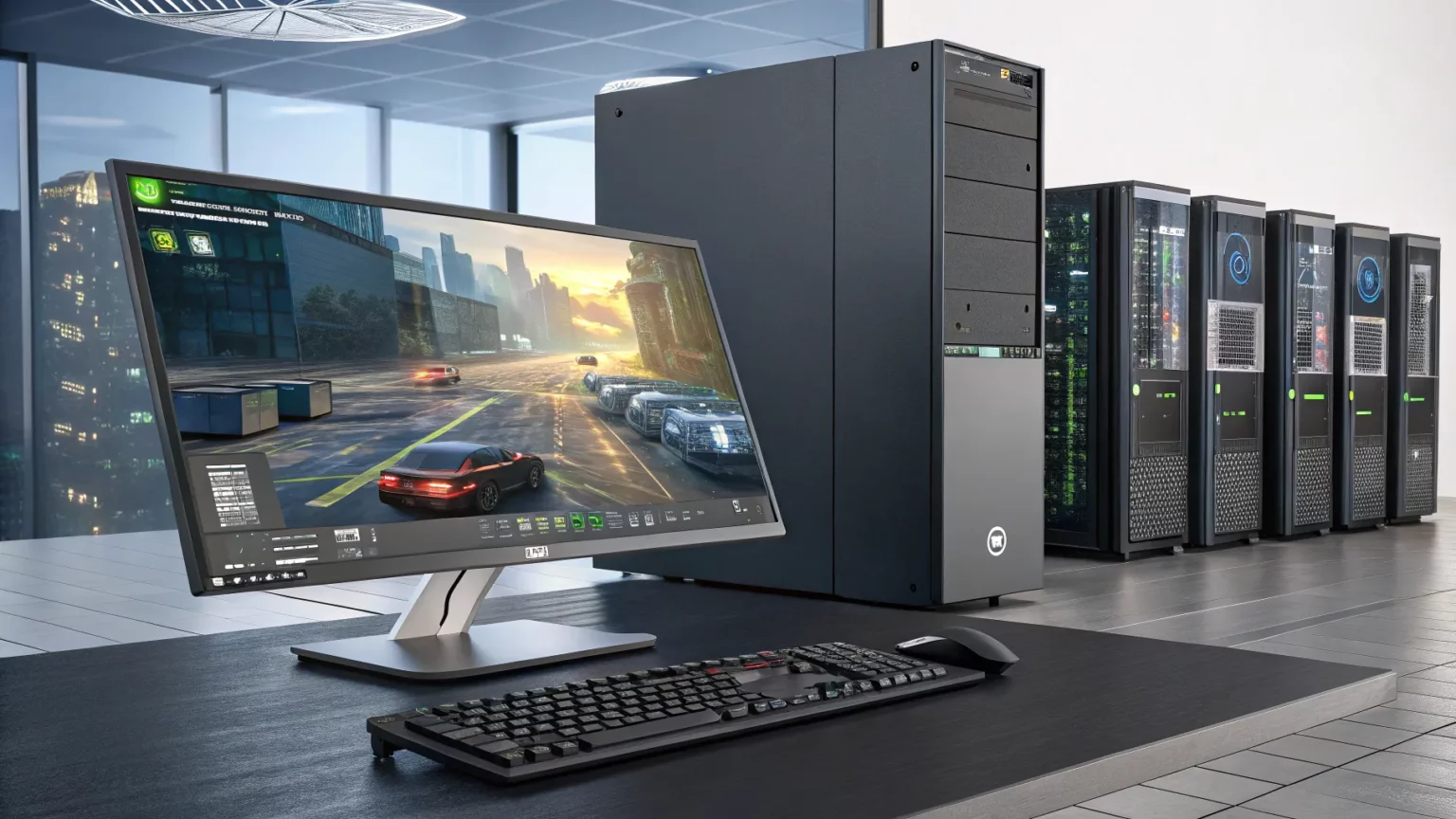
Nvidia’s Foundry tools target the AI lifecycle, from data processing to deployment on accelerated hardware. Microsoft’s Azure AI services provide orchestration, access control, monitoring, and integration with enterprise systems. Together, they aim to cover model training, evaluation, operations, and updates.
- Security by design: policy enforcement, identity controls, and logging for audit trails.
- Performance at scale: GPUs and cloud capacity for training and low-latency inference.
- Simulation first: digital twins to test agents before they reach production.
Enterprises often struggle to connect modeling tools with operational systems. The joint push suggests a more unified path, so teams can move from model experiments to steady services without manual glue code.


Potential Use Cases and Limits
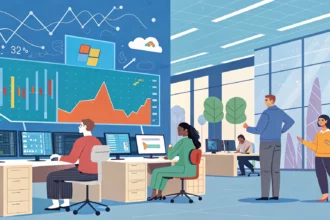
Early targets are likely to be sectors where seconds matter. Examples include factory control, power grid balancing, airline operations, and fraud prevention. In each case, agents need guardrails, rollback plans, and a clear chain of responsibility.
Analysts note trade-offs. Running large models for real-time action can be costly. Energy use is a concern. Vendor lock-in could slow future moves across clouds or hardware. Companies will want clear exit paths, cost estimates, and service-level terms before committing core operations.
What This Means for the Industry
The collaboration tightens the link between cloud platforms and accelerated computing. It pressures rivals to match simulation and governance features, not just model performance. It also supports a trend toward AI systems that manage tasks end to end, with less human stitching.
For developers, the promise is fewer tool gaps and more repeatable workflows. For risk teams, the draw is better testing, monitoring, and audit trails. For operations leaders, the appeal is lower latency and faster recovery when things go wrong.
What to Watch Next
Key signals in the coming months will include pilot case studies, benchmarks for latency and reliability, and details on how policy controls work across services. Integration with existing data stores and business apps will matter. Clear pricing and carbon data will be important for CFOs and sustainability teams.
The announcement points to a tighter playbook for building agents that can act in the real world. The next test is execution: real deployments, clear safety records, and measurable gains. If the tools deliver on speed and control, agent-driven operations could move from demos to daily use across many sectors.