




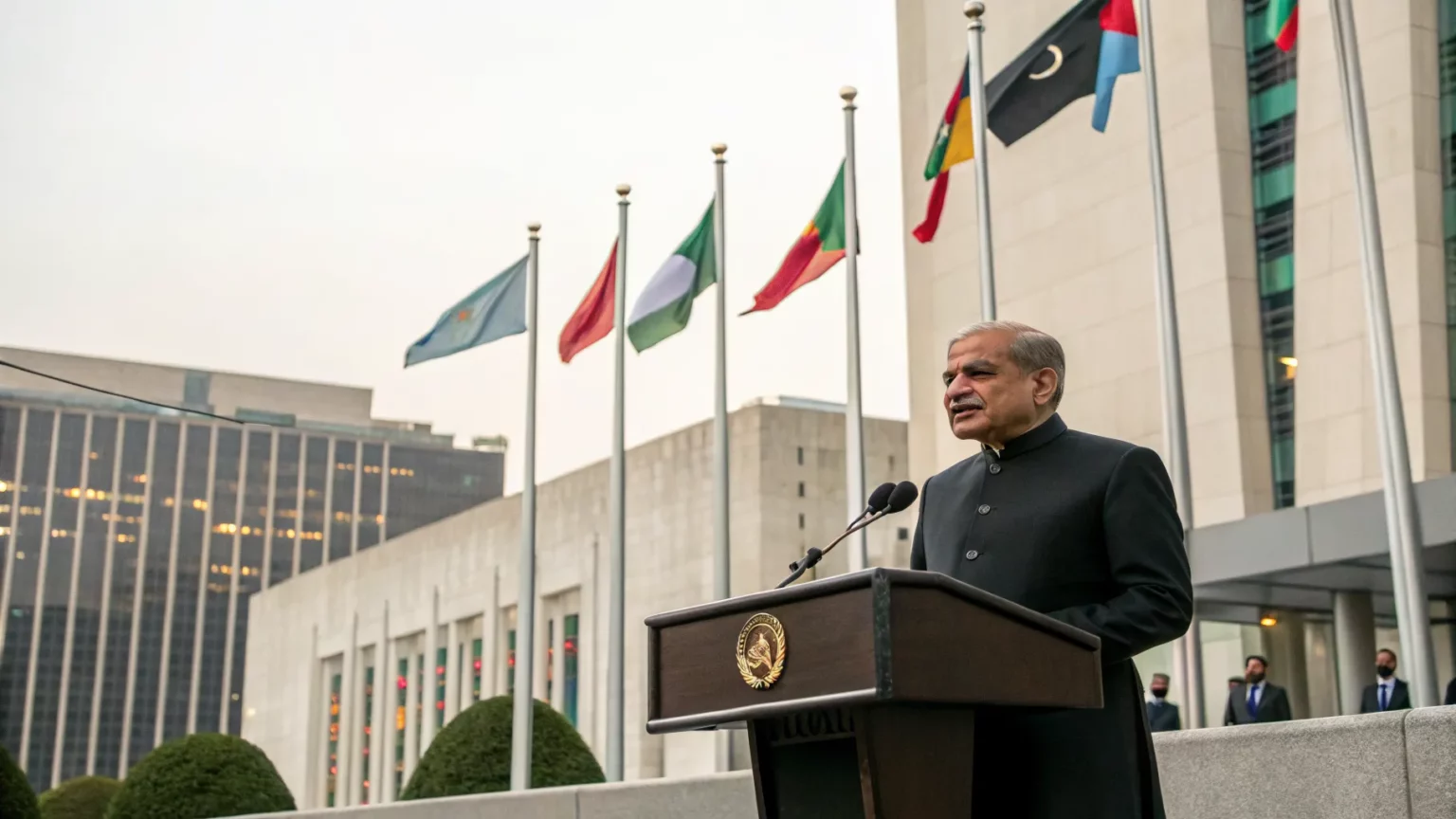
At the United Nations, Pakistan’s new prime minister used a global stage to press for urgent help after catastrophic floods put more than 33 million people at risk. Standing before world leaders in New York, Shehbaz Sharif framed his country’s crisis as a warning to others and a test of global will.
Sharif’s address came as Pakistan struggles to recover from historic monsoon floods that swamped towns, shattered roads, and wiped out crops. He called for support to rebuild and to prepare for future climate shocks, arguing that the world’s most vulnerable should not pay the highest price for a crisis they did not create.
“As I stand here today to tell the story of my …”
A Country Soaked and Strained
Pakistan’s recent floods followed record monsoon rains and glacial melt, compounding years of climate stress. Officials say tens of millions were affected across vast stretches of the country. Farms and villages vanished under water for weeks. Major health risks—waterborne disease, malnutrition, and disrupted care—surged in the flood zones.
Economists in Islamabad warn that rebuilding will take years and strain an already fragile budget. U.N. agencies have pushed for emergency funding to restore schools, clinics, and basic infrastructure. The damage to crops has driven up food prices, with knock-on effects for families already living on thin margins.
A Plea in Plain Terms
Sharif’s remarks were blunt. He tied Pakistan’s disaster to a warming planet and urged wealthy nations to step up financing for recovery and resilience. He emphasized the human cost—families uprooted, children out of classrooms, communities cut off.
He stopped short of assigning blame, but his message was clear: countries with the least emissions face the harshest fallout. Pakistan, he argued, needs immediate relief and long-term support to guard against the next shock.
The Global Debate Over Who Pays
His appeal fits into a wider fight at the U.N. over climate finance. Developing countries have long called for “loss and damage” funds to cover the harms they cannot prevent or adapt to. Donor nations have backed some new mechanisms but argue that money must come with clear plans and oversight.
Climate advocates side with Pakistan, saying disasters like these are becoming more frequent and severe. They argue that promises made a decade ago still fall short of what is needed on the ground. Others worry about how funds are spent and say better early-warning systems, resilient roads, and smarter housing rules can save lives and money.



- Pakistan seeks immediate relief for flood-hit communities.
- Long-term financing is needed for resilient infrastructure.
- Debate continues over how to structure “loss and damage” aid.
What Recovery Looks Like
Officials outline a two-track plan: restore daily life now and reduce risk later. The first step is repairing roads, reopening schools, and restoring health services. The next step is strengthening levees, redesigning drainage, and moving homes out of high-risk areas.
Public health experts warn that recovery must include clean water systems and vaccination drives to head off outbreaks. Agricultural groups want help replanting and diversifying crops that can better handle intense rain and heat.
Signals for the Future
Sharif’s pitch is also a diplomatic test. If major economies back words with funding, Pakistan could model how to rebuild smarter after climate shocks. If not, the country risks falling into a loop of damage and repair that drains public trust and public budgets.
For now, the prime minister’s message stands as both plea and warning. The floodwaters showed how quickly a season can become a national emergency. Whether the world responds with speed—and with staying power—may shape not just Pakistan’s recovery, but how other vulnerable nations face the next storm.