




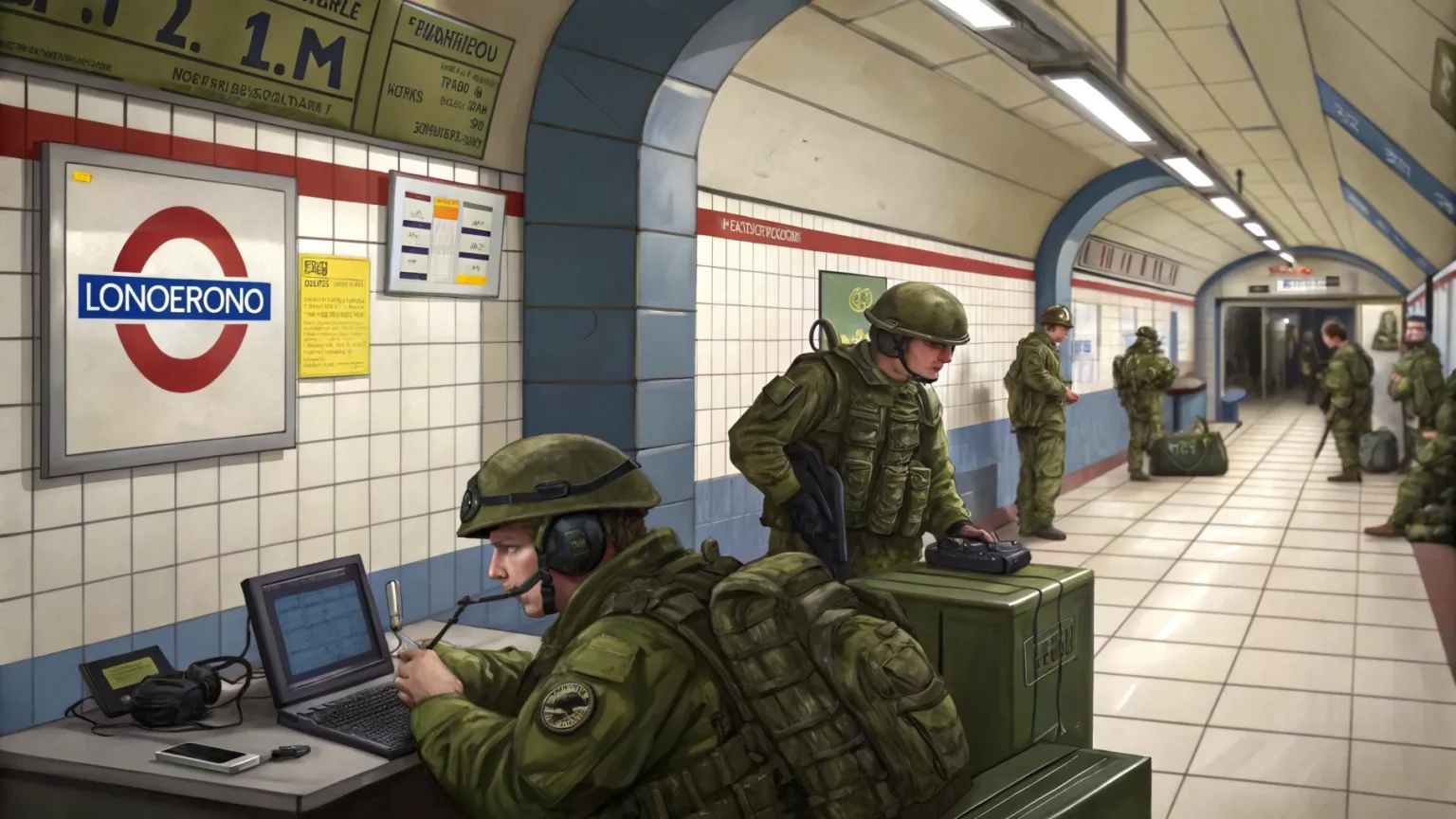
A quiet corner of central London turned into a military hub this week as a disused platform at Charing Cross Tube station became the command center for a NATO training exercise. Hundreds of personnel from the United States, Britain, France, and Italy took part. The operation tested how allied forces coordinate in a dense city environment and under pressure. It also showed how civilian infrastructure can support national defense without disrupting daily life.
A disused platform of London’s Charing Cross Tube station was transformed into a temporary military headquarters for a NATO wargame exercise this week involving hundreds of personnel from the United States, Britain, France and Italy.
Why a Disused Tube Platform
Urban spaces are complex. Underground stations add another layer of difficulty with tight corridors, poor signals, and heavy shielding. Training in such places helps commanders plan communications, logistics, and movement when streets are crowded and sight lines are short. A disused platform offers a secure, contained site that does not disturb passengers. Charing Cross, located near government and commercial districts, mirrors the mix of assets and risks found in many capitals.
Allied forces often train in settings that mirror real conditions. Subterranean spaces challenge radios, sensors, and mapping. They also compress decision-making. Teams must move, communicate, and manage supplies in minutes, not hours. Using an idle station allows that work while keeping the public safe and informed.
Inside the Urban Exercise
The headquarters set-up likely tested command-and-control, secure communications, and rapid information sharing. In a city setting, responders need to coordinate with police, transport staff, and local officials. The exercise would have included tight timelines and simulated disruptions. These can include blocked routes, network failures, or civilian crowds.
Interoperability sits at the heart of such drills. Forces from four nations must share a common picture, agree on procedures, and trust each other’s systems. Running that from an underground command post adds stress by design. It forces teams to work through signal issues, equipment limits, and different standard operating methods.
Security and Public Impact
Holding the exercise in a closed platform reduced the impact on commuters. It also kept sensitive equipment out of public view. Coordination with the transport operator and city officials is key. That includes safety checks, controlled access, and clear scheduling to avoid busy times.
- Minimal disruption by using a non-operational platform
- Controlled access to protect sensitive systems
- Coordination with local authorities for safety
Exercises like this also test how quickly authorities can stand up a command site. That skill can support responses to major incidents, from infrastructure failures to emergencies. The location allows real-world checks of power, ventilation, and emergency egress under load.
NATO’s Training Goals and Trends
NATO has increased focus on urban and critical infrastructure training in recent years. Cities pack people, services, and networks into small areas. Disruptions spread fast. Allies need to move resources, share intelligence, and give clear instructions when seconds matter. Drills now often include cyber, information operations, and logistics alongside field tactics.



Multi-nation scenarios reflect current planning needs. Partners must align radios, encryption, maps, and terminology. Standardization helps, but testing in a hard setting finds gaps that paperwork misses. Lessons from one city can apply to others, from Paris to Naples to New York.
What Comes Next
After-action reviews will likely assess communications reliability underground, speed of decision-making, and coordination with civilian agencies. Planners may update equipment lists, adjust procedures, or schedule follow-on drills in other transit sites. Future exercises could add more digital stress, such as simulated network outages or misinformation spikes.
This week’s operation shows that even unused corners of a city can serve national and allied security. It also shows the value of training where the challenges are real. As cities grow and networks link every service, allied forces will keep practicing in settings that test both people and systems.
The key takeaway is clear. Urban readiness depends on practice in real places, with real constraints, and with partners who can act as one team. Watch for more joint drills in complex sites and for steady updates to gear and plans that reflect what was learned under London’s streets.