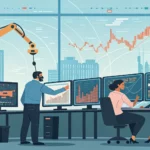





Scientists say a popular AI technique could quicken the hunt for new physics while cutting computing costs. The method, known as transfer learning, reuses knowledge from one task to help another. It promises faster results for teams sifting through vast data from telescopes and particle detectors.
The approach matters now, as researchers analyze rising volumes of data from major experiments and surveys. It could reduce the need for massive simulations and free computing time for other work. But it carries risks if models lean too hard on what they have seen before.
Background: Why Simulations Strain Research
Modern physics depends on simulations to compare theory with data. Particle physics simulates collisions to predict how known particles behave. Cosmology models the growth of structure across the universe. These runs are slow and expensive. Teams often generate billions of events or sky maps to train and test tools.
Transfer learning offers a shortcut. A model trained on one set of simulations can be adapted to a new dataset or a related task. That way, researchers do not need to start from scratch. They can use prior training to focus only on the last steps.
“Scientists found that transfer learning can make the search for new physics in the universe much faster, slashing the need for expensive simulations.”
How the Method Works in Practice
In a typical setup, a neural network learns features from a large labeled set. Those features capture patterns that reappear across datasets. Researchers then fine-tune the model on a smaller, task-specific sample. The final system can classify events, spot rare signals, or estimate parameters with fewer new examples.
This is attractive for experiments that change detectors, upgrade sensors, or shift targets. A well-trained base model can adapt. It can cut training time and reduce storage and power demands tied to simulation farms.
- Reuse of learned features cuts training steps.
- Less simulation time lowers cost and energy use.
- Faster turnarounds speed checks and cross-calibration.
The Catch: Familiar Patterns Can Hide the New
Transfer learning is not risk-free. If a model leans too much on patterns from prior data, it may miss signals that do not fit those patterns. That weakness matters in searches where the goal is to find the unknown. A blind spot could bury a weak but real sign of new physics.
“Yet the approach can backfire when AI relies too heavily on familiar patterns, potentially missing evidence of something truly new.”
Experts warn that bias enters when the source domain differs from the target in subtle ways. Shifts in detector noise, calibration, or event mix can mislead a model. The result is overconfidence and lower sensitivity to outliers.



Safeguards and Balanced Strategies
Researchers describe several checks to limit risk while keeping speed gains. They propose stress tests that add synthetic anomalies to see if models detect them. They also rotate between multiple base models trained on different assumptions. Independent pipelines can catch mismatches early.
Common steps include:
- Blinded analyses, so tuning choices do not bias outcomes.
- Out-of-distribution monitors that flag unfamiliar inputs.
- Uncertainty estimates that reflect training-source limits.
- Regular cross-checks with smaller, high-fidelity simulations.
Teams also favor interpretable features where possible. Simple, physics-motivated inputs can make diagnostics clearer. If performance drops, investigators can trace which features fail and why.
What It Means for Big Experiments
Large collaborations face tight budgets and computing caps. Faster tools could help them iterate more often and explore more theories. That may bring quicker feedback on detector upgrades and survey strategies. But leaders stress that speed should not replace rigor.
Some see a hybrid path. Use transfer learning to triage data and highlight promising regions. Then apply slower, high-precision methods to confirm any hints. This split could keep discovery channels open without overwhelming resources.
The promise is clear: reuse can save time and money across physics searches. The caution is also clear: the unknown can hide in patterns models think they already understand. The next phase will test safeguards at scale. Readers should watch for results from upcoming data releases, side-by-side studies of training sources, and reports on anomaly detection rates. The balance between speed and discovery may define the next wave of AI in physics.