



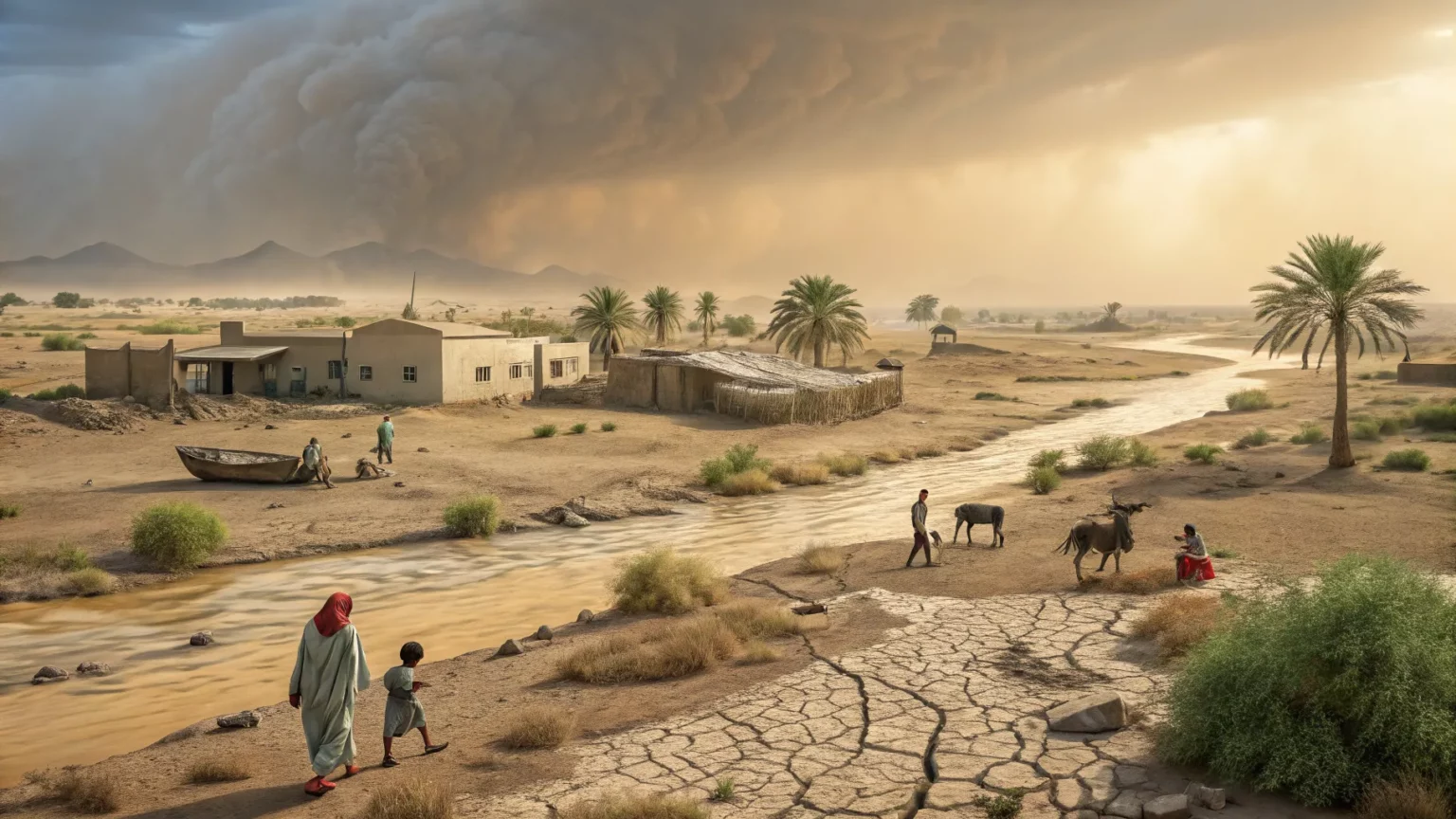
Every year, Dadu District in Pakistan braces for a new test from nature. Sandstorms, drought, and floods cycle through the seasons, straining families and services. Located in Sindh province along the lower Indus, the district sits at the center of the country’s climate pressures. Officials, aid groups, and residents say the risks are growing as weather patterns shift.
“Every season brings a new struggle for people in Dadu District, Pakistan, an area prone to sandstorms, drought and flooding.”
A District on the Front Line
Dadu lies near the Indus River and downstream barrages, where monsoon surges can back up for miles. In 2022, historic floods overwhelmed much of Sindh. Government and United Nations tallies reported more than 33 million people affected across Pakistan and over 1,700 deaths. Dadu was among the hardest hit as water from Manchar Lake and the Indus spread into towns and fields.
Many families still live with the damage. Crops failed, livestock perished, and roads crumbled. In the dry months that followed, wells ran low and winds carried dust into villages. Health workers documented spikes in waterborne disease after the floods, then respiratory issues during dust events. The pattern is now familiar, and it is unforgiving.
Sand, Drought, and Flood: The Seasonal Cycle
Local officials describe three distinct threats. Each peaks at a different time, but together they create year-round stress.
- Sandstorms sweep through during hot, dry spells, cutting visibility and choking travel.
- Drought reduces canal flows and shrinks water tables, pushing farmers to the edge.
- Monsoon floods arrive with intense rainfall and upstream runoff, breaching embankments.
Farmers who depend on cotton, rice, and wheat must plan for each hazard. One bad season may be survivable. A bad year, with all three, can erase savings and force migration.
Human Toll and Local Resilience
Teachers and health workers report interrupted schooling and clinics operating in emergency mode. Women often carry the heaviest load, walking farther for water when pumps fail. Small shop owners struggle when supply routes close for weeks. Aid groups set up mobile units to reach flooded hamlets and dust-struck settlements. Yet access remains a challenge when roads sink or bridges wash out.
Villagers respond with their own tactics. They raise beds and grain stores on platforms for the flood months. They plant short-duration crops, hoping to harvest before late monsoon surges. They seal windows before dust storms and pool funds to repair hand pumps after a dry winter. These steps help, but they do not remove the risk.
Infrastructure and Policy Responses
Provincial authorities have reinforced sections of the Indus embankments near Dadu and cleared drainage channels. Relief agencies supported early warning systems using radio and mobile alerts. Engineers patched key road links to Mehar and Khairpur Nathan Shah after 2022. Water managers also adjusted canal schedules to balance irrigation needs and flood safety.


Experts say longer-term planning is needed. Raised housing platforms, safer schools, and flood-resilient clinics can cut losses. Restoring wetlands around Manchar Lake could absorb peak flows. Drought planning, including efficient irrigation and community water storage, would blunt the next dry spell. Careful land use could reduce wind-blown dust.
Forecasts, Tradeoffs, and What to Watch
Seasonal forecasts suggest heavier bursts of rain even when total rainfall holds steady. That means higher flood peaks and longer dry gaps. Crop models point to yield swings that make income less predictable. Insurance pilots in Sindh are testing payouts tied to rainfall or river levels. Early results show promise for stabilizing household budgets, but costs and access are still hurdles.
Analysts warn of tradeoffs. Stronger embankments protect towns but can trap water on the wrong side if drainage is weak. Expanding irrigation can lift incomes but may deepen drought stress if aquifers are not recharged. Each fix must fit the local terrain and the river’s behavior.
Dadu is not alone, but its mix of river, lake, and desert wind makes it a bellwether for Pakistan’s climate risk. The coming seasons will test new embankments, warning systems, and community plans. Watch for stronger early alerts, safer routes for evacuation, and investments in water storage. The measure of success will be simple: fewer lives upended when the next storm, dry spell, or flood arrives.