



A leading voice in organic agriculture is drawing fresh attention to the tiny life beneath fields and orchards, arguing that the path to resilient harvests runs through healthy soil. As policymakers weigh climate and water challenges this year, her message is reaching more farms, classrooms, and government briefings: soil is alive, and treating it that way can change how food is grown.
The scientist, a longtime figure in the organic movement, helped popularize a simple idea with far-reaching impact: feed and protect the organisms in soil and they will feed and protect crops. Advocates say the approach can reduce fertilizer and pesticide use while building resilience to drought and heat. Skeptics want more side-by-side data and clearer standards for measuring results.
A scientist and leader in the organic farming movement, she popularized the “soil food web,” an understanding that soil is a complex realm of microorganisms.
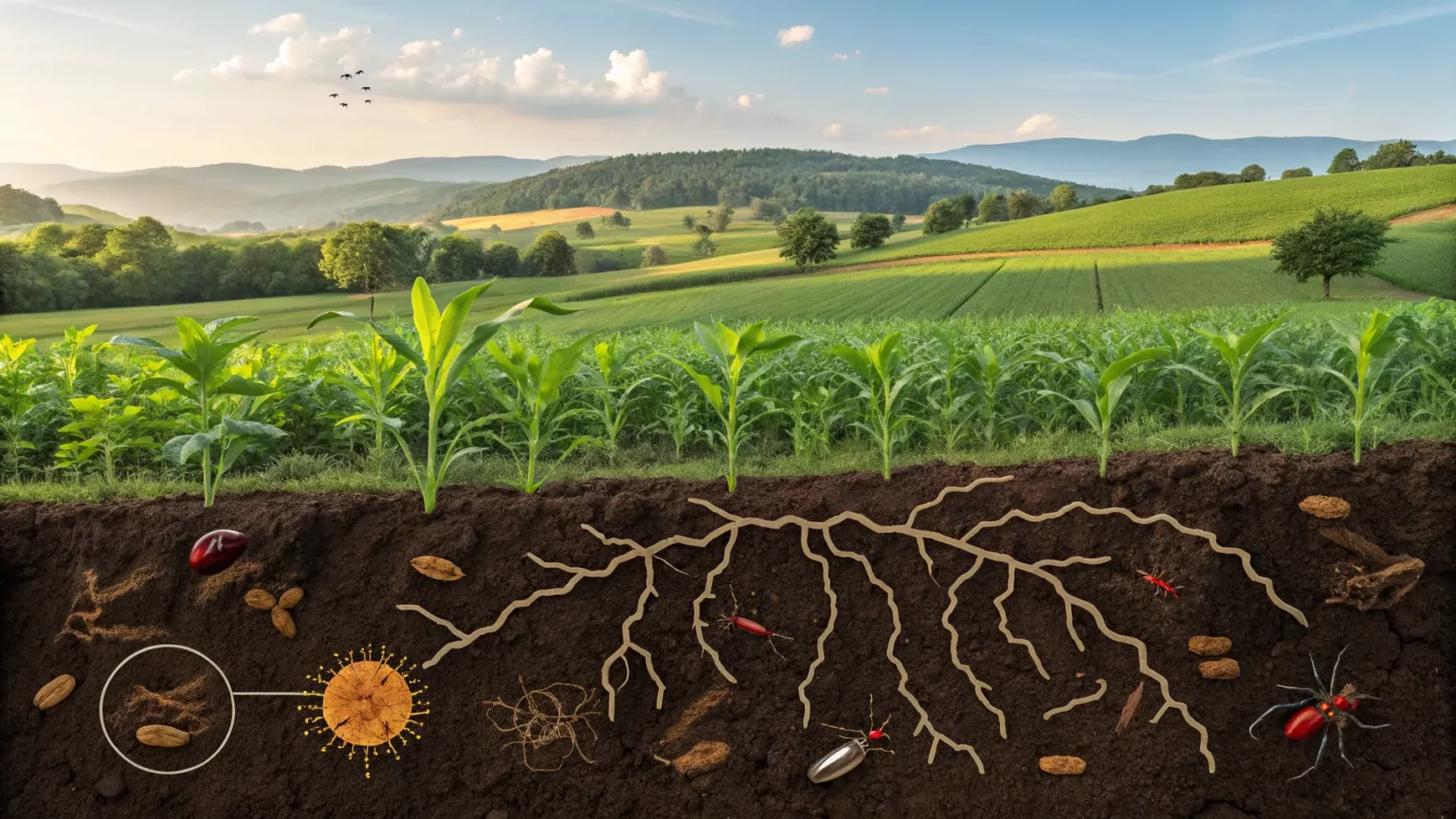
What the Soil Food Web Means
The concept describes soil as a living network of bacteria, fungi, protozoa, nematodes, arthropods, and earthworms. Each group plays a role in cycling nutrients, storing carbon, and defending roots. When this network thrives, plants tend to gain access to nitrogen, phosphorus, and micronutrients with fewer synthetic inputs.
Farmers who adopt the approach often focus on keeping soil covered, minimizing tillage, diversifying crops, and adding compost or plant-based amendments. They aim to grow microbial life, not just yields. As one educator put it, healthy soil “acts like a savings account,” buffering farms against weather swings.
Why Interest Is Rising Now
Concerns about input costs, water limits, and extreme weather have made soil health a practical priority. According to the UN Food and Agriculture Organization, about one-third of the world’s soils are degraded, putting pressure on long-term productivity. At the same time, consumer demand for food grown with fewer chemicals has climbed in many markets, lifting interest in organic and regenerative labels.
- Farmers seek lower input costs and steadier yields.
- Water scarcity and heat waves push soil-cover strategies.
- Buyers reward practices tied to climate and biodiversity goals.
Evidence, Debate, and Measurement
Field reports suggest that cover crops, reduced tillage, and compost can improve soil structure and water holding capacity within a few seasons. Some growers describe fewer disease outbreaks when fungal networks recover. Yet agronomists caution that outcomes are site-specific, and the transition can take time.
Independent trials are expanding. Universities are comparing yield, nutrient density, and soil carbon across conventional and soil-life-focused systems. Researchers stress the need for consistent tests, such as aggregate stability, respiration, and microbial biomass, to track progress rather than relying on single-year yields.
Critics warn that overstating benefits could mislead farmers facing tight margins. Supporters counter that short-term trials often miss gains in resilience and input savings, which show up over several seasons.



On-Farm Practices Taking Hold
Growers experimenting with the soil food web often start with small plots. They test compost quality, reduce passes with heavy equipment, and add diverse cover crops to feed microbes year-round. Some integrate livestock to cycle nutrients. Others brew biological extracts to jump-start life in tired soils, though results vary.
Advisers urge careful monitoring. A shovel test can reveal structure and earthworm activity. Simple infiltration tests show how fast water enters the ground. Over time, healthier soils tend to crust less, erode less, and carry crops through dry spells.
Policy and Market Signals
Public agencies are paying closer attention. Soil-health cost-share programs in several regions fund cover crops and reduced tillage. Food companies are piloting sourcing programs that reward farms for measurable gains in soil function. Insurers are exploring whether healthier soils lower weather-related risk.
Scientists say better metrics will guide these efforts. Clear baselines and annual checks can tie incentives to outcomes, not just practices. That, they argue, will help scale the approach while maintaining scientific rigor.
What to Watch
Expect more collaboration among farmers, researchers, and buyers as pressure mounts to grow more with fewer inputs and less water. The biggest questions now center on measurement, timelines for transition, and farmer training.
For many, the idea is simple even if the biology is complex: protect the networks underfoot and they will support crops above. The push ahead will hinge on solid data, practical tools for growers, and stable incentives that reward long-term soil care.
The season ahead may bring more pilot programs, university trials, and product tests. The outcome will shape how quickly the soil food web moves from theory to the standard toolkit on farms large and small.