




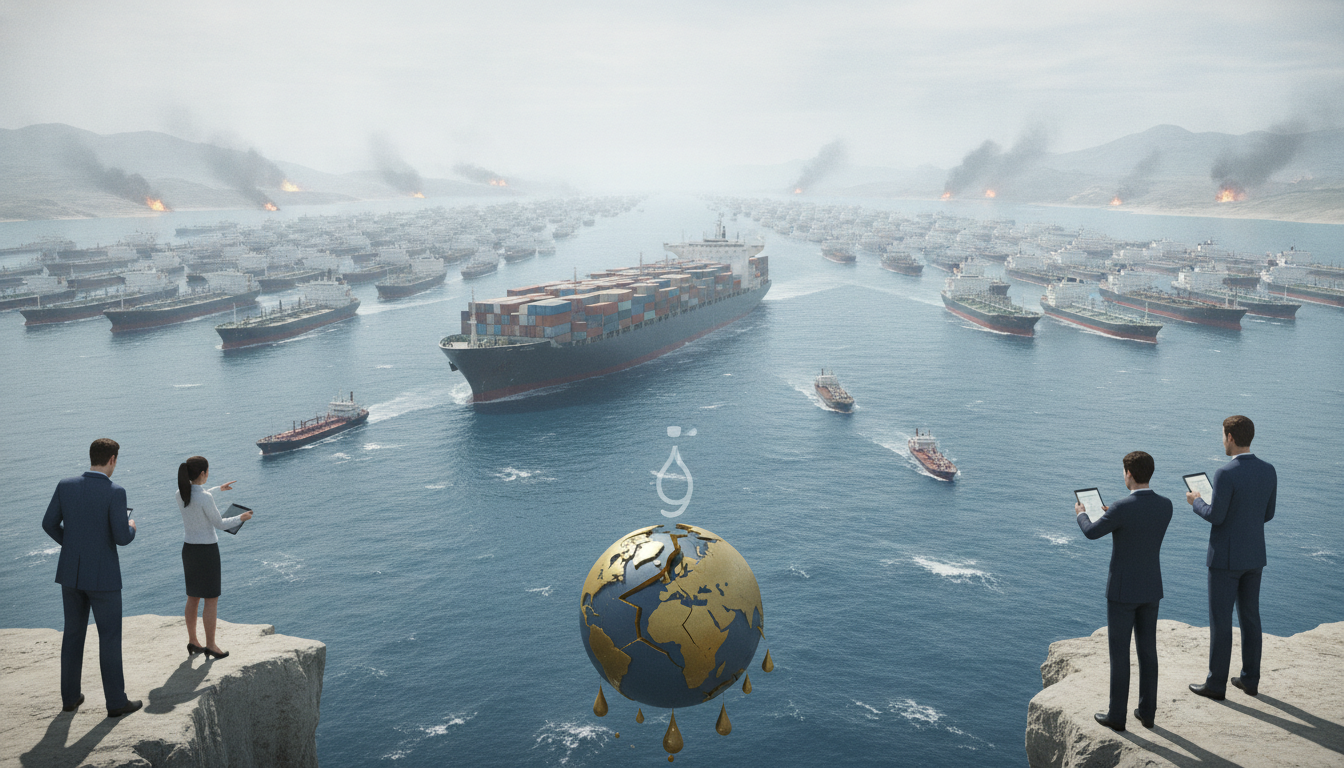
Fears over energy security surged as reports pointed to the largest strain on oil supplies in modern times, with renewed blockades at the Strait of Hormuz threatening trade and growth. Economists flagged the disruption after fighting in Iran expanded, warning that fresh shipping limits could spill into inflation and financial stress worldwide.
The largest-ever global oil supply shortage has topped economists’ lists of concerns since the start of the Iran war.
The Strait of Hormuz sits between Iran and Oman. It links the Persian Gulf with global markets. Tankers that pass through carry crude from major producers to Asia, Europe, and North America. During past crises, even partial slowdowns at this chokepoint lifted prices. Today’s constraints arrive as many countries are still working to control inflation.
The Chokepoint at the Center of the Crisis
Roughly a fifth of the world’s oil trade has historically moved through the Strait. Any blockade, even short, can drive up freight costs and insurance. When routes are unsafe, ships queue or divert, reducing effective supply.
Even as the United States and Iran resumed their blockades of the Strait of Hormuz, the economy faces a new problem.
Security shutdowns here affect more than crude. Liquefied natural gas from Qatar also depends on this narrow waterway. That raises concern for power generation and winter stockpiles in parts of Asia and Europe.
Immediate Economic Ripples
Markets tend to react before barrels are missed. Traders price in risk of longer outages, which can lift fuel costs at the pump and for airlines. Central banks watch for a second wave of inflation if energy prices rise and spread into transport and food.
Households feel the squeeze first. Higher fuel prices hit delivery fees and commuting costs. For businesses with thin margins, that can slow hiring and investment. If the shock lasts, growth forecasts may fall and credit conditions may tighten.
- Higher shipping insurance and longer routes raise delivered oil prices.
- Fuel costs can lift headline inflation and pressure central banks.
- Energy-sensitive sectors, such as airlines and chemicals, face margin risk.
Supply Options and Their Limits
There are levers that can soften the hit. Some producers hold spare capacity, though bringing it online takes time. Government stockpiles can be released in coordination, adding short-term barrels to the market. Refiners may adjust runs, drawing down inventories to cover immediate needs.
Still, rerouting has limits. Pipelines that bypass the Strait exist, but they cannot replace full tanker flows. If the blockades persist, buyers may bid up cargoes from the Atlantic Basin, shifting trade patterns and raising costs for long-haul shipments.



Security, Diplomacy, and the Path Ahead
Naval escorts and mine clearance can reopen lanes, but they carry risk and require coordination. Diplomacy could reduce tensions and allow safe passage, even without a full ceasefire. Energy importers may seek emergency deals and swap arrangements to keep refineries supplied.
Analysts note that price spikes tied to chokepoints can fade quickly if traffic resumes. The danger grows when outages last into weeks, which can lock in higher inflation expectations. Policymakers will weigh targeted fuel tax relief or strategic stock releases against the risk of fueling demand.
What to Watch Next
Key signals will come from shipping data, insurance rates, and official traffic notices. Inventory reports from major consumers will show whether stockpiles can bridge the gap. Any joint statement on maritime security could calm markets.
If blockades ease, prices may retreat. If they persist, governments will face hard choices on energy security and inflation control. The stakes are clear: keep trade moving through a critical strait, or prepare for a longer period of higher costs and slower growth.