




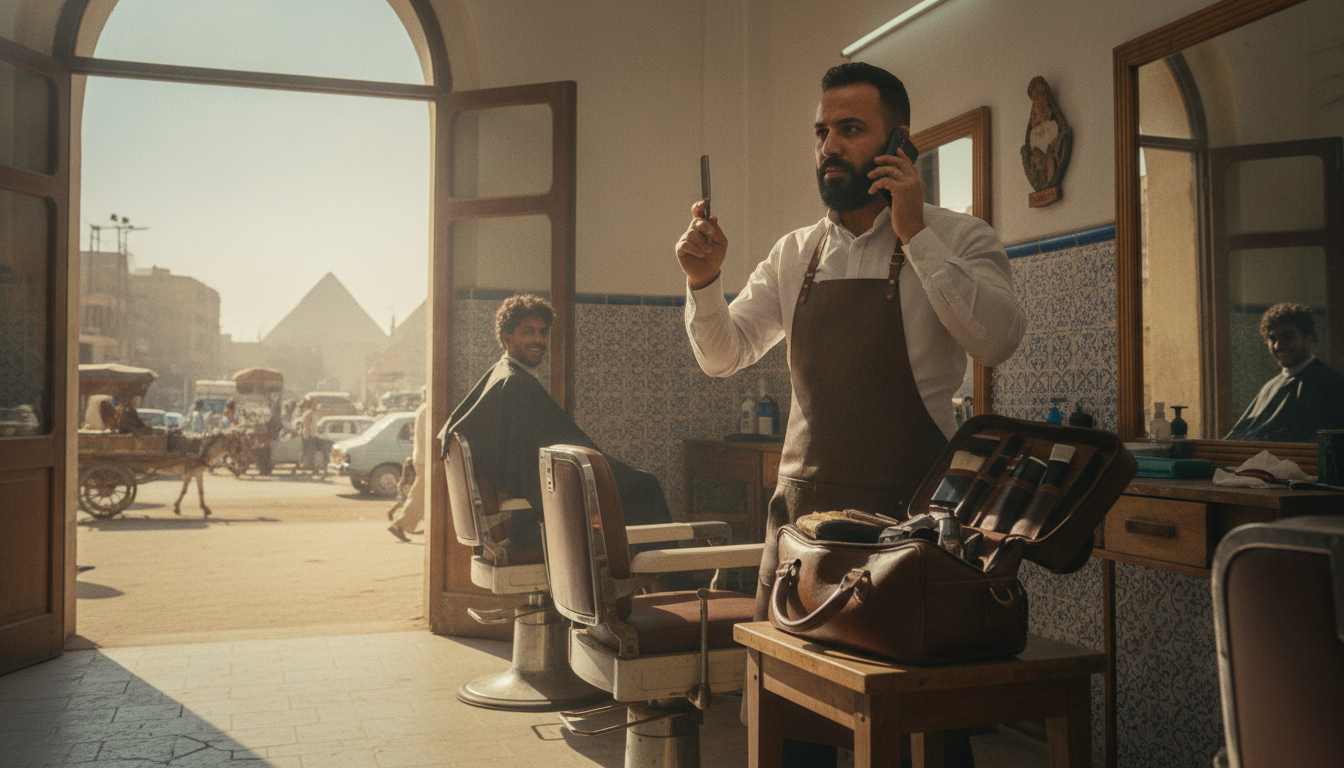
When word reached a Seattle-area barbershop that a chair was open in Egypt, the owner packed his tools and said yes. The move by Maram Hammadi, an Iraqi immigrant who built a business after years of hard work, shows how skilled workers can pivot across borders in a day.
Hammadi grew up far from the Pacific Northwest. He learned grit on dirt fields in Iraq, then found a foothold in the United States with clippers and a rented chair. He later opened a shop outside Seattle. When he heard Egypt needed a barber, he cleared his schedule and prepared to travel.
Maram Hammadi, who grew up playing on dirt fields in Iraq before opening a barbershop outside Seattle, heard Egypt needed a barber. He cleared his books.
His decision speaks to a new kind of mobility for small business owners. A barber’s work now moves with a carry-on case, a passport, and a phone full of loyal clients. Demand can come from a sports camp, a film set, a wedding season, or a private client who wants a familiar touch far from home.
From Local Shop to Global Chair
Hammadi’s path reflects a common immigrant arc. He arrived with limited means, built a client base cut by cut, and learned the needs of a new market. The shop became a gathering place where customers swap news and advice. It also became a springboard for new chances.
Taking a short-term post in Egypt required trust from clients back home. It also required confidence that his reputation would grow. Many barbers keep waitlists that stretch weeks. A sudden trip can mean lost revenue if regulars drift. Yet it can also raise a profile and bring in new business when the barber returns.
Industry veterans say travel jobs demand careful planning. A barber needs reliable tools, power adapters, and a clean workspace on arrival. Payment terms must be clear. Schedules change and flights get delayed. The work rewards those who stay flexible and deliver under pressure.
Why Barbers Get the Call
Personal grooming has become a feature of large events. Teams, performers, and executives often seek on-site services. A trusted barber offers more than a fade or a beard line. He offers calm before a game, a camera shoot, or a high-stakes meeting.
Hammadi’s story fits that pattern. A need emerged. Someone vouched for his skills. He responded quickly. The request may have stemmed from a training camp, a business gathering, or a private client. The exact reason matters less than the speed and trust that moved him across continents.



- Mobile barbers can set up in hotels, venues, or private homes.
- Clients prize consistency and hygiene across locations.
- Travel work can expand reach and increase rates.
Balancing Community and Opportunity
Back in Washington state, shops like Hammadi’s serve as social anchors. Regulars come in before job interviews, holidays, and school photos. The barber remembers each client’s style. Stepping away, even briefly, is a tradeoff with community ties.
Some clients welcome the ambition. A trip like this can bring new techniques and fresh ideas to the home shop. Others worry about wait times and rescheduling. Owners often prepare by training assistants, posting schedules in advance, and offering make-up hours when they return.
For immigrants, the decision to travel for work also carries meaning. It links old and new homes. It shows a career that once seemed limited to a single block can reach many places. It can inspire younger workers who are weighing trade school, apprenticeships, or small business starts.
What This Move Signals
Hammadi’s quick turn to Egypt shows how service trades are changing. Work follows reputation on social media and by word of mouth. Barbers, makeup artists, and stylists now book cross-border gigs with a message thread.
There are risks. Travel costs can erase earnings if plans shift. Health and safety standards differ by venue. Insurance may not cover every situation. Clear contracts help protect both sides.
There are rewards. A successful trip can lead to repeat bookings. It can bring new clients and teach new techniques. It can strengthen a brand that began with a single chair.
Hammadi’s choice to clear his books for Egypt captured a simple idea. Skill opens doors. Preparation keeps them open. His next cut, whether in Cairo or back near Seattle, will carry that message.
The latest development is his swift acceptance of a role abroad. The key takeaway is the blend of ambition and planning that made it possible. Watch for more tradespeople to say yes to short-term work in new places, and for local shops to adapt with stronger teams and clearer schedules.