



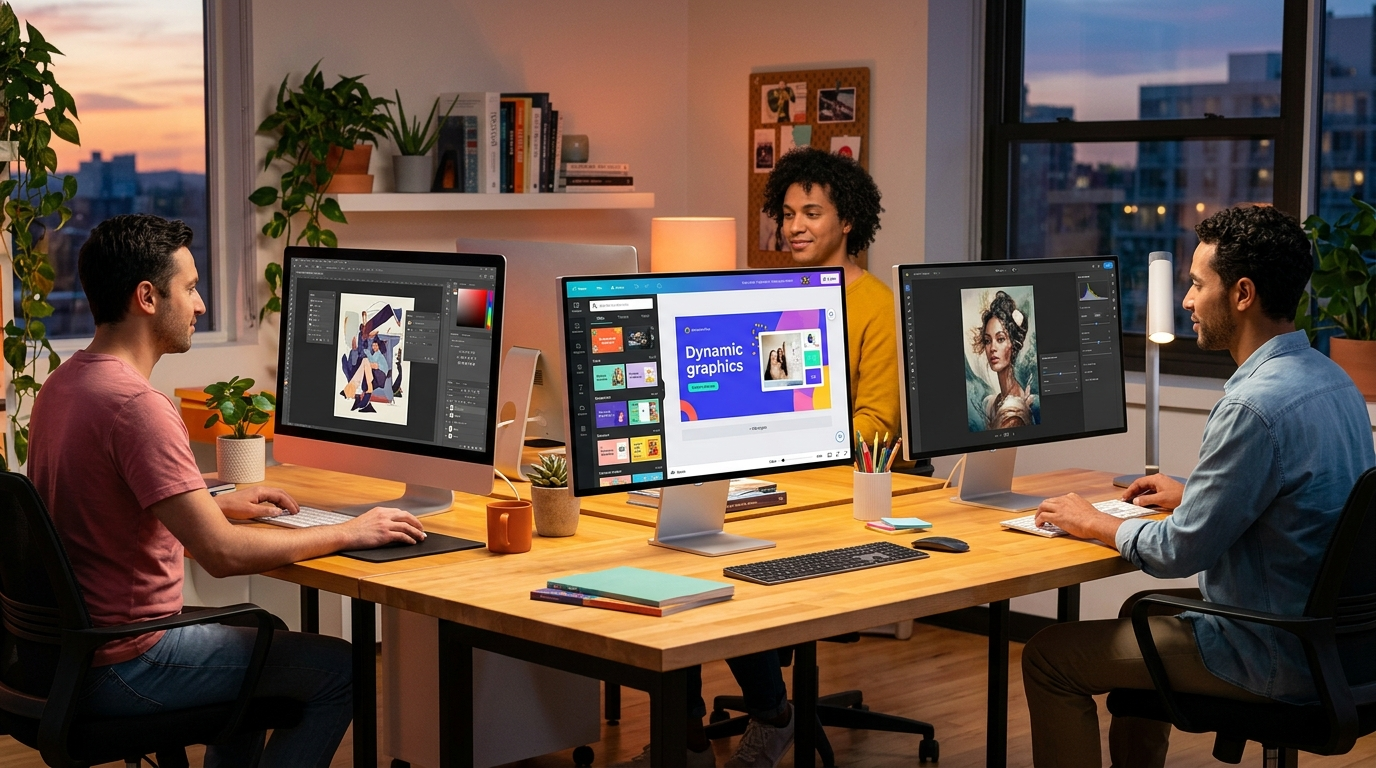
Google is moving deeper into creative software with Google Pics, an AI-first product positioned against established platforms Canva and Adobe.
The move places Google in a crowded market for digital design tools. It also signals that artificial intelligence may become the main way users create and edit visual content, rather than an optional feature.
“With Google Pics, Google is pushing deeper into the creative software market dominated by Canva and Adobe, but with a distinctly AI-first approach.”
Details about pricing, availability, and supported formats were not provided. Those unanswered questions will shape whether Google Pics can attract professionals, businesses, schools, and casual creators.
Google Enters an Established Market
Adobe has long served professional designers through products built for image editing, illustration, video, and publishing. Canva has gained users with simpler templates and browser-based tools.
Google brings a different type of advantage. Its productivity products already support collaboration across documents, presentations, spreadsheets, storage, and video meetings.
If Google Pics connects with those services, users could create graphics without leaving their existing work systems. That could appeal to teams seeking fewer tools and simpler workflows.
However, Google will need to show that Pics offers more than convenience. Canva and Adobe have established user communities, familiar interfaces, and large collections of creative resources.
An AI-First Strategy Changes the Contest
The description of Google Pics as AI-first suggests that automated creation will sit at the center of the product. Traditional creative software usually starts with a blank canvas, template, or imported file.



An AI-led service may instead begin with written instructions. A user could describe a desired image, layout, or design and then refine the generated result.
That approach could lower the skill barrier for routine design tasks. Small organizations may use it for social posts, presentation graphics, marketing drafts, or internal materials.
The same model creates concerns. AI-generated images can contain errors, reflect bias, or imitate copyrighted work. Businesses also need clear rules about ownership, training data, and the handling of confidential material.
- Ease of use will influence adoption among beginners.
- Editing controls will matter to professional creators.
- Copyright policies may affect business use.
- Integration could determine its value within Google’s services.
Pressure Builds on Canva and Adobe
Google’s entry could push its rivals to place even greater emphasis on automated creation. Both competitors already benefit from strong recognition and mature design systems.
Competition may lead to lower costs, faster product updates, and easier tools. It may also lead companies to bundle AI features into larger subscriptions, making direct price comparisons difficult.
For creative workers, the central issue is control. AI can speed up first drafts and repetitive production, but polished work still depends on judgment, accuracy, and a clear visual goal.
Google Pics therefore faces two tests. It must be simple enough for new users while offering enough control for experienced creators. It must also explain how generated content can be used safely.
Google’s AI-first direction adds a major competitor to creative software. The next signs to watch are a public release schedule, pricing, integration details, and policies covering data and copyright. Those choices will determine whether Google Pics becomes a serious alternative or another limited tool inside Google’s product catalog.