



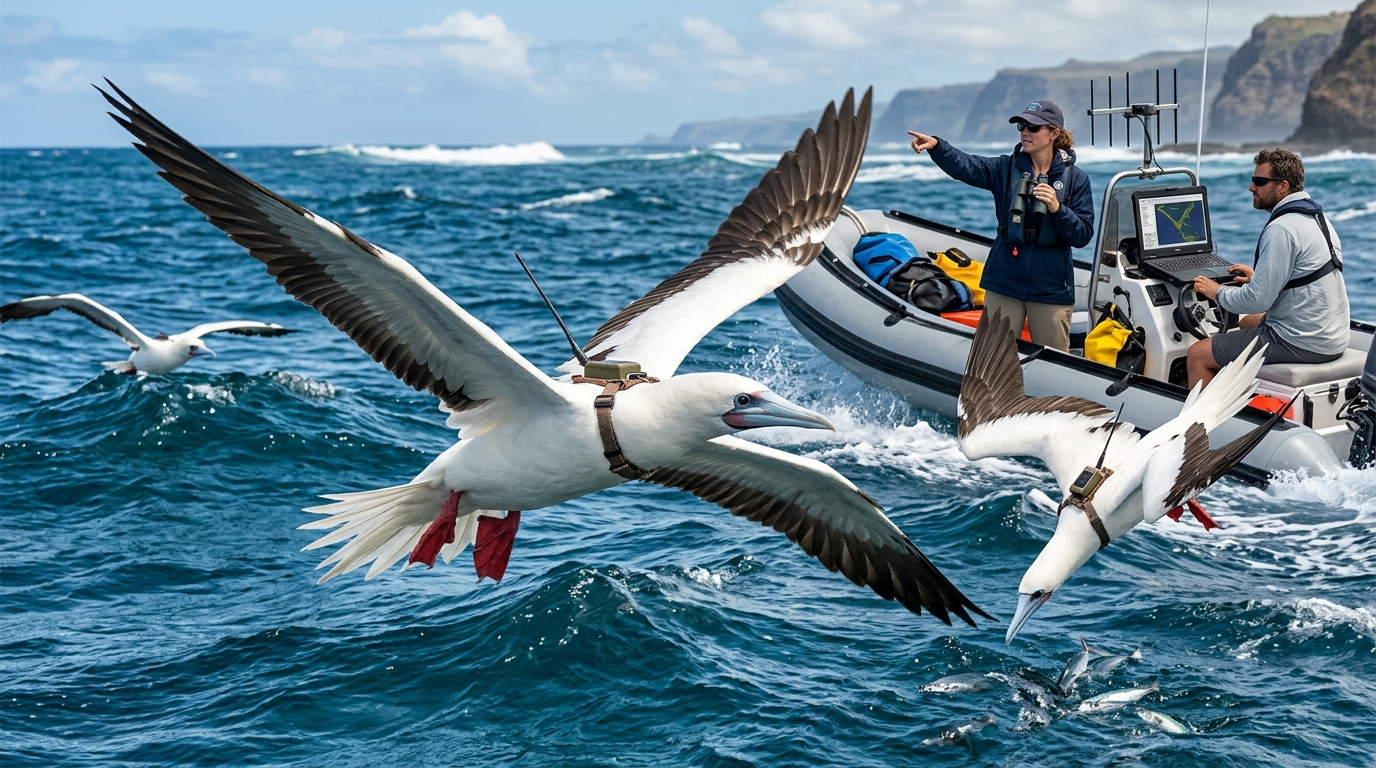
Scientists are using new tracking tools to follow red-footed boobies at sea, seeking answers about how the seabirds spend their days away from land.
The technology allows researchers to “tag” along as the birds travel over open water. Those journeys have often been difficult to observe from boats or shore. Tracking may reveal where the boobies search for food, how long they remain at sea, and which waters support their survival.
Following Birds Into Open Water
Red-footed boobies spend much of their lives over the ocean. They return to land for nesting and other activities, making that part of their behavior easier to study.
Their time offshore presents a larger challenge. A bird may fly far from its colony and disappear from human view. Direct observation can require ships, crews, favorable weather, and many hours at sea.
New tools offer another option. A tag carried by a bird can record parts of its journey, letting researchers reconstruct behavior that once remained hidden. The approach turns an individual seabird into a source of movement data.
Scientists can now “tag” along with red-footed boobies to investigate how they spend their days at sea.
The available account does not identify the tag model or the information it collects. Modern wildlife tags can vary widely. Some record position, while others may measure depth, speed, motion, or environmental conditions.
Why Daily Movements Matter
Learning where boobies travel can help scientists identify feeding areas. Repeated visits to one location may point to waters where prey is easier to find.
Tracking can also show how much effort birds use during a routine trip. Longer flights may demand more energy and keep adults away from nests for extended periods.


Key questions for researchers include:
- How far do the birds travel from their colonies?
- Which ocean areas do they visit most often?
- How much time do they spend flying, resting, or feeding?
- Do their routes change with weather or prey conditions?
Answers could improve understanding of both the birds and the waters they depend on. Seabirds often respond to changes in fish and squid populations, ocean temperatures, storms, and human activity.
Technology Brings Limits and Trade-Offs
Animal tracking also requires caution. Tags must be small enough to avoid changing normal behavior. Researchers need to consider each device’s weight, placement, battery life, and ability to remain attached safely.
Data from a limited number of birds may not represent an entire colony. Age, breeding status, season, and weather can shape individual movements. Scientists therefore need repeated observations before drawing broad conclusions.
Even with those limits, the work may fill a major gap in seabird research. Colonies show researchers where boobies breed, but offshore tracking can reveal what happens between departure and return.
The next step will be turning movement records into clear evidence about feeding and habitat use. If researchers can connect routes with ocean conditions, the findings may help identify important waters and guide future conservation decisions.
For now, the tags give scientists a new view of a familiar bird. Each recorded trip can bring the daily life of the red-footed booby into sharper focus, one flight at a time.