



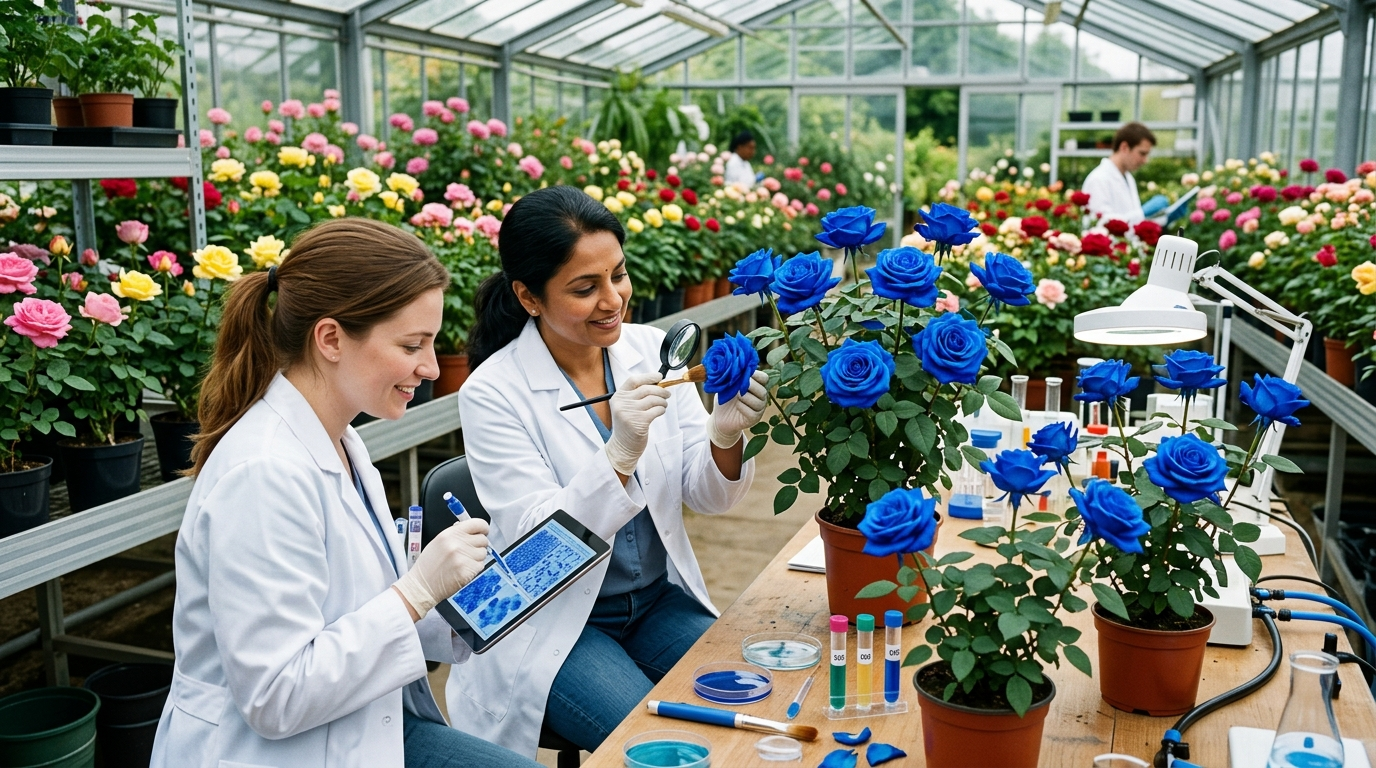
Scientists have engineered roses to produce a blue pigment and a colorless helper molecule, addressing a long-standing challenge in flower breeding. The paired substances allowed the pigment’s blue shade to appear more clearly within the petals.
The result points to a new strategy for changing flower color. Instead of adding a pigment alone, researchers adjusted the chemical setting that controls how people see that pigment.
Why Blue Roses Are Difficult to Create
Rose breeders have pursued blue flowers for generations. Traditional crossbreeding has produced roses described as lavender, mauve, or violet. A convincing blue has remained difficult because roses lack some of the natural chemistry found in blue flowers.
Flower color depends on more than the presence of a single pigment. Acidity, metal ions, nearby molecules, and pigment concentration can change the final shade. The structure of petal cells also affects how light is absorbed and reflected.
Many red, purple, and blue flowers receive their color from pigments called anthocyanins. These compounds can appear different under different chemical conditions. A pigment that looks blue in one flower may look purple or red in another.
That issue has limited earlier genetic engineering efforts. Giving a rose the ability to produce a blue-associated pigment does not guarantee a blue bloom. The petal must also provide the right environment for that color.
A Two-Part Genetic Strategy
The scientists addressed that problem by engineering the roses to make two substances. One was the blue pigment. The other was a colorless molecule that helped reveal and stabilize its shade.
Scientists engineered roses that made both a blue pigment and a colorless helper molecule that brought out its shade.
Such helper molecules are often described as copigments. Although they may have no visible color on their own, they can interact with colored compounds. That interaction can deepen a shade or shift how it appears.


The approach treats petal color as a chemical system rather than a one-gene trait. Its central elements include:
- Producing the desired pigment inside rose petals.
- Creating a colorless molecule that supports the blue appearance.
- Coordinating both substances within the same plant tissue.
This distinction matters because plant engineering often requires several linked changes. A new gene may produce the intended molecule, yet other conditions inside the plant can weaken or alter the result.
What the Finding Could Mean
The work may give ornamental plant breeders another method for developing colors that conventional breeding cannot easily produce. Similar strategies could be tested in other flowers with limited natural color ranges.
Commercial impact will depend on several factors. An engineered rose must retain its color across changing light, temperature, soil, and growing conditions. It must also grow well, resist disease, and produce flowers with an acceptable shape and scent.
Public acceptance and regulation may shape whether such roses reach consumers. Rules for genetically engineered plants differ by country. Growers may also need to consider whether modified plants can spread pollen or genes to related varieties.
The reported finding does not establish that every engineered flower will display the same shade. Blue is also a broad visual label, and observers may disagree about whether a bloom appears blue, violet, or lavender. Measurements of reflected light would help define the result.
Color Chemistry Remains the Key
The research shows why pigment production alone is often insufficient. The visible outcome depends on supporting chemistry inside each petal cell.
Future work will likely focus on color consistency, plant health, and performance outside controlled settings. Researchers may also study whether the helper molecule remains stable as flowers age.
For breeders, the main lesson is clear: creating a blue rose requires control of both pigment and its surroundings. Engineering the colorless partner may prove as important as producing the blue pigment itself.