


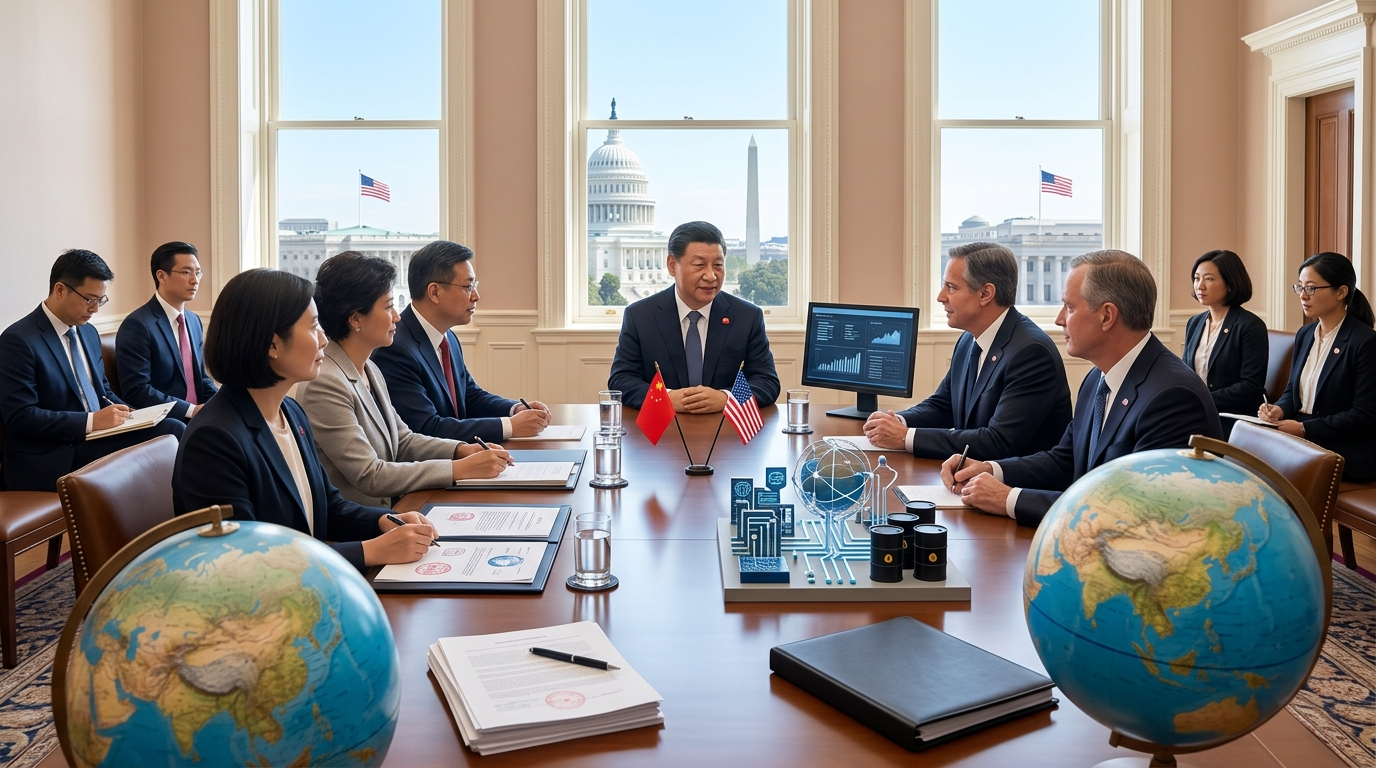
China’s president is set to spend three days in Washington, D.C., for talks centered on artificial intelligence, tariffs and Iran. The planned visit places three major sources of global tension on one agenda, with economic security and regional stability at stake.
The schedule signals an effort by Beijing and Washington to manage disputes through direct diplomacy. However, the available details do not identify meeting dates, participating U.S. officials or possible agreements.
Artificial Intelligence Moves Up the Agenda
Artificial intelligence has become a central issue in relations between the United States and China. Both countries view advanced computing as important to economic growth, military planning and national security.
U.S. restrictions on advanced chips and manufacturing equipment have sought to limit China’s access to technology with possible military uses. Beijing has criticized such controls as an attempt to contain its development.
The Washington talks could address export rules, AI safety and the risk of miscalculation. Officials may also consider how automated systems should be used in defense and critical infrastructure.
Any agreement would face a basic challenge. Each government wants safeguards against dangerous uses, but neither wants to surrender a strategic advantage. Even limited communication rules could reduce the chance of an accidental crisis.
Tariffs Keep Economic Friction High
Tariffs remain another source of strain. Washington has used import duties and trade controls to respond to concerns about subsidies, market access, industrial capacity and intellectual property.
China argues that many U.S. measures are protectionist and harmful to global trade. American policymakers counter that state support can give Chinese companies an unfair advantage.

The discussions are likely to affect several groups:
- Manufacturers that rely on Chinese parts or materials
- Exporters seeking access to the Chinese market
- Consumers who may face higher costs from tariffs
- Technology companies operating under tighter trade controls
A broad settlement may be difficult because the dispute now reaches further than trade balances. It includes supply chains, industrial policy and control of sensitive technology.
Iran Adds a Security Test
Iran gives the visit a wider diplomatic focus. China maintains economic and political ties with Tehran, while the United States has relied heavily on sanctions and security partnerships in the Middle East.
Washington may seek Chinese help in limiting regional escalation or encouraging restraint from Iran. Beijing could use its relationship with Tehran to support talks, while resisting policies that weaken its commercial interests.
The subject also connects energy security with diplomacy. Disruption involving Iran could affect oil supplies, shipping routes and prices across major markets. That gives both China and the United States an interest in preventing a wider conflict, despite their different policies.
Three Days Offer Time, Not Certainty
A three-day visit allows room for formal meetings, smaller discussions and work by senior advisers. Its length suggests that the agenda will require more than a ceremonial exchange.
Still, duration does not guarantee progress. The two governments continue to compete across technology, trade and security. Domestic political pressure may also limit concessions by either side.
The clearest measure of success will be whether the meetings produce practical steps. These could include continued leader-level contact, working groups, clearer trade discussions or crisis communication on AI and Iran.
The visit may not resolve the largest disputes between Beijing and Washington. Yet sustained talks could keep competition from turning into open confrontation. Officials, companies and allied governments will watch for concrete commitments after the three-day meetings end.