




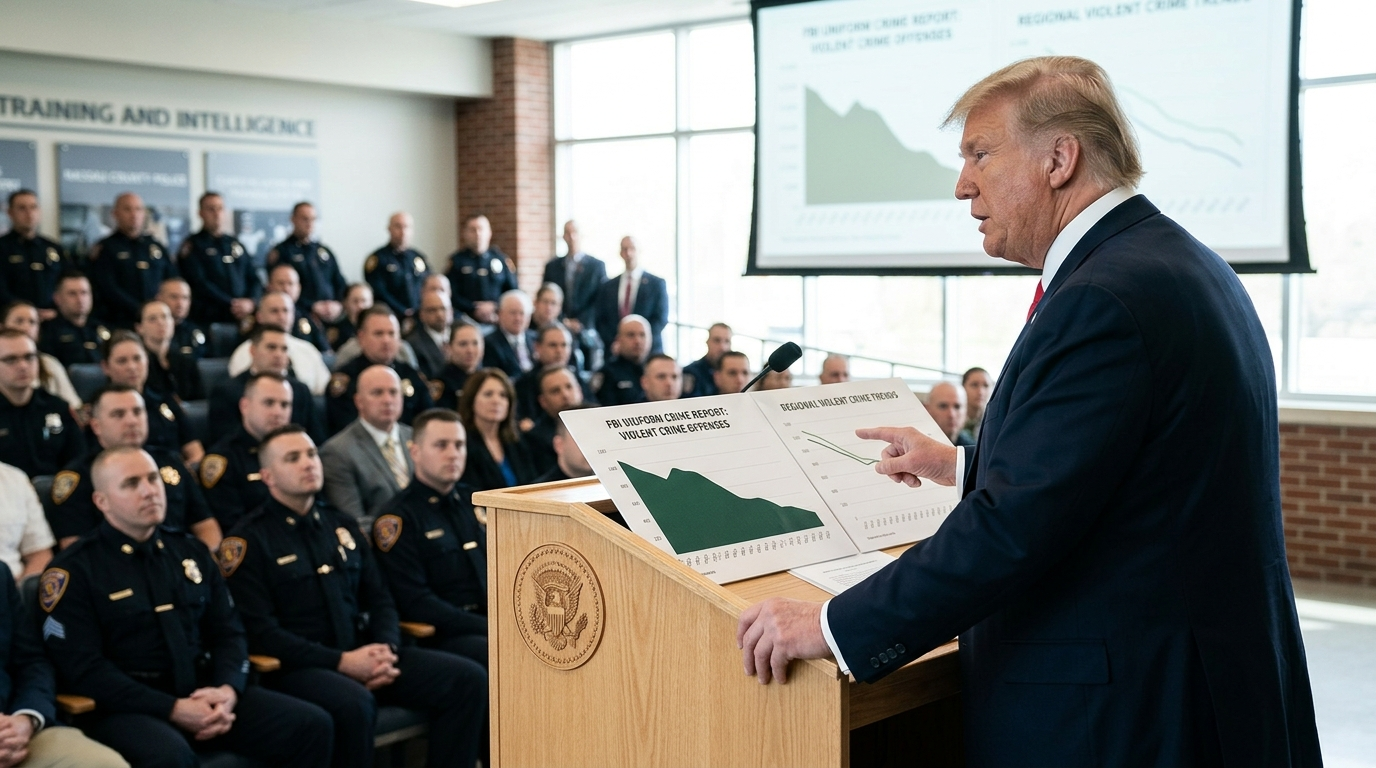
President Donald Trump used an appearance at the Nassau County Police Academy Center for Training and Intelligence to highlight new FBI statistics showing violent crime has declined.
The remarks placed federal crime data at the center of the administration’s public safety message. They also brought national attention to a law enforcement training center in Nassau County, New York.
The available information did not include the specific reporting period, percentage change, or crime categories cited by Trump. Those details are needed to measure the size and reach of the reported decrease.
FBI Data Shapes the Crime Debate
The FBI gathers crime information from law enforcement agencies across the United States. Its reports track major offenses, including murder, rape, robbery and aggravated assault.
Federal crime statistics often become part of political debates about policing, prosecution and public spending. A national decline can support claims that safety is improving, but local conditions may differ sharply.
Crime data also changes as agencies submit updated records. Participation levels, reporting methods and population changes can affect comparisons between years.
For that reason, researchers usually examine several measures before reaching a conclusion. These include crime rates per resident, raw offense totals and trends covering multiple years.
Local Venue Carries National Message
Trump selected the Nassau County Police Academy Center for Training and Intelligence for the appearance. The setting linked the FBI figures with the work of police officers and public safety agencies.



Training centers prepare officers for field duties and support coordination among agencies. Holding the event at such a facility gave the president a law enforcement audience for his national message.
The location also focused attention on the role of local departments in producing federal statistics. The FBI depends on reports submitted by state, county and municipal agencies.
- National figures show broad changes across participating jurisdictions.
- State and county reports reveal regional differences.
- Long-term trends provide more context than a single reporting period.
Decline Does Not End Policy Disputes
A decrease in violent crime may influence decisions about staffing, prevention programs and investigative resources. Yet lower national totals do not mean every community experienced the same result.
Supporters of strict enforcement may view the findings as evidence for continued investment in police operations. Others may point to prevention, economic conditions, community programs or demographic shifts.
Establishing the cause of a crime decline is difficult. Several forces often change at once, and federal statistics alone cannot show which policy produced the result.
Public perception may also lag behind official numbers. Highly visible incidents can shape residents’ sense of safety even during a broader decline.
Key Details Will Determine the Significance
The reported drop will be easier to assess once the full FBI release is reviewed. Analysts will watch the time period, agency participation and changes in individual offenses.
Comparisons with earlier years will also matter. A one-year decrease may signal improvement, while a sustained decline would provide stronger evidence of a lasting shift.
Trump’s remarks made the fall in violent crime the central news from the Nassau County event. The larger policy meaning will depend on the underlying figures and whether improvement reaches communities across the country.