

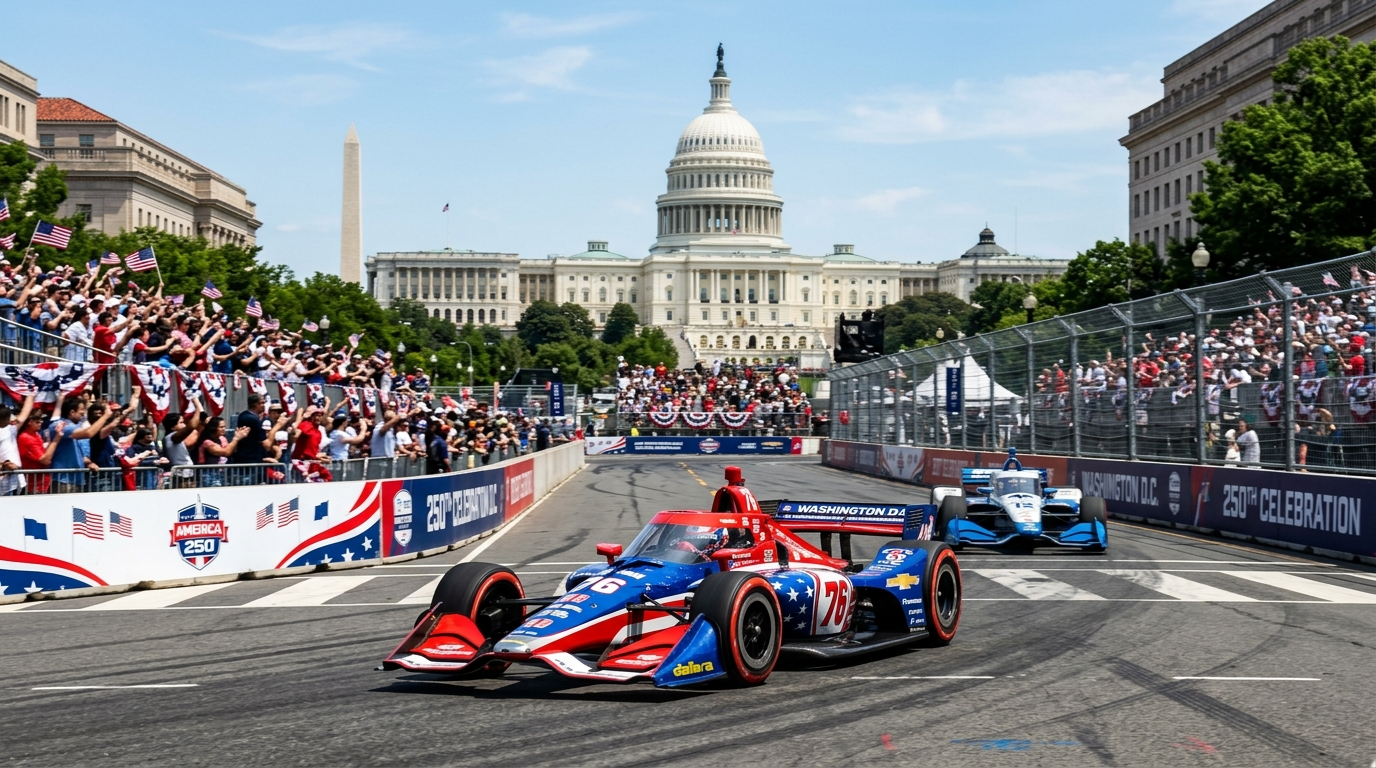
IndyCar drivers will race through Washington, D.C., as part of the closing celebrations for America’s 250th birthday. The first-of-its-kind event will bring high-speed competition to streets in the nation’s capital.
The race is planned as the finale to a summer of national celebrations. It will connect a major sporting event with the 250th anniversary of American independence in 2026.
Organizers described the event as “capping off a summer of celebration for America’s 250th birthday.” Further details, including the course, race date, ticketing plans, and participating drivers, were not announced.
A Street Race With National Symbolism
IndyCar races include permanent tracks, oval circuits, and temporary street courses. A Washington event would place the series in a highly visible setting shaped by federal buildings, monuments, and public spaces.
The location gives the race added meaning. July 4, 2026, will mark 250 years since the adoption of the Declaration of Independence in 1776.
National anniversary programs are expected to include public ceremonies, cultural events, and community activities. The IndyCar race would add professional motorsports to that schedule and offer a large closing attraction.
The announcement calls the race a first-of-its-kind event. That description suggests a new format or location for IndyCar, although organizers have not yet explained the distinction.
Planning a Race in Washington
A street race requires major preparation. Officials must create a secure circuit while protecting access for residents, workers, visitors, and emergency services.
Key planning issues are likely to include:
- Street closures and changes to public transportation
- Temporary barriers, fencing, grandstands, and pit facilities
- Security near federal property and crowded public areas
- Noise controls and access for nearby neighborhoods
- Removal of race equipment after the event
The course will be central to the event’s identity. A route near major landmarks could create striking television images. However, it could also increase security demands and transportation disruptions.
Local agencies and federal authorities may need to coordinate permits, crowd management, and traffic plans. The scale of that work will depend on the final route and expected attendance.
Potential Benefits and Public Costs
A major race could bring visitors to hotels, restaurants, and other local businesses. National television coverage may also promote Washington as a destination during the anniversary year.
Street events can also create costs for host cities. Temporary construction, policing, sanitation, and transportation changes may require public resources. Residents and businesses may face restricted access before and after race day.
A full assessment will require information about financing. Organizers have not said how much the event will cost, whether public funds will be involved, or how revenue will be shared.
What Comes Next
The next announcements should clarify the date, route, event schedule, and operating partners. Officials will also need to explain safety measures and how the public can attend.
The Washington race could give IndyCar one of its most prominent civic stages. Its success, however, will depend on careful planning and clear communication with the people affected by the temporary circuit.
For now, the event stands as a major sporting addition to America’s 250th anniversary. The course and funding details will show whether that ambition can translate into a workable race through the capital.