




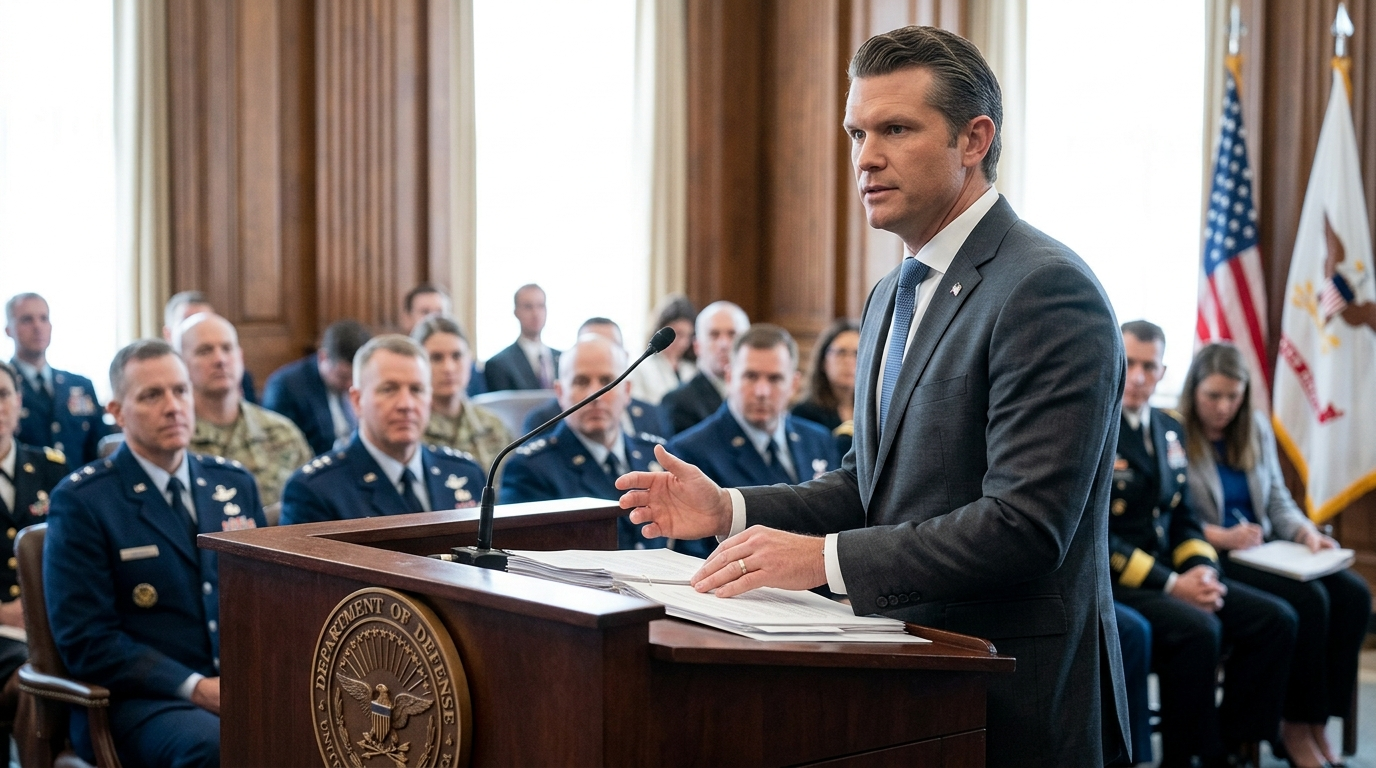
Defense Secretary Pete Hegseth plans to announce further cuts to the number of generals and admirals serving in the U.S. military.
The coming announcement signals another effort to shrink the Pentagon’s senior leadership ranks. Key details remain undisclosed, including the number of positions affected, the services involved, and the timetable for carrying out the reductions.
The move could reshape decision-making across the armed forces. It may also renew debate over whether fewer senior officers would reduce bureaucracy or place added pressure on commanders.
Details of the Plan Remain Limited
The available information describes the reductions as further cuts. That wording indicates the plan is part of a wider push rather than a stand-alone action.
Hegseth is expected to provide the formal outline. Until then, several basic questions remain unanswered:
- How many generals and admirals will leave their posts?
- Will vacant positions disappear, or will serving officers be removed?
- Which military branches and commands will face the largest changes?
- How quickly will the Pentagon put the plan into effect?
Those distinctions matter. Eliminating an unfilled job can produce a different result from replacing an active commander. Likewise, cuts spread across services may cause less disruption than reductions concentrated in key operational commands.
A Test of Efficiency and Readiness
Generals and admirals oversee military operations, training, personnel, logistics, strategy, and major commands. They also advise civilian leaders on national security choices.
Supporters of leadership reductions may argue that a smaller senior corps can shorten chains of command and limit administrative overlap. The Pentagon, after all, has never been accused of having too few organizational charts.



Critics may counter that rank reductions do not automatically remove the work attached to those jobs. Duties may instead shift to fewer commanders or lower-ranking officers. That could slow decisions if the restructuring is not carefully designed.
The central policy question is therefore not simply how many senior officers remain. It is whether the revised command structure can manage current missions without weakening military readiness, oversight, or accountability.
Congress and the Services Will Watch Closely
Senior military appointments often involve Senate confirmation, while Congress controls funding and conducts Pentagon oversight. Lawmakers are likely to examine both the reasoning behind the cuts and their effect on individual services.
Military leaders will also be watching for changes to promotion paths. Fewer senior posts could increase competition among officers and alter long-term career planning. It could also affect efforts to retain experienced commanders.
The method used to select positions will shape reaction inside and outside the Pentagon. A review based on mission needs may draw less resistance than cuts viewed as arbitrary or politically driven.
What the Announcement Must Explain
Hegseth’s announcement will need to show how the reductions support defense goals, not merely reduce a head count. Clear criteria, service-level figures, and an implementation schedule would help Congress and the public assess the plan.
The larger test will come after the announcement. If command structures become faster and clearer, the cuts may strengthen Hegseth’s case for reform. If responsibilities pile up or oversight slips, the savings could prove costly.
For now, the Pentagon’s senior ranks are preparing for change without knowing its full size. The next details will determine whether this is a targeted reorganization or a broader shake-up of military leadership.