



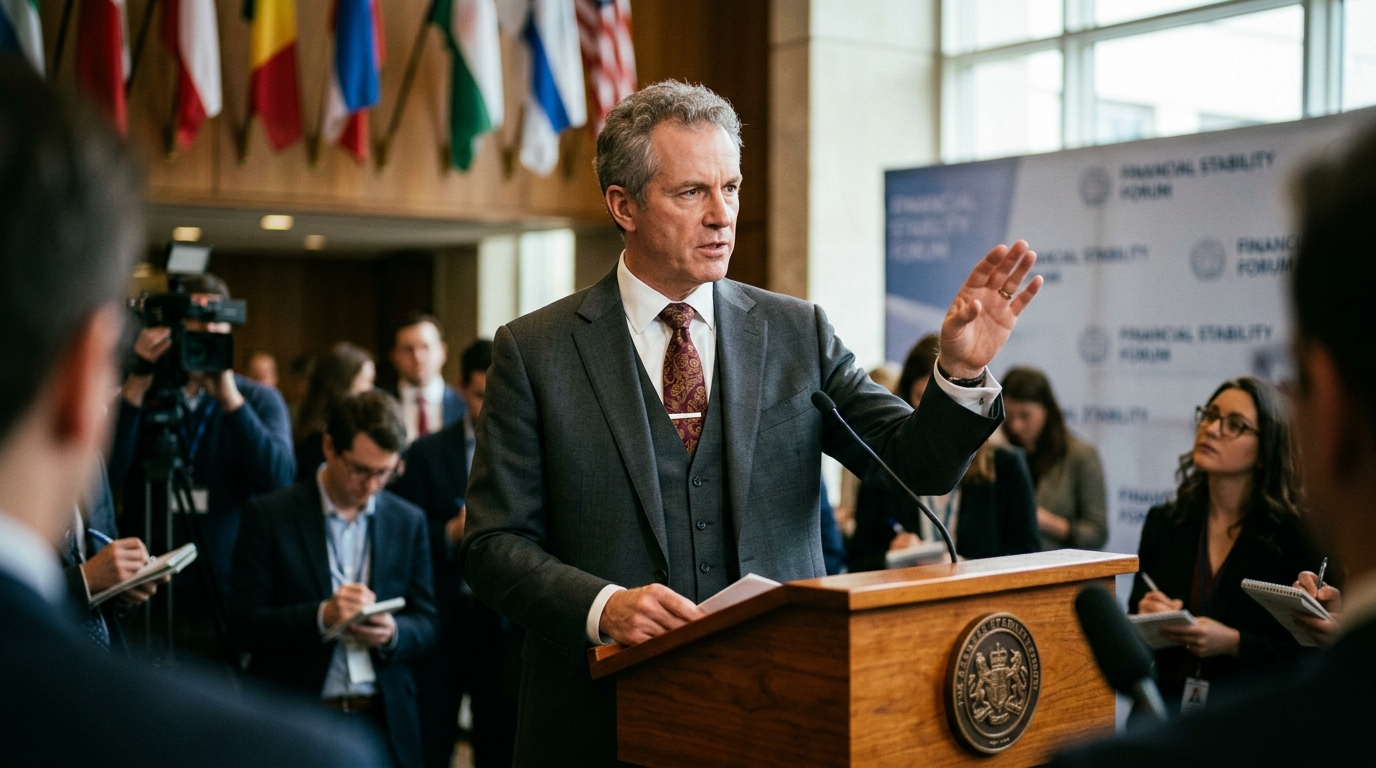
A governor has warned that regulators “cannot stand aside” while artificial intelligence creates new risks for financial stability. The statement calls for active oversight rather than relying on technology companies and financial institutions to police themselves.
The warning comes as banks, insurers, investment firms and payment providers increase their use of AI. These systems can process large amounts of information, detect fraud and automate decisions. Yet their speed and reach may also spread errors across markets before officials can respond.
Regulators Face Pressure to Act
The governor rejected the idea that the AI industry will resolve financial threats without public oversight.
Regulators “cannot stand aside” and assume the AI industry will resolve the risks it presents to financial system stability.
The statement suggests that existing rules may need closer enforcement or revision. It also places financial stability, rather than only consumer protection, at the center of the debate.
Financial regulators usually monitor banks, markets and key service providers for threats that could disrupt the wider economy. AI complicates that work because a system may influence lending, trading and risk management at the same time.
How AI Could Amplify Market Stress
AI can help firms identify patterns faster than human analysts. However, similar models may reach similar conclusions based on the same data. During a period of stress, that behavior could cause many institutions to sell assets or withdraw credit at once.
Key areas for regulatory attention may include:
- Automated trading decisions that increase sudden market moves.
- Credit models that make widespread errors or unfair decisions.
- Dependence on a small group of AI and cloud providers.
- Cyberattacks, fraud and false information produced at greater speed.
- Limited explanations for decisions made by complex systems.
Reliance on outside technology providers creates another concern. If many financial firms use the same model or infrastructure, one failure could affect several institutions. That concentration may turn a technical problem into a broader financial threat.



Innovation and Oversight in Tension
Financial companies have strong reasons to adopt AI. Automation can reduce costs, improve fraud detection and help staff review large sets of records. Excessively rigid rules could slow useful services or place smaller firms at a disadvantage.
Industry leaders may also argue that companies understand their systems better than government agencies. Internal testing and voluntary standards can adapt quickly as technology changes.
The governor’s position challenges that approach. Private firms bear some costs when systems fail, but the public may carry wider losses if credit markets freeze or confidence falls. That gap has long supported government supervision of finance.
Effective oversight would require regulators to build technical knowledge and coordinate across agencies. AI systems often cross national borders and legal categories. A model developed in one country may support financial decisions in many others.
What Officials May Examine Next
Regulators could seek clearer records of how firms select, test and monitor AI systems. Stress tests may also examine how automated tools behave during sharp market declines, cyber incidents or sudden changes in economic data.
Rules may focus on accountability. Financial institutions could be required to retain human control over high-impact decisions, explain model failures and maintain backup plans when automated services stop working.
The governor’s warning does not reject AI use in finance. Instead, it draws a line against passive supervision. The next test will be whether agencies turn that message into practical standards without blocking useful technology.
For markets and the public, the central issue is clear: AI risks may begin inside individual companies, but their effects can spread across the financial system. Regulators will now face pressure to act before a major failure tests that system in real time.