




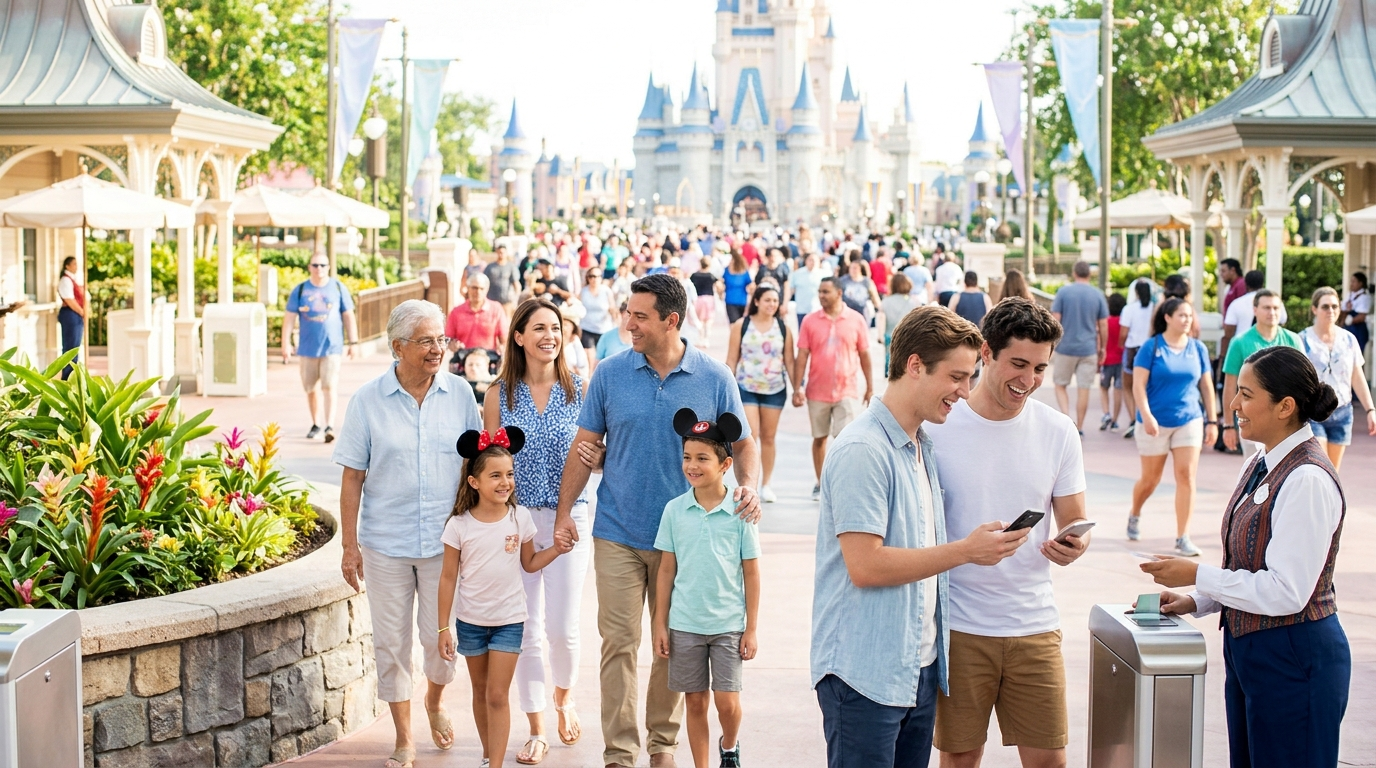
Disney raised prices across many theme park offerings as its new fiscal year began, yet consumers appear less resistant than during earlier rounds of increases. The move signals that demand for Disney vacations remains firm, even as guests face higher costs throughout their visits.
The timing is significant. Starting a fiscal year with new prices can help Disney capture added revenue during major travel periods. It also gives the company a new baseline for measuring park spending and attendance.
Consumer Resistance Appears to Ease
Disney faced stronger public criticism over price increases a few years ago. Guests objected to rising admission costs and added charges tied to planning a park visit.
The latest adjustment has not produced the same level of visible pushback. That suggests many visitors may now view regular price increases as an expected part of a Disney vacation.
“Consumers aren’t pushing back the way they did a few years ago.”
That response does not mean every customer accepts the increases. Some families may shorten trips, choose lower-priced dates, spend less on food and merchandise, or delay a visit.
Others may continue paying because Disney parks offer attractions and characters that are difficult to find elsewhere. Guests who have already budgeted for transportation and lodging may also tolerate higher park costs rather than cancel an entire trip.
Price Changes Test Disney’s Strategy
Theme parks are important to Disney because they generate revenue from several parts of one vacation. A guest may pay for admission, hotels, meals, merchandise, transportation, and services that save time.
Higher prices can lift revenue without requiring an equal rise in attendance. They can also help manage crowds by shifting some visitors to less expensive dates or encouraging different spending choices.



However, repeated increases carry risks. A family that feels priced out may choose another destination. Frequent visitors may reduce annual trips, while local guests may reconsider passes or optional purchases.
The central question is whether Disney can preserve the value guests expect. Price increases are easier to sustain when visitors see clean facilities, reliable operations, new attractions, and strong customer service.
What the Limited Reaction May Mean
The softer response could reflect several factors:
- Customers have grown used to yearly pricing changes.
- Strong travel demand may be reducing sensitivity to higher costs.
- Guests may be changing spending habits instead of publicly objecting.
- Disney’s most committed customers may place a high value on the experience.
Visible reaction is only one measure of customer sentiment. Attendance, hotel bookings, per-guest spending, and satisfaction will provide clearer evidence of how consumers respond.
Disney must also balance premium pricing with broad access. Theme parks have long been marketed as family destinations, but higher total trip costs can place them outside many household budgets.
Future Results Will Show the Impact
The price increases offer an early test for Disney’s new fiscal year. If attendance and spending remain healthy, the company may gain further confidence in its pricing approach.
If guests cut optional purchases or visit less often, the muted public response could prove misleading. The most useful signals will come from future financial results and park demand, not social reaction alone.
For now, Disney appears to have raised prices without repeating the intense consumer resistance seen several years ago. Whether that reflects lasting acceptance or quieter changes in buying behavior will shape the company’s next decisions.