

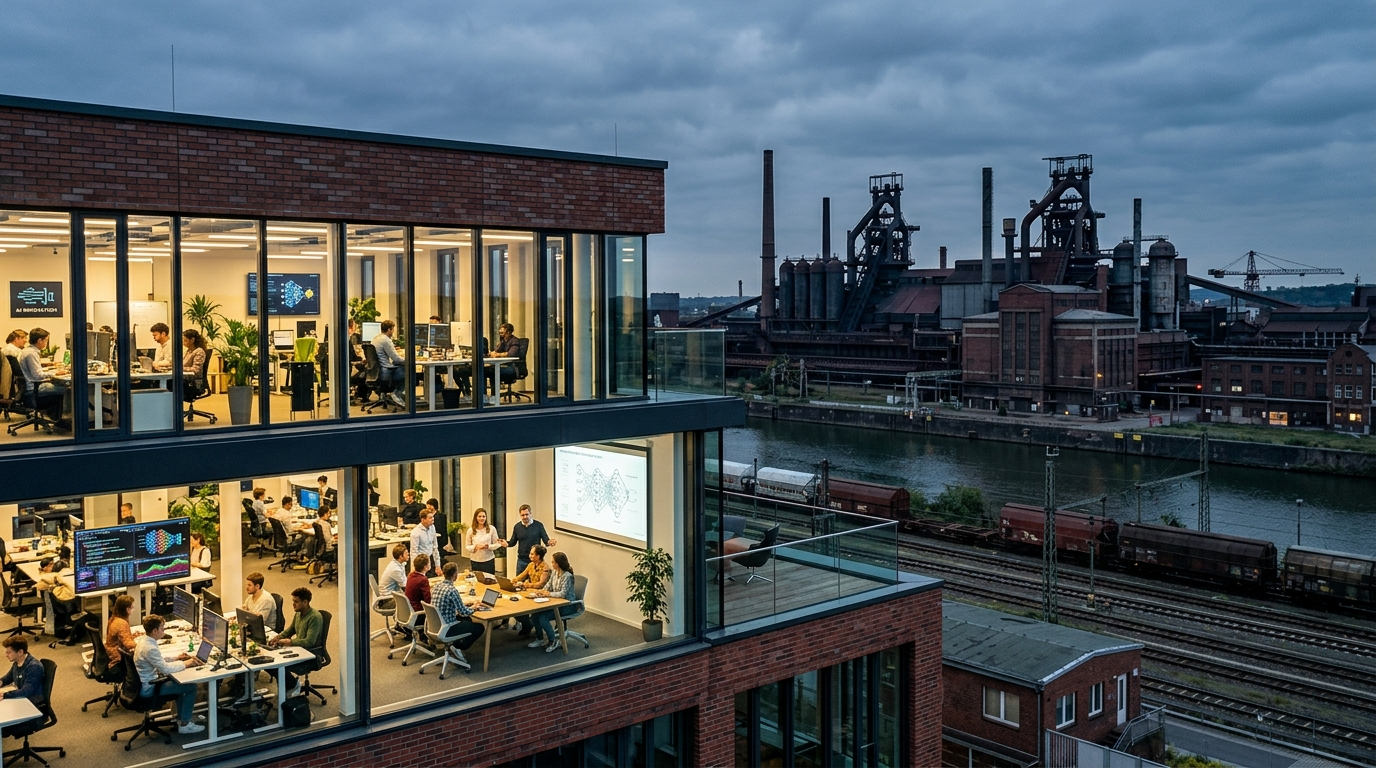
Germany’s emerging artificial intelligence sector is gaining momentum as its industrial economy faces a sharp downturn, creating a possible new source of growth.
The shift presents an unusual contrast for Europe’s largest economy. Established manufacturers are under pressure, while a startup sector once viewed as weak is seeing an unprecedented AI-led boom.
That boom could help offset part of the industrial slowdown. It may also benefit from the downturn as skilled workers, investment, and business demand move toward younger technology companies.
Germany’s Industrial Model Faces Pressure
Germany has long depended on large industrial companies, export demand, and advanced manufacturing. That model supported jobs, tax revenue, and economic influence across Europe.
The current weakness therefore carries risks outside factory gates. A long industrial contraction could reduce investment, weaken supply chains, and limit opportunities in communities tied to manufacturing.
The description of German industry as being in “free fall” signals more than a routine slowdown. It suggests that the country may face a structural challenge requiring new sources of productivity and employment.
However, industrial decline is not guaranteed to be permanent. Germany retains deep engineering knowledge, established companies, and experienced workers. Those assets could support recovery or help newer businesses grow.
AI Startups Find an Opening
Germany’s startup sector has often appeared small beside its industrial giants. Artificial intelligence may be changing that balance by giving young companies access to a rapidly growing market.
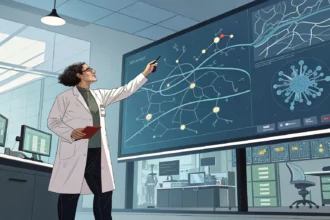

Germany’s once anaemic startup sector is experiencing an “unprecedented AI-led boom” that could offset the wider economic malaise.
AI firms can sell software and services to manufacturers seeking lower costs, quicker production, and better use of data. This creates a direct link between industrial strain and startup demand.
Several forces could work in the sector’s favor:
- Experienced engineers may move from struggling employers into younger companies.
- Manufacturers may increase demand for automation and efficiency tools.
- Investors may seek growth outside traditional German industries.
- Startups may gain access to industrial clients and technical knowledge.
This relationship means AI growth does not need to replace manufacturing. Startups could instead supply tools that help factories improve output, manage energy use, or redesign operations.
Promise Comes With Economic Limits
The startup surge offers hope, but it cannot quickly match the scale of German industry. Young technology firms usually employ fewer people than major manufacturers, especially during their early years.
AI investment can also cluster in a limited number of cities and companies. Industrial losses, by contrast, may affect broad regions and many suppliers. That difference could leave some communities behind.
There is also no guarantee that startup growth will produce lasting German businesses. Companies need financing, customers, skilled staff, and room to expand. Without those conditions, successful firms may relocate or be acquired.
A Chance to Connect Old and New
The strongest outcome may come from cooperation between startups and established manufacturers. Germany’s industrial expertise gives AI developers access to practical problems, while startups can offer faster experimentation.
Germany now faces a test of whether a technology boom can develop into broad economic renewal. Key signs will include job creation, startup investment, and adoption of AI across industrial companies.
The emerging sector is unlikely to erase industrial weakness on its own. Still, it could soften the downturn and help reshape the economy. The next stage will show whether Germany can turn a moment of industrial stress into sustained technology-led growth.