



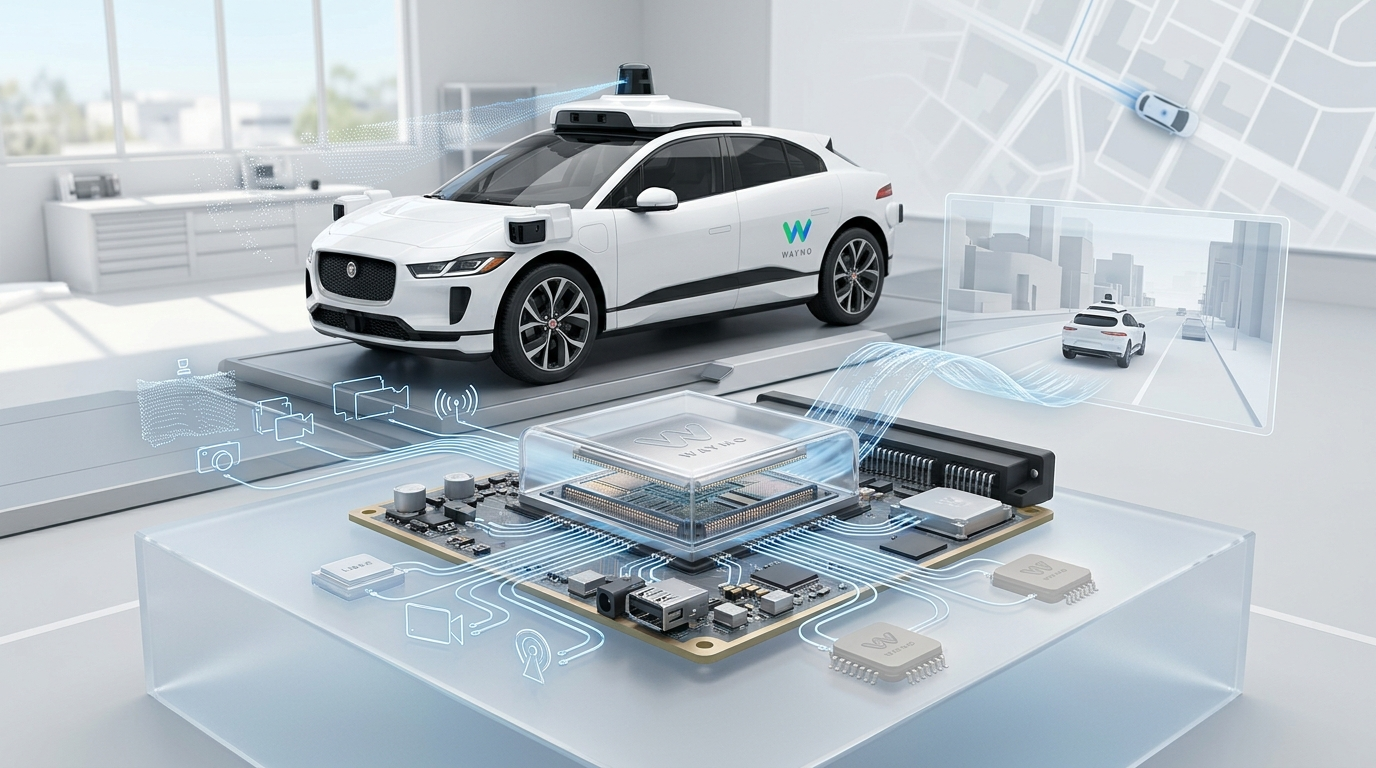
Alphabet’s Waymo has developed a custom chip designed to improve its robotaxi performance and reduce reliance on outside semiconductor suppliers, including Nvidia.
The move gives Waymo greater control over a key part of its autonomous-driving system. It also follows a wider industry shift as technology companies design processors for specialized artificial intelligence tasks.
Greater Control Over Robotaxi Systems
Waymo said the chip will improve the performance of its robotaxis. The company did not provide technical specifications, production targets, or a timetable for broader use.
The custom chip will “improve the performance” of Waymo’s robotaxis while diversifying its chip supply.
Autonomous vehicles must process information from cameras and other sensors with little delay. Their computers then identify nearby vehicles, pedestrians, road markings, and possible hazards.
A processor designed around Waymo’s own software could complete those tasks more efficiently than a general-purpose product. Tighter links between hardware and software may also help engineers adjust systems as the driving service grows.
However, designing a chip carries financial and operational risks. Development is costly, production can face delays, and the design may need frequent updates as artificial intelligence models change.
Reducing Supplier Dependence
Waymo’s decision also addresses supply-chain exposure. Nvidia is a major provider of processors used for artificial intelligence and vehicle computing, but demand for advanced chips remains intense.
Using an internal design can give Waymo more influence over product schedules and technical priorities. It may also strengthen the company’s position in future negotiations with chip suppliers and manufacturers.



The strategy does not necessarily mean Waymo will stop using third-party technology. Companies often combine internal processors with outside hardware, selecting each product for a specific workload.
- Custom designs can target Waymo’s software requirements.
- A wider supplier base may reduce disruption risks.
- Internal development adds cost and manufacturing pressure.
A Broader Technology Industry Shift
Alphabet already has experience developing specialized chips for artificial intelligence through Google. That corporate expertise may help Waymo design and test hardware suited to autonomous vehicles.
Other large technology companies have also pursued internal chip programs. Their goal is often to improve efficiency, manage costs, and avoid dependence on a small group of semiconductor vendors.
Robotaxis create added demands because their computers operate in moving vehicles rather than controlled data centers. Hardware must manage heat, power use, reliability, and rapid decision-making under changing road conditions.
Waymo’s chip could therefore affect more than processing speed. If it lowers energy use or reduces the amount of hardware required per vehicle, it could influence operating costs. Those savings would matter as autonomous services add vehicles and enter more markets.
Performance Evidence Will Be Key
The announcement leaves several questions unanswered. Waymo has not disclosed who will manufacture the chip, how it compares with existing processors, or whether it is already operating in passenger vehicles.
Independent performance data will be needed to assess the design’s value. Safety results, energy use, processing capacity, and cost per vehicle will offer clearer measures than an internal performance claim alone.
Waymo’s custom chip signals a deeper investment in owning the technology behind its robotaxi service. The next test will be whether that control produces measurable gains while maintaining reliability and safety. Manufacturing plans and real-world deployment results will be the developments to watch.